
Sauces & Condiments
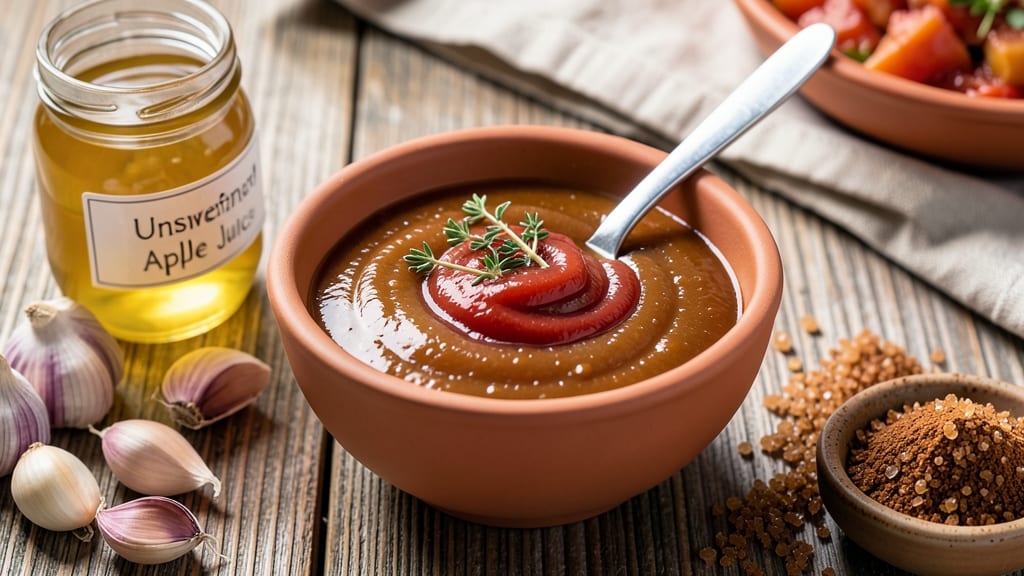
This apple juice BBQ sauce recipe transforms grilling into a sweet-tart experience that balances smoky depth with fruity brightness. 🍏 I developed it after years of perfecting rubs and marinades—this sauce cuts through rich meats while adding a signature caramelized finish.
The secret lies in reducing apple juice with vinegar and spices until it thickens into a glossy, clingy glaze. What sets this sauce apart is its versatility: use it as a marinade for pork chops, a glaze for grilled chicken, or a dipping sauce for ribs.
The apple juice adds natural sweetness without overpowering the smoky flavors, while the vinegar and spices create that perfect tangy backbone. It's restaurant-quality without requiring hours in the kitchen—just 30 minutes of simmering and stirring.
The result is a sauce that's rich enough to stand alone but light enough to let the meat shine through. It develops deeper flavor as it sits, making it ideal for meal prep.
Store it in the fridge for up to two weeks or freeze for longer use—though I doubt it'll last that long. Perfect for summer cookouts or weeknight grilling, this sauce elevates every dish it touches. Let's make it!
Ingredients for apple juice bbq sauce
Five simple ingredients plus pantry staples make this smoky-sweet glaze perfect for grilling.
| Ingredient | Amount | Notes |
|---|---|---|
| Unsweetened Apple Juice 🍏 | 1 ½ cups | Pasteurized for shelf stability |
| Apple Cider Vinegar 🍶 | ½ cup | Raw, unfiltered preferred |
| Brown Sugar 🍚 | ½ cup | Light or dark variety |
| Tomato Paste 🍅 | ¼ cup | Canned, unsweetened |
| Smoked Paprika 🌶️ | 1 tbsp | For smoky depth |
| Garlic Cloves 🧄 | 3 cloves | Minced for flavor |
| Ground Black Pepper 🌶️ | ½ tsp | Freshly ground preferred |
| Dried Thyme 🌿 | 1 tsp | Or 1 tbsp fresh |
| Mustard Powder 🟡 | ½ tsp | Yellow or Dijon |
| Salt 🧂 | 1 tsp | Kosher or sea salt |
The apple juice is the star—Trader Joe's or Whole Foods carry the best-tasting pasteurized versions without added sugar. If you're using fresh apple juice, strain it well to avoid pulp clogging your saucepan. Brown sugar here adds depth, but if you're watching carbs, coconut sugar works just as well. The tomato paste? Mueller's or Rao's are my go-tos—they're consistent and don't taste like cardboard. For smoked paprika, Penzeys has the best selection, but any smoked paprika from the spice aisle will do (just check the label for 100% smoked paprika, no fillers).
No apple cider vinegar? White vinegar or balsamic vinegar both work—just use the same amount. Running low on tomato paste? Crushed tomatoes in a pinch (use half the amount and strain out excess liquid). Fresh thyme is ideal, but dried thyme at one-third the amount keeps the flavor profile intact. If you're making this for a crowd, double the batch—it reheats beautifully and tastes even better the next day. The mustard powder adds that subtle tang that balances the sweetness, so don't skip it unless you're allergic (but then why are you making BBQ sauce?).
This sauce thickens as it cools, so don't over-reduce—you want it glossy, not syrupy. Store in a glass jar in the fridge for up to two weeks, or freeze for three months. I always make extra because it disappears fast—pork chops, grilled chicken, even baked beans all love this stuff. For a quick glaze, microwave for 20 seconds before using. Leftovers? Toss them in a smoothie or use as a salad dressing—trust me, it's versatile.
Why You'll Love This Recipe
- Pantry Magic: I swear, this sauce comes together with stuff I already have—no special trips to the store. Just apple juice, vinegar, and a little brown sugar to balance the tang, and boom, you’ve got something way better than store-bought.
- Sweet-Smoky Kick: That smoked paprika and tomato paste give it this deep, caramelized richness, but the apple juice keeps it bright and tangy. It’s like a fall BBQ party in your mouth—warm, a little sweet, with just enough bite.
- Weeknight Hero: Slather it on grilled chicken for dinner, toss it with roasted potatoes for lunch, or even drizzle it on a burger when the kids are begging for something different. I’ve used it for everything, and it never lets me down.
- Fridge Goldmine: Make a big batch—it keeps for weeks in the fridge—and the flavor only gets better as it sits. Honestly, I’ve had leftovers turn into my go-to sandwich spread because it’s that good. Plus, it’s cheap to make.
Step-by-step instructions for apple juice BBQ sauce
Here's how to make this sweet-tart glaze that'll take your grilled meats to the next level.
🍳 Step 1: Sauté Garlic and Spices in Tomato Paste
Heat a medium saucepan over medium heat and add the 0.25 cup tomato paste. Stir continuously for 2-3 minutes until it begins to darken slightly and release its rich aroma. This is where all the deep flavors start building.
Add the 3 cloves minced garlic, 1 tbsp smoked paprika, 0.5 tsp mustard powder, 1 tsp dried thyme, 0.5 tsp ground black pepper, and 1 tsp salt. Stir for another 1 minute until the garlic becomes fragrant and the spices are fully incorporated. You'll know it's ready when you can smell that smoky, garlicky aroma filling your kitchen.
🍳 Step 2: Add Apple Juice and Vinegar
Pour in the 1.5 cups unsweetened apple juice and 0.5 cup apple cider vinegar all at once. Stir well to combine with the tomato-spice mixture. The sauce will immediately start to bubble and thicken slightly as the liquid begins to reduce.
Bring the mixture to a gentle boil over medium-high heat, then immediately reduce to medium-low heat. Let it simmer uncovered for 10-12 minutes, stirring occasionally. You're looking for the sauce to reduce by about 25%—it should coat the back of a spoon and become slightly syrupy in consistency.
🍳 Step 3: Sweeten and Thicken the Sauce
Once the sauce has reduced, stir in the 0.5 cup brown sugar. This is where the magic happens—the sugar will help balance the tartness of the vinegar and apple juice while adding that perfect caramelized depth. Let the sauce simmer for another 5-7 minutes, stirring frequently, until it reaches your desired thickness.
For a thicker glaze, continue simmering until it coats a spoon completely. If it's too thick, you can add 1-2 tablespoons of water to loosen it up. The sauce should be glossy and coat the back of a spoon when you lift it from the pan. Taste and adjust seasoning if needed—you might want to add a pinch more salt or sugar to balance the flavors.
⏰ Step 4: Cool and Store
Remove the sauce from heat and let it cool for 10 minutes. This resting period allows the flavors to meld together and the sauce to thicken slightly as it cools. Once cooled, transfer the sauce to a clean jar or airtight container.
Let it come to room temperature before sealing. This sauce will keep in the refrigerator for up to 2 weeks or can be frozen for up to 3 months. The flavors actually improve as it sits, so if you can wait a day or two before using it, do so—it'll be even better!
Pro Tips For Making Apple Juice Bbq Sauce
- Simmer Low and Slow: That high heat at the start? It’s tempting, but resist. Once you mix in the tomato paste, drop the flame to medium-low and let it bubble gently for at least 20 minutes—no rushing. I learned this the hard way when my sauce turned grainy and raw-tasting. The longer it simmers, the deeper the flavor, especially that caramelized apple-cider tang.
- Reduce the Apple Juice First: Don’t dump all the unsweetened apple juice in at once. Start by reducing half of it in the pot for 5 minutes before adding the rest—this concentrates the sweetness and prevents a watery sauce. (Yes, even if you’re impatient like me.) The difference in thickness and richness is noticeable.
- Use Real Tomato Paste, Not Powder: Skip the powdered shortcut—it’s a flavor crime. A 6-ounce can of tomato paste adds body and a subtle acidity that balances the brown sugar. Stir it in slowly while simmering to avoid clumping, and let it cook for at least 10 minutes so it integrates fully. Trust me, your sauce will taste like it came from a pitmaster’s kitchen.
- Balance the Vinegar Gradually: Apple cider vinegar is potent, so add it in two batches: half upfront, then the rest at the end. Taste as you go—if it’s too sharp, a pinch of brown sugar will mellow it out. I once added all of it at once and ended up with a sauce that tasted like a science experiment. Better to adjust than regret.
Make-ahead tips for leftovers
Batch Prep Basics
Make a double batch of this sauce—it disappears fast! Use a 6-quart saucepan for larger batches, scaling all ingredients by 2x. I always prep extra because it reheats beautifully and tastes even better the next day. Store in glass jars with tight-sealing lids to maintain freshness. 🍏
Freezing for Later
Freeze sauce in quart-sized freezer bags or silicone molds for easy portion control. Leave ½-inch headspace for expansion, then seal tightly. Label with the date—it keeps for 3 months without losing flavor. Thaw overnight in the fridge before using. For quick use, microwave 20 seconds to loosen, then stir.
Reheating Like a Pro
Stovetop reheating preserves texture best. Pour sauce into a lightly oiled saucepan and heat over medium-low for 3-5 minutes, stirring constantly. Avoid boiling—just warm until it reaches 160°F (test with a thermometer). For microwave reheats, use 30-second intervals on 50% power to prevent scorching. Always stir between intervals.
Garnish & Glaze Tips
For restaurant-style presentation, drizzle sauce over grilled meats while still hot. Finish with chopped fresh thyme or a sprinkle of smoked paprika for visual appeal. For extra shine, reduce sauce further by 5 minutes before serving—this creates a glossy, clingy glaze that caramelizes beautifully on grills.
Versatile Uses Beyond Grilling
This sauce isn’t just for meats! Use it as a marinade for tofu or chicken, a dipping sauce for fries, or a salad dressing base. Toss with roasted sweet potatoes or drizzle over grilled corn for a sweet-tart twist.
The possibilities are endless—just keep it in your fridge for spontaneous flavor boosts.
Flavor Boost Hacks
Need extra depth? Add ½ tsp liquid smoke for smokier flavor or 1 tsp apple cider for brightness. For heat lovers, stir in ½ tsp cayenne with the spices.
If you prefer less sweetness, reduce sugar to ¼ cup and add 1 tbsp honey instead. Always taste as you go—adjust to your preference! 💡
Nutrition facts
Frequently asked questions
Can I substitute apple juice with apple cider?
Yes, but with a few adjustments! Use 1 cup apple cider plus 0.5 cup water to match the liquid volume. Apple cider has more pulp, so strain it first to avoid thickening issues. The flavor will be slightly more robust, but you may want to reduce the brown sugar to 0.35 cup since cider is naturally sweeter.
How do I make this sauce thicker for glazing?
Simmer the sauce uncovered for an extra 5-7 minutes after adding sugar to reduce it further. For a quick fix, mix 1 tablespoon cornstarch with 2 tablespoons water, stir into the sauce, then boil for 1-2 minutes until thickened. Always taste as you go—you want glossy, not gummy!
Is this sauce good for non-meat dishes?
Brush it on portobello mushrooms before grilling, drizzle over roasted Brussels sprouts, or use as a marinade for tofu or halloumi. The apple-tang combo works beautifully with veggies and dairy too. Just reduce the sugar slightly (0.35 cup) if using with delicate flavors like fish.
Why did my sauce turn out too sweet?
This happens when the vinegar's acidity doesn't balance the sugar properly. Next time, add 1 extra tablespoon of apple cider vinegar during simmering or a pinch of cayenne pepper to cut sweetness. For immediate fixes, stir in 1 teaspoon lemon juice or reduce the sugar by 2 tablespoons in future batches.
Can I make this in an Instant Pot?
Yes! Sauté the tomato paste and spices on sauté mode for 3 minutes, then add all liquids. Cook on high pressure for 5 minutes, then quick-release. Finish by stirring in sugar and simmering 2-3 minutes on the stovetop to thicken. The pressure method speeds up reduction but requires extra attention to thickness.