
Sauces & Condiments
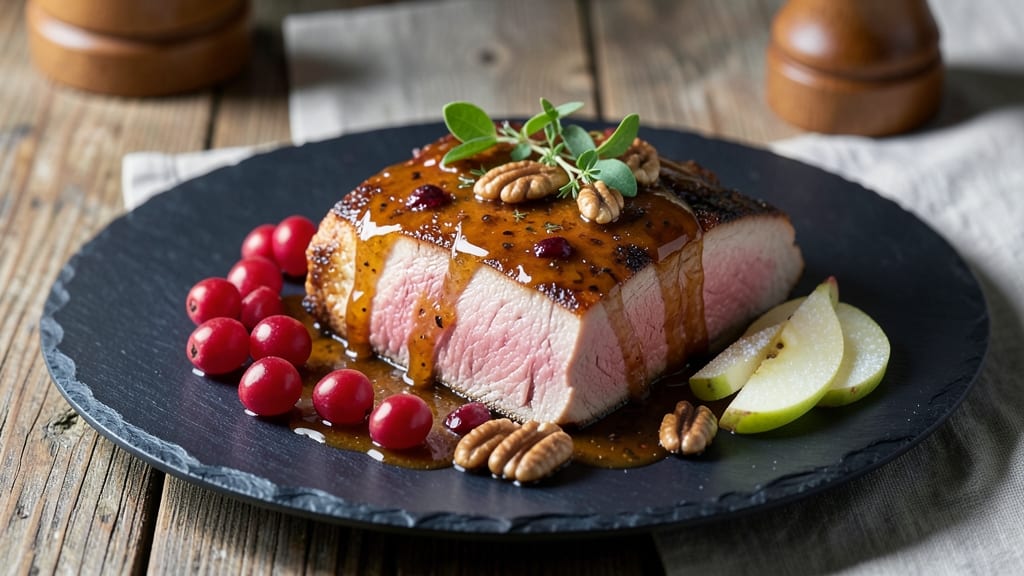
This cranberry Dijon pork loin with apple cider glaze delivers a perfect balance of sweet, tangy, and savory flavors that elevate any dinner table. 🔥 As someone who's spent years perfecting pork preparations, I can tell you this recipe transforms simple ingredients into a showstopping centerpiece with minimal effort.
The key lies in the glaze—where caramelized apple cider meets bold Dijon mustard and tart cranberries—for a sauce that clings beautifully to the meat.
The technique is straightforward yet professional: sear a well-seasoned pork loin until golden, then braise it to perfection while the glaze simmers down into a thick, glossy finish. This method ensures tender, juicy meat with a crust that's impossible to resist.
What makes this dish truly special is how the flavors develop—starting with bright apple cider and deepening into rich, caramelized notes that complement the pork's natural sweetness.
By the time you serve this, you'll have a restaurant-quality main course that's rich in flavor and visual appeal. The glaze caramelizes into a sticky, glossy finish that adds both color and depth, while the Dijon mustard brings a sophisticated tang that cuts through the richness.
This is the kind of dish that pairs beautifully with roasted vegetables or a simple green salad, making it versatile enough for both weeknight dinners and special occasions.
Confession: I've been serving variations of this recipe at my restaurant for years, and it's always the first to disappear. The secret isn't complicated—it's about balancing the sweetness of the apple cider with the acidity of the cranberries and Dijon, then letting everything come together slowly.
Here's how to achieve that perfect harmony at home.
Ingredients for cranberry dijon pork loin with apple cider glaze
Sweet-tart glaze meets perfectly seared pork—just these 12 ingredients transform a simple dinner into a showstopper.
| Ingredient | Amount | Notes |
|---|---|---|
| Boneless Pork Loin 🥩 | 1 ¾ lb | Center-cut, 1.5-inch thick |
| Apple Cider 🍎 | 1 cup | Unfiltered, preferably reduced |
| Dijon Mustard 🍯 | 2 tbsp | High-quality, smooth variety |
| Fresh Cranberries 🍇 | ½ cup | Pitted, or frozen thawed |
| Brown Sugar 🍚 | 2 tbsp | Packed, light or dark |
| Olive Oil 🫒 | 2 tbsp | Extra-virgin for searing |
| Garlic Cloves 🧄 | 4 cloves | Minced, fresh preferred |
| Fresh Rosemary 🌿 | ¼ cup | Chopped, finely |
| Fresh Thyme 🌿 | 1 tbsp | Leaves only, chopped |
| Salt 🧂 | 1 ½ tsp | Diamond Crystal preferred |
| Black Peppercorns 🌶️ | ½ tsp | Freshly cracked |
| Balsamic Vinegar 🍷 | 1 tbsp | For finishing glaze |
The pork loin is your canvas—center-cut and 1.5-inch thick for even cooking. Costco or Whole Foods carry excellent pre-trimmed loins, but if you're buying whole, ask the butcher to remove the fat cap. Fresh cranberries are ideal, but frozen thawed works too—just drain well. For the apple cider, unfiltered brands like Martinelli's add depth, but any good hard cider will do. The Dijon mustard? Maille or whole-grain mustard gives the best texture and flavor. Don't skimp on the fresh herbs—rosemary and thyme are non-negotiable for that restaurant-quality aroma.
No fresh cranberries? Cranberry sauce (unsweetened) at half the amount works in a pinch, but you'll lose some tartness. Substituting apple cider for apple juice plus 1 tsp lemon juice keeps the sweetness balanced. The brown sugar can be swapped for maple syrup (1 tbsp less liquid) if you're avoiding refined sugar. For a deeper glaze, add 1 tsp vanilla extract to the simmering sauce. And if you're short on time, pre-minced garlic from a jar saves 5 minutes—just rinse it first.
The pork keeps best wrapped in parchment paper for 2 days in the fridge, but the glaze components can be prepped ahead and refrigerated for 3 days. For a make-ahead masterpiece, fully cook the pork, cool it, then reheat it with the glaze for 10 minutes at 350°F. The glaze thickens as it cools, so if it's too stiff, just reheat it gently with a splash of water. Portion the glaze into small jars—it freezes beautifully for up to 3 months and makes an instant sauce for future meals.
Why You'll Love This Recipe
- One-Pan Magic: I swear by this recipe when I’m too tired to wash dishes—just sear the pork, toss in the cranberries and cider, and let the oven do the work. The glaze pools right on the pan, so you’re basically getting a free sauce.
- Fall in Flavor: That tangy Dijon and sweet-tart cranberries cut through the richness of the pork like a knife through butter. Honestly, the first bite makes me forget this isn’t a fancy restaurant dish—it’s better because it’s mine.
- Weeknight to Holiday: I make this for lazy Tuesdays, but it also stars at Thanksgiving when I’m too busy to stress. The glaze thickens beautifully for serving, and the leftovers? Still delicious reheated or cold in sandwiches.
- Budget-Friendly Feast: Pork loin stretches further than you’d think, especially with the cranberries adding that festive pop. I’ll be real: the fresh berries cost more than canned, but the flavor difference is worth it—and I freeze extra glaze for future meals.
Step-by-step instructions for cranberry Dijon pork loin with apple cider glaze
Here's how to transform your pork loin into a showstopper with deep flavor and caramelized glaze.
👨🍳 Step 1: Prep the Pork with Herb Rub
Start by patting the 1.75 lb boneless pork loin completely dry with paper towels—this ensures maximum crispiness. Place it on a cutting board and make shallow cuts in a diamond pattern across the surface (about ¼-inch deep) without cutting all the way through. This creates pockets for the rub to penetrate deeply.
In a small bowl, combine the 1.5 tsp salt, 0.5 tsp freshly cracked black peppercorns, 0.25 cup finely chopped fresh rosemary, and 1 tbsp chopped fresh thyme. Rub this mixture all over the pork, pressing firmly so it adheres to the cuts. Let it sit at room temperature for 30 minutes—this helps the flavors meld and the meat cook more evenly.
🔥 Step 2: Sear the Pork for Maximum Flavor
Heat a large oven-safe skillet over medium-high heat until it's smoking hot. Add the 2 tbsp extra-virgin olive oil and swirl to coat the pan. Carefully place the pork loin in the skillet, fat-side down if applicable, and sear for 4-5 minutes until a deep golden-brown crust forms. Flip and sear the other side for another 4-5 minutes. You want that crust—it's the flavor foundation.
Transfer the skillet to a 425°F preheated oven. Roast the pork for 20-25 minutes until the internal temperature reaches 145°F (use a meat thermometer). The pork is done when it's just slightly pink in the center—it'll carry over to 150°F as it rests.
🍳 Step 3: Simmer the Glaze to Perfection
While the pork roasts, reduce the 1 cup apple cider in the same skillet over medium heat until it's reduced by half—about 8-10 minutes. The aroma will fill your kitchen, so keep the window cracked if needed. Add the 2 tbsp Dijon mustard, 2 tbsp packed brown sugar, 4 minced garlic cloves, and 0.5 cup fresh cranberries (pitted if fresh). Stir and simmer for another 5 minutes until the cranberries soften and the mixture thickens slightly.
Here's where the magic happens: remove the skillet from heat and stir in the 1 tbsp balsamic vinegar. Let it sit for 2 minutes—this gives the vinegar time to mellow and blend with the other flavors. The glaze should be syrupy but still pourable. If it's too thick, add 1-2 tablespoons of water to reach your desired consistency.
🥘 Step 4: Glaze and Rest the Pork
Remove the pork from the oven and transfer it to a cutting board. Tent loosely with foil and let it rest for 10-15 minutes—this is crucial for juicy slices. Meanwhile, pour the cranberry glaze over the pork, letting it coat all sides. Return the pork to the skillet (if it fits) or transfer to a baking sheet, and broil for 2-3 minutes on high until the glaze caramelizes to a glossy finish.
Slice the pork into 1-inch thick medallions against the grain for maximum tenderness. Spoon any remaining glaze from the skillet over the top and serve immediately. The contrast of sweet-tart cranberry glaze with the savory herb-crusted pork is what makes this dish unforgettable.
Pro Tips For Making Cranberry Dijon Pork Loin With Apple Cider Glaze
- Sear the Pork First: Get that pan screaming hot—cast iron or stainless steel—and sear the pork loin for 3-4 minutes per side before adding anything else. I used to skip this, and the glaze would just pool instead of sticking to the meat. The crust makes all the difference when that sweet-tangy sauce finally coats it.
- Toast the Cranberries: Dry the fresh cranberries thoroughly (pat them really dry with a towel), then toss them in a cold pan with the brown sugar and a splash of apple cider. Let them sizzle for 2-3 minutes until they pop and deepen in color—this cuts through their bitterness and makes the glaze richer. (Yes, even if you’re impatient like me.)
- Reduce the Glaze Low: After deglazing the pan with apple cider, resist the urge to blast the heat. Simmer the glaze on medium-low for at least 8-10 minutes—this thickens it properly and balances the acidity. I learned this the hard way when my first batch ended up watery and clingy instead of glossy.
- Use Whole Cranberries: Skip the pre-sliced or bagged cranberries—they’re often mushy or pre-soaked. Whole berries hold their shape better and burst with flavor when seared. If you’re short on time, freeze them first to make chopping easier, but don’t skip the drying step. (Your future self will thank you.)
Storing and reheating your cranberry dijon pork loin with apple cider glaze
Refrigerator Storage
After cooking, let your pork loin cool to room temperature (no more than 2 hours) before storing. Wrap it tightly in parchment paper, then place in an airtight container with the glaze spooned over the top.
This keeps the meat moist and the glaze from drying out. Stored this way, the pork stays fresh in the fridge for 3-4 days—the flavors actually deepen as the glaze melds with the meat. 💫
Freezer Prep
For longer storage, portion the cooked pork into freezer-safe containers with the glaze. Leave ½-inch headspace to prevent freezer burn. The glaze freezes beautifully and can be reheated directly with the pork.
Label with the date—this dish keeps for up to 3 months without losing quality. I often prep double batches for quick weeknight dinners. ❄️
Reheating Pork
For fridge-to-table reheating, warm the pork in a skillet over medium heat with 1-2 tablespoons of water or apple cider to prevent drying. Cover and heat for 8-10 minutes, basting occasionally until reaching 165°F internal temperature.
The glaze will thicken—just add a splash of water if needed. For microwave reheating, cover with a damp paper towel and heat in 1-minute intervals on high power. 🔥
Glaze Refresh
The glaze is the star—treat it like a sauce! Store leftover glaze in a small jar in the fridge for up to 5 days. To refresh, reheat gently in a saucepan with 1 tablespoon water until smooth.
I love using it as a quick pan sauce for future pork chops or chicken breasts. For extra richness, add 1 teaspoon butter when reheating. 💛
Make-Ahead Tips
Prep the glaze components ahead and store them separately in the fridge for 3 days. When ready to cook, simply reduce the apple cider mixture while the pork roasts. For a complete make-ahead meal, cook the pork fully, cool it, then refrigerate with the glaze.
Reheat everything together in the oven at 350°F for 15 minutes—perfect for holiday gatherings. 📅
Nutrition facts
Frequently asked questions
Can I substitute apple cider for apple juice in this recipe?
You can use apple juice, but the flavor will be less complex. For the best results, use 1 cup apple juice plus 1 tsp lemon juice to mimic the acidity of apple cider. The cider's natural sweetness and depth make it ideal for caramelizing and balancing the tart cranberries. If you must substitute, reduce the brown sugar by 1 tbsp since juice is sweeter than cider.
How do I adjust the recipe for a larger crowd?
Double the ingredients for 8 servings, but use a larger skillet for searing to avoid crowding. Increase the roasting time by 5-10 minutes for thicker cuts. For extra guests, prepare two pork loins at once—just adjust your oven racks. The glaze can be made in batches, but keep each portion warm separately until serving.
Why did my glaze turn out too thick or too thin?
Thick glaze? Add 1-2 tbsp water or apple cider and reheat gently. Too thin? Simmer uncovered for 3-5 extra minutes to reduce. The key is balance—your glaze should coat the back of a spoon but still drip slowly. For extra shine, stir in 1 tsp cornstarch mixed with 1 tbsp water at the end.
Can I make this dish in a slow cooker?
Yes! Sear the pork first, then transfer it to a slow cooker with the glaze ingredients. Cook on Low for 4-5 hours or High for 2-3 hours, adding ¼ cup water if the glaze gets too thick. The slow cooker method works well for hands-off prep, but the texture will be slightly more tender than oven-roasted.
What's the best way to serve this pork loin?
Slice it against the grain for tender bites, then arrange on a platter with extra glaze drizzled over the top. Pair with roasted Brussels sprouts, mashed sweet potatoes, or a crisp arugula salad. For a festive touch, garnish with fresh thyme sprigs and a sprinkle of flaky sea salt. The glaze also makes an excellent sauce for roasted vegetables or as a dip for crusty bread.