
Sauces & Condiments
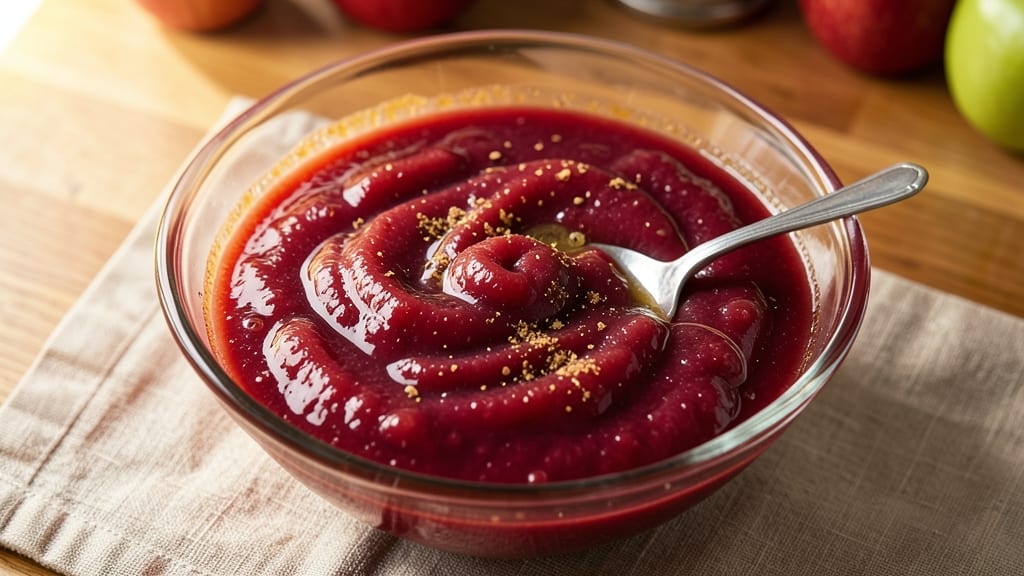
This red apple sauce recipe transforms tart apples into a thick, spiced sweetness that elevates everything from desserts to savory dishes. The secret lies in simmering apples with cinnamon and a touch of sugar until they break down into a velvety, fragrant sauce—no peeling or coring required.
I developed this version after years of testing, ensuring it’s foolproof for beginners while delivering restaurant-quality depth.
The process is simpler than it sounds: core the apples, simmer them with spices until tender, then blend until smooth. The result is a versatile sauce that’s rich enough for apple pie filling, bright enough for cocktails, or tangy enough to drizzle over pork chops.
A splash of lemon juice at the end keeps the color vibrant and balances the sweetness.
What makes this sauce stand out is its thick, spoonable consistency—perfect for dolloping over pancakes, swirling into yogurt, or using as a glaze for roasted meats. The spices (cinnamon, nutmeg, and a pinch of clove) add warmth without overpowering, while the natural apple acidity keeps it from being cloying.
Store it in the fridge for up to a week or freeze for months—it only tastes better with time as the flavors meld. Whether you’re baking, cooking, or just craving a cozy sip, this sauce delivers versatile sweetness with minimal effort. Let’s make it.
Ingredients for red apple sauce
Tart apples, warm spices, and a splash of lemon—this sauce is easier than it looks.
| Ingredient | Amount | Notes |
|---|---|---|
| Red Apples 🍎 | 4 medium | Tart varieties like Granny Smith |
| Granulated Sugar 🍚 | ½ cup | Light brown sugar adds depth |
| Cinnamon 🌿 | 1 ½ tsp | Ground, not stick |
| Ground Nutmeg 🌿 | ¼ tsp | Freshly grated preferred |
| Ground Cloves 🌶️ | ⅛ tsp | Pinch, not heaping |
| Lemon Juice 🍋 | 1 tbsp | Freshly squeezed |
| Water 💧 | ¼ cup | Or apple cider for depth |
| Salt 🧂 | ¼ tsp | Kosher or sea salt |
The apples are the star, so pick tart varieties like Granny Smith—they hold up better to simmering and keep the sauce bright. I always grab the organic ones at Trader Joe's when I can, but regular apples work too. No need to peel or core—just slice them into chunks (skin on adds color). For the spices, Penzeys or bulk bins have the freshest ground cinnamon and nutmeg. If you only have whole spices, toast and grind them fresh—game changer. The cloves? Just a pinch—you don’t want to overpower the apple flavor.
No Granny Smith? Fuji or Honeycrisp work too, but they’ll be slightly sweeter. Running low on water? Apple cider or white grape juice adds depth without altering the color. Fresh lemon juice is best, but bottled works in a pinch (just add a pinch extra salt). The sugar can be swapped for maple syrup or honey if you prefer, but granulated keeps it neutral. For extra thickness, simmer uncovered—it’ll reduce naturally. And if you’re feeling fancy, add a splash of bourbon or vanilla extract at the end.
This sauce keeps 1 week in the fridge, sealed tight. For longer storage, freeze in ice cube trays—perfect for single servings. It actually tastes better after a few days as the flavors meld. I always make a double batch—one for pancakes, one for pork tenderloin. The leftovers? Perfect for swirling into oatmeal or drizzling over ice cream. Just reheat gently on the stove, stirring often, and add a splash of water if it gets too thick.
Why You'll Love This Recipe
- Five-Ingredient Magic: I swear by this recipe—just apples, sugar, and three spices. No peeling required (I leave the skins on for texture), and the spices do all the work.
- Spice Kiss Perfection: That nutmeg and clove combo? It’s like autumn in a jar. The apples caramelize just enough to balance the sweetness, and the cinnamon ties it all together—warm, cozy, and ridiculously satisfying.
- Pantry Staple Power: Honestly, you’re probably already making this. The ingredients don’t cost a fortune, and they last—meaning fewer grocery runs and more time for actual cooking (or not cooking, if you’re me on a Tuesday).
- Leftovers That Work: This sauce keeps for weeks in the fridge, and it’s better the next day. Drizzle it over oatmeal, mix it into yogurt, or just eat it straight with a spoon—no judgment here.
Step-by-step instructions for red apple sauce
Here's how to make a perfectly spiced, thick apple sauce that's ready in under 30 minutes.
Core and Chop the Apples
Start by peeling the 4 medium red apples if you prefer a smooth texture, or leave the skin on for extra fiber and color. Using a sharp knife, carefully remove the cores and slice each apple into ¼-inch thick pieces. I like to work over a bowl to catch any juice that might escape during chopping—this keeps my workspace clean and prevents waste.
For even cooking, try to cut the apple pieces as uniformly as possible. If you're using particularly large apples, you might want to cut them into ½-inch chunks instead. The goal is to maximize surface area so the apples soften quickly and evenly during the simmering process. Place the chopped apples in a large pot once you're finished.
Combine Apples with Sugar and Spices
In the same pot with the chopped apples, add the ½ cup granulated sugar, 1½ teaspoons cinnamon, ¼ teaspoon ground nutmeg, ⅛ teaspoon ground cloves, and ¼ teaspoon salt. Stir everything together gently but thoroughly to ensure the spices coat the apple pieces evenly. This step is crucial for distributing the flavors throughout the sauce.
Don't be tempted to add all the spices at once without stirring—some of those ground spices, like cloves, can clump. Give it a good mix now so you don't end up with pockets of intense spice later. The sugar will start to dissolve slightly as you stir, but don't worry if it doesn't all disappear immediately.
Simmer Until Soft and Tender
Pour in the ¼ cup water (or apple cider if you prefer) and bring the mixture to a boil over medium-high heat. Once boiling, reduce the heat to medium-low and let it simmer uncovered for 15-20 minutes. You'll know it's ready when a fork slides in easily and the apples are completely tender with no resistance.
Here's the thing—don't walk away during this process. You want to stir occasionally to prevent the apples from sticking to the bottom of the pot. If they start to brown too much, just add a splash of water. The sauce should reduce naturally as it cooks, becoming thicker and more concentrated in flavor.
Finish with Lemon Juice and Texture Check
After the apples are tender, remove the pot from heat and stir in the 1 tablespoon lemon juice. This brightens the flavors and balances the sweetness. Let the sauce sit off the heat for 5 minutes—this resting period allows the flavors to meld together and the sauce to thicken slightly.
Now for the texture check: Use a fork or potato masher to achieve your desired consistency. For a smooth sauce, press the apples through a fine-mesh sieve. For a slightly rustic texture, just mash them lightly with the fork. If the sauce is too thick, add a tablespoon of water or apple cider to reach your preferred consistency.
Cool and Store for Maximum Freshness
Transfer the warm apple sauce to a clean jar or airtight container. Let it cool to room temperature before refrigerating. This sauce keeps well in the fridge for up to 5 days or can be frozen for up to 3 months—perfect for making ahead for holiday meals or quick breakfasts.
I always make a double batch because this versatile sauce pairs beautifully with everything from pork chops to oatmeal. The spices develop even more depth as it cools, so if you can wait, the flavors will only get better. Enjoy it warm with your favorite dessert or spread it on toast for a comforting treat!
Pro Tips For Making Red Apple Sauce
- PEEL AND CORE APPLES UNIFORMLY: Cut the apples into quarters first, then slice them from the core outward—this keeps the pieces even and prevents one side from cooking faster. I learned this the hard way when my sauce turned mushy on one side but still had a stubborn core in the middle. A sharp knife and a steady hand make all the difference here.
- STIR LOW AND SLOW: Once the apples soften, drop the heat to medium-low and stir every 2-3 minutes. Rushing it with high heat turns the sauce into glue, and you’ll end up with a thick, cloying mess instead of a silky, balanced sauce. Patience here means the spices meld properly without burning.
- SKIP THE PRE-GRATED NUTMEG: Freshly grind your nutmeg—yes, even if it’s a pain. Store-bought pre-ground nutmeg loses its punch fast, and this sauce needs that warm, bright kick. A few seconds with a microplane or spice grinder makes a real difference in flavor. (And if you’re lazy, at least use it within a month of opening.)
- SWEAT THE SPICES FIRST: Toast the cinnamon, nutmeg, and cloves in a dry pan for 30 seconds before adding the apples. This deepens their aroma and prevents them from floating in the sauce like dust. I was skeptical until I tried it—now I can’t imagine skipping it. Just don’t walk away; watch them like a hawk.
Pro cooking tips for perfect results
Simmering Secrets
Keep the heat at medium-low once boiling to prevent scorching—this is where most home cooks go wrong. I use a heavy-bottomed pot (like my All-Clad) to distribute heat evenly.
If the apples brown too quickly, add 1 tablespoon water and stir gently. The goal is tender apples with minimal browning for a bright, vibrant sauce. 🌡️
Spice Distribution
Don’t just toss spices in—stir vigorously for 30 seconds to break up clumps, especially with ground cloves. I like to toast the spices in the dry pot for 1 minute before adding apples to deepen their aroma.
For extra warmth, add a ¼ teaspoon cardamom alongside the nutmeg. Just be cautious—cardamom can overpower if overused.
Texture Control
For a smooth sauce, blend with an immersion blender after simmering—no straining required. For a rustic texture, mash with a potato masher and leave small chunks. If the sauce thickens too much, add 1 tablespoon water or apple cider at a time.
I’ve found that simmering uncovered naturally reduces the sauce to the perfect consistency.
Lemon Juice Timing
Add the lemon juice only at the very end—5 minutes before serving. This preserves its bright acidity and prevents the sauce from turning dull. If you’re making it ahead, add the lemon juice right before reheating.
For extra zing, I sometimes add ½ teaspoon lemon zest along with the juice. 🍋
Flavor Boosters
Want to elevate your sauce? Swap ½ cup of the water for apple cider or white wine for depth. For a bourbon twist, add 1 teaspoon bourbon at the end (it burns off quickly).
A pinch of black pepper adds warmth, while vanilla extract (½ teaspoon) enhances sweetness. Just remember: start with small amounts and adjust to taste.
Storage Hacks
For long-term storage, freeze in ice cube trays—thaw individual cubes as needed. Label with the date, as the sauce thickens further in the freezer. To reheat, warm on low heat with 1 tablespoon water to restore smoothness.
If stored in the fridge, stir well before using—it separates slightly but comes back together beautifully. ❄️
Nutrition facts
Frequently asked questions
Can I make this red apple sauce without peeling the apples? Leaving the skin on adds natural fiber and vibrant color to your sauce. The skins soften during simmering, blending right in. Just
How can I adjust the sweetness level?
The recipe uses ½ cup sugar as a baseline, but you can easily reduce it to ¼ cup for less sweetness or increase to ⅔ cup for extra richness. For a natural sweetener swap, try maple syrup or honey at a 1:1 ratio. Taste as you go—simmering reduces the sauce, so flavors concentrate over time.
What are the best apples to use for this recipe?
Tart varieties like Granny Smith are ideal—they hold up well during simmering and keep the sauce bright. Other good choices include Fuji or Honeycrisp for a slightly sweeter balance. Avoid overly soft apples like Red Delicious, as they can turn mushy during cooking.
Can I make this sauce in a slow cooker? Yes! Combine all ingredients in your slow cooker and cook on low for 3-4 hours or high for 2 hours. The slow cooking enhances the spices beautifully. Stir occasionally and add water if it gets too thick. Just
How can I use this sauce beyond desserts?
This versatile sauce works beautifully with pork chops, roasted meats, or even as a glaze for chicken. Try swirling it into oatmeal or yogurt for breakfast, or use it as a tangy dip for cheese boards. The warm spices pair especially well with savory dishes—just reduce the sugar slightly if using in savory applications.