
Main Courses
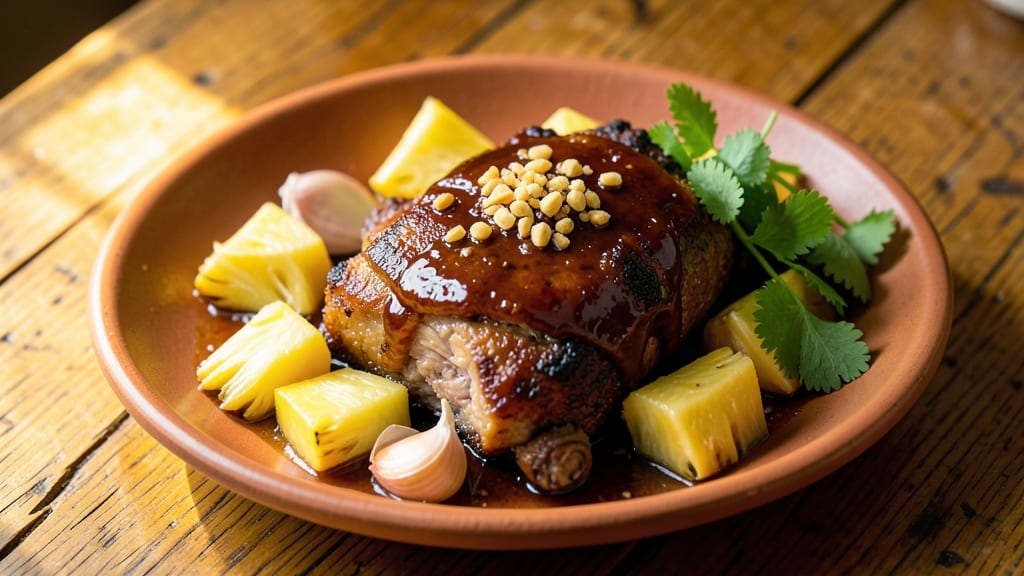
This pork pata humba with pineapple recipe in a Pinoy style delivers that perfect Filipino sweet-tangy balance—caramelized edges, tender meat, and a glaze that'll have you licking the plate. 💛 I perfected this recipe after years of testing, balancing traditional braising with pineapple's natural sweetness to create a sauce that's both rich and bright. The secret lies in slow cooking the pork until it falls apart, then finishing with a quick caramelization that transforms the sauce into something restaurant-worthy.
This dish starts with a simple marinade of soy sauce, vinegar, and garlic that tenderizes the pork hock while building deep umami flavors. As it braises, the meat absorbs the aromatic blend, becoming melt-in-your-mouth tender.
The pineapple comes in later—not just as a garnish, but as the star of the caramelized glaze that adds sweetness and prevents the sauce from becoming too heavy. Every bite delivers that perfect contrast of textures and flavors that makes this dish so beloved in Filipino kitchens.
By the time you're done, you'll have a dish that's rich yet balanced, with pork so tender it practically dissolves and a glaze that's sticky-sweet with just the right tang. The aroma alone will have everyone gathering around the table, and the taste will make them ask for seconds.
This is comfort food at its finest—heartwarming, satisfying, and packed with the kind of flavors that remind you of home.
Serve it over steamed jasmine rice with a side of atchara or steamed green beans to round out the meal. The acidity from the pickled papaya cuts through the richness, while the vegetables add freshness.
This recipe is perfect for family gatherings, special occasions, or whenever you're craving a taste of the Philippines. Let's get cooking—your taste buds will thank you.
Ingredients for pork pata humba with pineapple recipe pinoy style
Sweet, tangy, and packed with umami—these ingredients transform simple pork into Filipino comfort food magic.
| Ingredient | Amount | Notes |
|---|---|---|
| Pork Hock (or Pork Shoulder) 🐷 | 2 lb | Cut into 1-inch chunks, skin removed |
| Fresh Pineapple 🍍 | 1 whole | Cored and chopped into chunks |
| Soy Sauce 🍶 | ½ cup | Use light soy sauce for authentic flavor |
| White Vinegar 💧 | ¼ cup | For tangy depth |
| Garlic Cloves 🧄 | 6 cloves | Minced for marinade |
| Brown Sugar 🍚 | ½ cup | Packed tightly for sweetness |
| Olive Oil 🫒 | 2 tbsp | For searing pork |
| Black Peppercorns 🌶️ | 1 tsp | Coarsely crushed |
| Bay Leaves 🌿 | 2 whole | For aromatic depth |
| Water 💧 | 1 cup | For braising liquid |
| Cornstarch 🌾 | 1 tbsp | For thickening glaze |
| Salt 🧂 | 1 ½ tsp | Adjust to taste |
| Jasmine Rice 🍚 | 1 ½ cups | For serving |
| Green Beans 🥦 | 1 lb | Steamed for side dish |
The pork hock is non-negotiable for that signature melt-in-your-mouth texture. Filipino markets often carry it pre-cut, but if you're at a regular grocery store, ask the butcher for a pork knuckle or shoulder—just make sure it's fatty enough to stay juicy. The pineapple should be ripe but firm; local Asian markets usually have the sweetest varieties. For the soy sauce, Lee Kum Kee is my go-to, but any good light soy will do. Don't skip the bay leaves—they're the secret to that authentic Filipino aroma. And trust me, brown sugar here is better than white; it adds caramel notes that white sugar can't match.
No soy sauce? Coconut aminos in a pinch, though the flavor won't be identical. Running out of vinegar? Lime juice works in a squeeze, but you'll lose some of that classic tang. The garlic can be pre-minced from a jar (no shame), but fresh is always better if you've got it. For the glaze, cornstarch is your friend—it thickens beautifully without making the sauce gummy. If you're feeling fancy, swap the green beans for atchara (pickled papaya), which adds that perfect acidic crunch. And if you're serving a crowd, double the rice—this dish disappears fast!
This sauce gets better the next day, so make extra. Store it in the fridge for up to 5 days—the flavors meld beautifully. For freezing, portion into containers and keep for 3 months. The pork stays tender when reheated, but the glaze might thicken, so add a splash of water when warming. Serve with steamed rice and those pickled veggies—trust me, the contrast makes it sing. And if you've got leftovers, turn them into pork pata humba fried rice the next day. Game-changer!
Why You'll Love This Recipe
- One-Pot Magic: Honestly, this dish is my go-to when I need something hearty but hands-off. The pork hock (or shoulder) simmers right in the same pot as the pineapple—no extra pans, no fuss. Just slice the garlic, toss in the soy and vinegar, and let the flavors meld while you do whatever else needs doing.
- Sweet-Savory Balance: Between us, the pineapple’s tang cuts through the richness of the pork so perfectly. The vinegar gives it that bright, almost tangy kick, while the garlic and soy sauce deepen the flavor into something dangerously addictive. It’s like a party in your mouth—sweet, salty, and just a little bit funky.
- Leftover Goldmine: I always make extra because this reheats like a dream. The pork stays tender, and the pineapple adds moisture, so it never dries out. Pack it for lunch or freeze portions—it’s my secret weapon for lazy days when I don’t feel like cooking.
- Budget-Friendly Feast: Pork hock or shoulder is cheaper than you’d think, and pineapple stretches across multiple servings. A single cut of meat and a few pantry staples feed four people for under $15. That’s a win for my wallet and my taste buds.
Step-by-step instructions for pork pata humba with pineapple
Here's how to create that irresistible sweet-tangy glaze that caramelizes the edges perfectly.
🍳 Step 1: Sear the Pork for Maximum Flavor
Heat a large Dutch oven over medium-high heat and add the 2 tbsp olive oil. Once shimmering, add the 2 lb pork hock cut into 1-inch chunks in a single layer. Let them sear undisturbed for 3-4 minutes until deep golden brown on all sides.
This initial sear creates the Maillard reaction that builds deep flavor. I press down gently on the pork pieces during the first minute—this prevents them from curling and ensures even contact with the pan. Once browned, transfer the pork to a plate and set aside (we'll return it later).
👨🍳 Step 2: Build the Sweet-Tangy Braising Liquid
In the same Dutch oven, add the 6 minced garlic cloves and cook for 30 seconds until fragrant—don't let them brown or they'll turn bitter. Pour in the 0.5 cup soy sauce, 0.25 cup white vinegar, and 1 cup water. Stir to deglaze the pan, scraping up all those delicious browned bits from the bottom.
Add the 1.5 tsp salt, 1 tsp coarsely crushed black peppercorns, and 2 whole bay leaves. Bring to a simmer, then stir in the 0.5 cup packed brown sugar until completely dissolved. The mixture should smell like a perfect balance of sweet, tangy, and savory—this is your flavor foundation.
🥘 Step 3: Braise the Pork Until Fork-Tender
Return the seared pork to the Dutch oven, along with any accumulated juices. Bring the liquid to a boil, then reduce heat to low and cover tightly. Simmer for 1.5-2 hours until the pork is fork-tender (a knife should slide in easily with no resistance).
Here's the thing—don't peek or stir during this time. Every time you open the lid, you lose moisture and extend the cooking time. I like to set a timer and let it do its magic undisturbed. The pork should be falling off the bone when done, with the braising liquid reduced to a thick, glossy glaze.
🍍 Step 4: Add Pineapple for Sweet-Tangy Depth
Once the pork is tender, stir in the 1 whole fresh pineapple chopped into chunks. Simmer uncovered for 10-15 minutes until the pineapple softens slightly and the liquid reduces to a syrupy consistency that coats the back of a spoon. You want that beautiful caramelized glaze clinging to every piece of pork.
The pineapple adds natural sweetness that balances the tangy-savory braising liquid. You'll see the edges of the pork and pineapple pieces start to caramelize—that's your signal they're ready. If the glaze thickens too much, add 1-2 tablespoons of water to maintain the right consistency.
⏰ Step 5: Thicken the Glaze and Finish
In a small bowl, whisk together the 1 tbsp cornstarch with 2 tablespoons of the braising liquid to create a slurry. Pour this back into the Dutch oven and stir constantly for 2-3 minutes until the glaze thickens to a glossy, coatable consistency.
Taste and adjust seasoning if needed—this is where you can really make it your own. I usually add a pinch more salt or a splash of vinegar if the sweetness needs balancing. The final glaze should be thick enough to cling to the pork but still flow slightly when spooned. Serve immediately over 1.5 cups cooked jasmine rice with 1 lb steamed green beans on the side.
Pro Tips For Making Pork Pata Humba With Pineapple Recipe Pinoy Style
- BLANCH THE PINEAPPLE: Toss pineapple chunks in boiling water for 30 seconds first—this softens the core just enough to caramelize faster without turning to mush. I learned this the hard way after serving a batch with stubborn, undercooked pineapple centers that ruined the texture.
- SALT THE PORK TWICE: Generously salt the pork hock (or shoulder) before browning, then again after the initial braise when adding the vinegar-soy mixture. The first layer seasons the meat, the second layer ensures the sauce clings. My grandmother swore by this, and she was right: the flavor penetrates deeper.
- DON’T SKIP THE GARLIC MASH: Crush the garlic cloves with the flat of your knife or a mortar and pestle until it’s almost a paste—this releases more flavor than mincing. I was skeptical until I tried it: the sauce tastes richer and the aroma is next-level (yes, even if you’re impatient like me).
- BASTE WITH THE SAUCE: Every 20 minutes, spoon the cooking liquid over the pork to keep it moist and build a glossy crust. I used to ignore this, and the meat ended up dry. Now I treat it like a slow-cooked roast—constant attention makes all the difference.
Essential equipment for perfect results
Dutch Oven
This is my go-to piece of equipment for pork pata humba—it's the secret to even heat distribution and that perfect caramelized glaze. I use a 5-6 quart enameled cast iron Dutch oven like the Le Creuset Signature or Lodge Pre-Seasoned Dutch Oven.
The heavy bottom maintains consistent heat while the sloped sides prevent spills when stirring. The enamel coating also makes cleanup a breeze, which is a must when dealing with sticky pineapple glaze. 🔥
Meat Thermometer
Never guess when it comes to pork tenderness. A digital instant-read thermometer like the Thermoworks ThermoPop is essential for checking internal temperature. The pork is done when it reaches 195-203°F—that's when it becomes fork-tender.
I also love using a dual-probe thermometer like the Meater if I'm cooking for a crowd, as it lets me monitor both the meat and the sauce simultaneously.
Sharp Chef's Knife
For this recipe, you'll need a sharp 8-inch chef's knife like the Wüsthof Classic or Shun Premier. I use mine to chop the pineapple into even chunks—about 1-inch pieces—so they caramelize uniformly. A dull knife crushes the fruit, leading to uneven cooking and a mushy texture.
I also use it to trim excess fat from the pork hock before searing. Pro tip: Keep your knife sharp with a Whetstone or Sharpie Sharpening Stone—it makes all the difference in precision.
Wooden Spoon
A heat-resistant wooden spoon (I use OXO Good Grips) is perfect for stirring the pork and pineapple without scratching the Dutch oven's surface. Wood helps distribute heat evenly and prevents the glaze from sticking to the bottom.
I also use it to gently press down on the pork during searing to ensure even browning. Plus, it's gentle on your hands when stirring hot liquids—no more burning your fingers on metal utensils.
Fine-Mesh Strainer
For a silky-smooth glaze, I strain the braising liquid through a fine-mesh strainer like the OXO Good Grips to remove any impurities or pineapple fibers. This step ensures a glossy, restaurant-quality finish.
I also use it to rinse the pineapple chunks before adding them to the pot—this removes any residual juices that could make the glaze watery. A clean strainer is key here, so I give it a quick rinse with hot water before use.
Mixing Bowls
Two stainless steel mixing bowls (I have a set of Pyrex mixing bowls) are essential for prepping ingredients. One for the marinade components and another for making the cornstarch slurry. Stainless steel is durable and won't absorb odors like plastic.
I also use a small bowl for whisking the cornstarch slurry—it needs to be smooth to avoid lumps in the final glaze. Keep these bowls handy for organizing your mise en place before cooking. ✨
Nutrition facts
Frequently asked questions
Can I substitute pork hock with another cut of pork?
Yes, but choose fatty cuts that stay tender when braised. Pork shoulder (butt) works well—just cut it into 1-inch chunks and increase braising time to 2.5-3 hours for extra tenderness. Avoid lean cuts like tenderloin, as they dry out. The key is fat: it keeps the meat juicy during long cooking.
Why does my pineapple glaze turn watery?
This usually happens if the pineapple releases too much juice or the glaze wasn't reduced enough. For a thicker glaze, simmer uncovered for 5-10 extra minutes after adding pineapple, stirring occasionally. If it's still too thin, whisk in 1 more tbsp cornstarch with 1 tbsp water and cook for 2 minutes. Fresh pineapple should be firm but ripe—overripe fruit releases more liquid.
How do I make this dish spicier?
Add 1 tbsp chopped siling labuyo (Filipino chili) or 1 tsp chili flakes when building the braising liquid. For heat depth, stir in 1 tsp ground black pepper and ½ tsp cayenne during the final simmer. If you love spicy-sweet combos, top with sliced jalapeños or bird's eye chili slices before serving.
Can I make this in a slow cooker?
Sear the pork first in a skillet, then transfer everything (pork, garlic, soy sauce, vinegar, water, sugar, and spices) to a 6-quart slow cooker. Cook on low for 6-7 hours or high for 3-4 hours until pork is tender. Add pineapple in the last 30 minutes of cooking. The glaze will be thinner—reduce it on the stovetop afterward with cornstarch.
What's the best way to reheat leftovers?
Reheat gently to preserve moisture. Place pork and sauce in a skillet over low-medium heat and add 1-2 tbsp water to prevent drying. Cover and warm for 5-7 minutes, stirring occasionally. For microwave reheating, cover with a damp paper towel and heat in 30-second intervals, stirring between each. Avoid high heat—it makes the glaze stringy.