
Main Courses
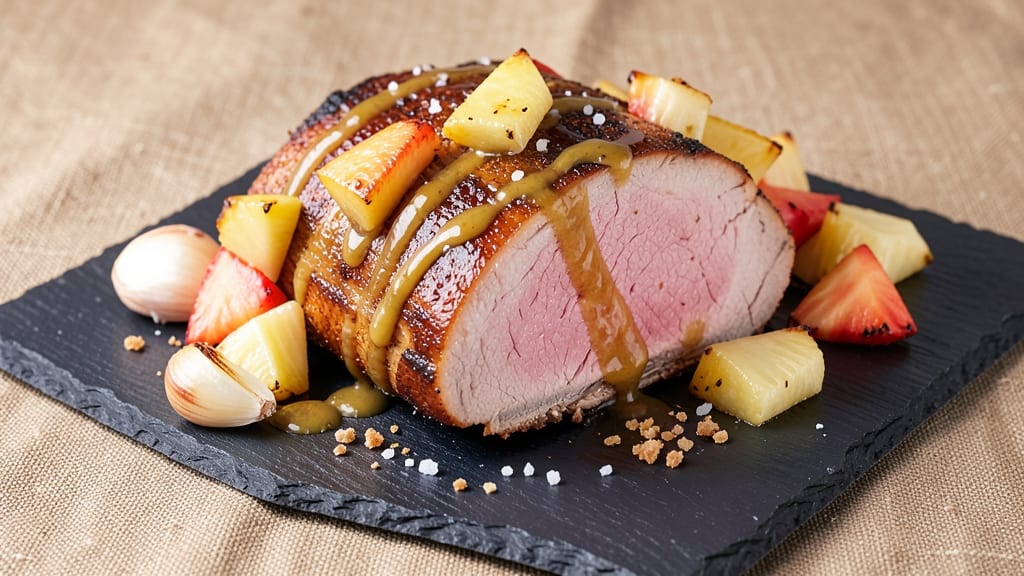
This pork loin roast with pineapple recipe transforms a classic centerpiece into a tropical masterpiece—where caramelized glaze meets bright, juicy pineapple in every bite. 🌟 After perfecting this dish for holiday tables at The Smoky Pig, I’ve refined the technique to ensure tender, golden pork with a glaze that’s sticky-sweet without overpowering the meat’s natural richness.
The key? A slow roast with frequent basting, balanced by fresh pineapple chunks that add a refreshing contrast.
The process begins with a simple marinade of garlic, mustard, and a touch of brown sugar, which tenderizes the pork while building depth of flavor. As it roasts, I baste it generously with a homemade glaze—equal parts pineapple juice and honey—that caramelizes beautifully into a glossy finish.
The pineapple isn’t just for flavor; it’s a textural game-changer, offering bursts of juicy sweetness that cut through the richness of the pork.
By the time it’s done, you’ll have a restaurant-quality roast with crisp edges, tender meat, and a glaze that’s perfectly balanced—sweet, tangy, and just slightly sticky. The pineapple adds a vibrant touch that makes this dish feel special, whether you’re serving it for a holiday feast or a weeknight dinner.
Pair it with roasted sweet potatoes or a simple green salad to round out the meal.
What sets this apart is the technique: no shortcuts, just a method that delivers foolproof results every time. The slow roast ensures the pork stays juicy, while the glaze develops rich caramel notes that tie everything together.
It’s the kind of dish that impresses guests but doesn’t require hours in the kitchen—just patience and attention to detail.
Ingredients for pork loin roast with pineapple
Restaurant-quality pork meets tropical sweetness with these carefully chosen ingredients.
| Ingredient | Amount | Notes |
|---|---|---|
| Boneless Pork Loin Roast 🥩 | 3 lb | Center-cut for even cooking |
| Fresh Pineapple Chunks 🍍 | 2 cups | Fresh or frozen, no sugar added |
| Garlic Cloves 🧄 | 6 cloves | Fresh, peeled and minced |
| Yellow Mustard 🍯 | ¼ cup | Dijon preferred for depth |
| Brown Sugar 🍚 | ¼ cup | Light or dark, packed |
| Fresh Pineapple Juice 💧 | 1 cup | No pulp, freshly squeezed |
| Honey 🍯 | ¼ cup | Wildflower preferred |
| Olive Oil 🫒 | ⅛ cup | Extra-virgin for richness |
| Fresh Rosemary 🌿 | ¼ cup | Chopped, fresh preferred |
| Salt 🧂 | 1 ½ tsp | Diamond Crystal kosher |
| Black Pepper 🌶️ | 1 tsp | Freshly ground |
| Balsamic Vinegar 🍶 | 1 tbsp | For glaze depth |
| Fresh Thyme Leaves 🌿 | ⅛ cup | Chopped, fresh preferred |
The pork loin is the foundation—center-cut ensures tender, even cooking. Whole Foods or Costco carry excellent quality, but any reputable butcher will have it trimmed and ready. Look for good marbling and vibrant color; avoid pale or overly dry cuts. The pineapple should be ripe but firm—Dole or Del Monte brands are reliable for freshness, or opt for frozen if fresh isn't available. Fresh pineapple juice is non-negotiable for the glaze; bottled versions lack the bright acidity needed to balance the honey.
No Dijon mustard? Whole-grain mustard thinned with water works in a pinch, though it lacks the same depth. Substitute brown sugar with white sugar if needed, but the molasses notes in brown sugar caramelize beautifully. For the glaze, agave nectar can replace honey at a 1:1 ratio, though it lacks the floral complexity. Fresh herbs are ideal, but dried rosemary at one-third the amount suffices if fresh isn't available. The balsamic vinegar adds a tangy richness—aged balsamic glaze can be used sparingly for extra depth, but reduce the amount by half to avoid overpowering.
The pork roast should rest 15-20 minutes after cooking before slicing—this ensures juices redistribute for maximum tenderness. Store leftovers in an airtight container for up to 4 days in the fridge, though the glaze may dry slightly. For longer storage, freeze portions for up to 3 months. The pineapple chunks can be prepped ahead and stored separately; toss them in a bit of lemon juice to prevent browning. This dish reheats beautifully—low and slow in a covered pan with a splash of water preserves moisture and flavor.
Why You'll Love This Recipe
- Five-Ingredient Magic: I swear by this combo—garlic, mustard, and brown sugar create a glaze that caramelizes into something ridiculously good. The pineapple adds that sweet-tart punch that cuts through the richness of the pork, making every bite feel like a little vacation.
- One-Pan, Zero Stress: Honestly, this is my go-to when I need dinner on the table fast. Toss the pork and pineapple on a sheet pan, drizzle that mustard-sugar glaze, and let the oven do the work. No chopping boards, no extra dishes—just clean-up that takes less time than waiting for takeout.
- Weeknight to Weekend: Between us, this roast works everywhere. Weeknight dinners? Check. BBQ spread for 20 people? Also check. Even my picky teenage nephew doesn’t complain when it’s on the menu—because that crispy edge with the creamy center? Chef’s kiss.
- Leftovers That Don’t Suck: I make this intentionally extra because the leftovers are just as good cold or reheated. Slice it for sandwiches, toss it into fried rice, or just eat it straight from the fridge—it’s the kind of meal that turns into three more days of effortless lunches. (Yes, even on a Tuesday.)
Step-by-step instructions for pork loin roast with pineapple glaze
This method delivers perfectly tender pork with a caramelized pineapple glaze that balances sweet and savory notes.
👨🍳 Step 1: Prepare the Pork and Herb Rub
Pat the 3 lb boneless pork loin roast completely dry with paper towels—this is critical for that crisp exterior. Place it on a cutting board and make shallow cuts in a diamond pattern across the surface. This helps the marinade penetrate more deeply.
In a small bowl, combine 0.25 cup fresh rosemary, 0.125 cup fresh thyme leaves, 1.5 tsp salt, and 1 tsp black pepper. Rub this mixture all over the pork, pressing firmly so the herbs adhere. Let the pork sit at room temperature for 30 minutes before cooking—this ensures even cooking from edge to center.
🔥 Step 2: Sear the Pork for Maximum Flavor
Heat a large oven-safe skillet over medium-high heat and add 0.125 cup olive oil. Once shimmering, carefully place the pork in the skillet, fat-side down. Sear for 4-5 minutes until a deep golden crust forms. Flip and sear the other side for another 4-5 minutes. You want that crust—it's what locks in moisture and adds texture.
Transfer the skillet to a preheated 400°F oven (make sure your oven is fully preheated first). Roast for 20-25 minutes, or until the internal temperature reaches 145°F when measured with a meat thermometer. The pork should feel firm to the touch but still yield slightly to gentle pressure.
🥘 Step 3: Create the Pineapple Glaze
While the pork roasts, combine 1 cup fresh pineapple juice, 0.25 cup honey, 0.25 cup brown sugar, 0.25 cup yellow mustard, 6 cloves minced garlic, and 1 tbsp balsamic vinegar in a saucepan. Bring to a simmer over medium heat, then reduce to low and let it cook for 8-10 minutes, stirring occasionally, until it thickens slightly and coats the back of a spoon.
Add 2 cups fresh pineapple chunks to the glaze and simmer for another 3-4 minutes until the pineapple softens slightly but still retains some texture. The mixture should reduce enough to coat the back of a spoon but remain pourable—this ensures a glossy finish on the pork.
🍳 Step 4: Glaze and Finish the Pork
Remove the pork from the oven and pour the pineapple glaze evenly over the top. Return it to the oven for 5-7 minutes to let the glaze caramelize slightly and form a sticky, glossy coating. Watch closely—the glaze should turn a deep amber color, indicating it's ready.
Let the pork rest for 10-15 minutes before slicing. This resting period allows the juices to redistribute, ensuring each slice stays moist and flavorful. The glaze will thicken further as it cools, creating a perfect balance of sweet, tangy, and herby notes with every bite.
Pro Tips For Making Pork Loin Roast With Pineapple
- USE A MEAT THERMOMETER: I learned this the hard way—pork loin looks done long before it actually is. Bury that probe into the thickest part (no fat, just muscle) and pull it at 145°F internal temp. The carryover cooking will push it to 150°F, and you’ll avoid dry, overcooked meat that’s still pink inside.
- BRINE THE PINEAPPLE: Fresh pineapple stays watery when caramelized. Toss chunks in 1/4 cup salted water (1 tsp salt per cup) for 10 minutes, then drain. This firms them up and makes the brown sugar glaze stick like glue—no more soggy fruit drowning in sauce.
- SEAR THE PORK FIRST: Skip the slow start. Get your skillet screaming hot and sear the pork loin on all sides for 3-4 minutes per side before roasting. That crust locks in flavor and keeps the mustard-browned-sugar glaze from turning into a sad, thin drizzle instead of a sticky, caramelized crust.
- SAVE THE GARLIC JUICE: After mincing your garlic, don’t toss the liquid—it’s packed with flavor. Add it to the mustard-brown sugar glaze before brushing it on the pork. That extra umami punch makes the difference between "meh" and "wow," and it’s free. (Yes, even if you’re impatient like me.)
Wine and beer pairings for these flavors
White Wine Pairings
For this tropical pork dish, I reach for a crisp, aromatic white wine that complements the pineapple’s brightness without clashing. A Sauvignon Blanc from New Zealand—like Kim Crawford or Oyster Bay—is my go-to.
Its citrusy notes and herbal undertones mirror the rosemary and thyme in the pork, while the acidity cuts through the honeyed glaze beautifully. Serve it slightly chilled (45-50°F) to enhance its refreshing qualities. 🍷
Rosé Wine Balance
If you prefer something with a touch more body, a dry rosé from Provence or California works wonders. Look for Whispering Angel or Miraval—their strawberry and citrus notes harmonize with the pineapple while standing up to the pork’s richness.
The slight pink hue even echoes the dish’s tropical vibrancy. Chill to 50-55°F for optimal sipping.
Beer Options
A Belgian witbier like Hoegaarden or Stella Artois brings a crisp, citrusy contrast that cleanses the palate between bites. The coriander and orange peel notes complement the pineapple beautifully, while the effervescence balances the dish’s sweetness.
For a darker option, try a honey-brown ale—like Samuel Smith’s Nut Brown Ale—which adds caramel depth that pairs with the glaze’s caramelized notes.
Cocktail Pairing
For a festive touch, serve a Pineapple Rum Punch alongside the roast. Mix 2 oz white rum, 1 oz fresh pineapple juice, ½ oz lime juice, and ½ oz honey syrup (equal parts honey and hot water).
Garnish with a pineapple wedge and rosemary sprig. The rum’s warmth and the pineapple’s sweetness echo the dish’s flavors while adding a festive vibe. 🍹
Non-Alcoholic Pairings
Don’t overlook non-alcoholic options! A sparkling pineapple spritzer—made with chilled pineapple juice, sparkling water, and a squeeze of lime—mirrors the dish’s tropical theme.
For something bolder, try a hibiscus iced tea with a hint of honey, which complements the rosemary and caramelized glaze without overpowering the pork’s natural flavors.
Nutrition facts
Frequently asked questions
Can I substitute chicken breast for pork loin in this recipe?
While you can technically use chicken breast, it won't yield the same results. Pork loin has a higher fat content that renders beautifully during roasting, creating that perfect crispy exterior. Chicken breast would dry out more quickly and lack the rich, tender texture this recipe relies on. If you must substitute, use bone-in chicken thighs instead—they stay juicier and pair well with the pineapple glaze.
How do I caramelize the pineapple glaze without burning it?
Keep the heat at medium-low once the glaze starts simmering, and stir frequently to prevent sticking. The glaze is ready when it coats the back of a spoon but still has a slight sheen—this usually takes 8-10 minutes. If it thickens too quickly, add 1-2 tablespoons of water or pineapple juice to loosen it. Watching closely during the last 2-3 minutes is key to achieving that perfect caramelized finish.
What's the best way to reheat leftovers without drying out the pork?
Place sliced pork in an oven-safe dish, drizzle with a little pineapple juice or water, cover tightly with foil, and reheat at 300°F for 15-20 minutes. The foil traps moisture while the gentle heat prevents drying. For microwave reheating, use 30-second intervals on medium power, adding a splash of water between each interval. The glaze may thicken further—just warm it briefly on the stove with a splash of water to restore its glossy texture.
Can I make this recipe in a slow cooker?
Yes, but with adjustments. Sear the pork first as directed, then place it in your slow cooker with all glaze ingredients (except pineapple chunks). Cook on Low for 4-5 hours until the pork reaches 145°F. Add pineapple chunks during the last 30 minutes to prevent overcooking. The glaze will be thinner—reduce it on the stove afterward to achieve the same consistency. The texture will be more tender than roasted but equally flavorful.
Why is my pork loin roast coming out dry?
Overcooking is the most common culprit—pork loin dries out quickly once it hits 160°F. Always use a meat thermometer and remove it at 145°F. Another issue is skipping the rest time—juices need 10-15 minutes to redistribute after cooking. For extra moisture, try brining the pork for 1 hour before cooking (use 1/4 cup salt per 4 cups water), or add 1/2 cup chicken broth to the glaze mixture.