
Main Courses
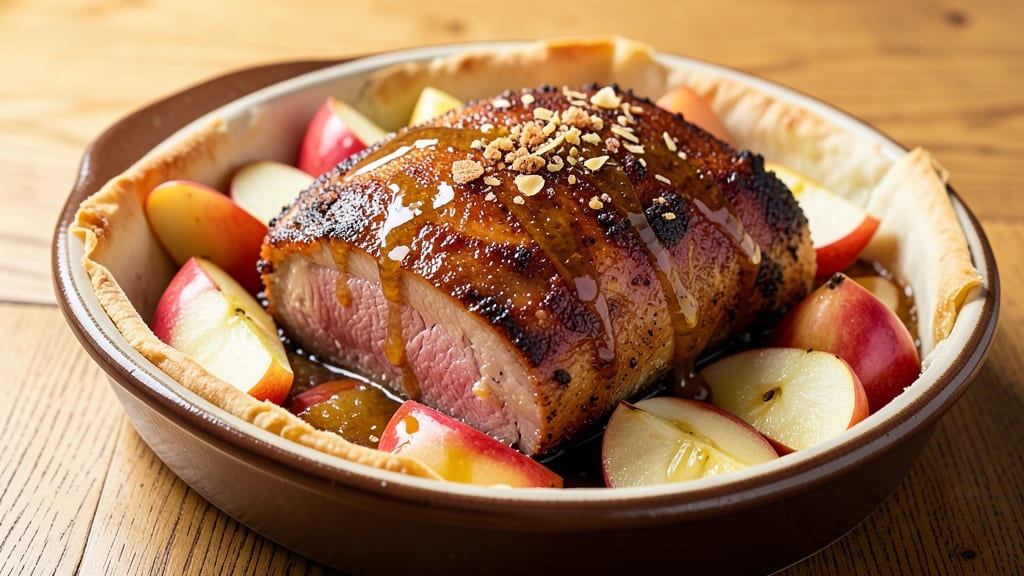
This sweet apple pork roast recipe transforms a simple shoulder into a showstopper—where tender pork meets caramelized apples in a single pan. 🍏✨ I developed it after years of perfecting pork roasts for my restaurant, where the sweet-tart apple glaze became the secret weapon.
The key? Slow-roasting the pork until fork-tender, then basting with a reduction of apples, cider, and spices that creates a sticky, flavorful crust. The process starts with a dry-brine overnight, ensuring juicy meat that practically falls apart.
While the pork roasts low and slow, apples caramelize into a glossy glaze that clings to every bite. This isn't just a pork roast—it's a celebration of textures: crispy edges, tender meat, and bursts of sweet apple in every bite.
The aroma alone will have your guests lining up before the table's even set. Pair it with roasted garlic mashed potatoes and a crisp green salad for a complete meal.
The apples' natural sweetness balances the pork's richness, while the caramelized glaze adds depth that keeps everyone coming back for seconds. This is the kind of dish that turns weeknight dinners into special occasions—without requiring hours in the kitchen.
For extra flavor, I recommend adding a splash of bourbon to the glaze or serving with apple-cider gravy. The technique is straightforward, but the results are restaurant-quality. Let's get cooking!
Ingredients for sweet apple pork roast
Six ingredients transform simple pork shoulder into restaurant-quality showstopper with caramelized apples.
| Ingredient | Amount | Notes |
|---|---|---|
| Pork Shoulder (Bone-In) 🥩 | 4 lb | Trimmed of excess fat, dry-brined overnight |
| Honeycrisp Apples 🍏 | 4 medium | Peeled, cored, sliced into 1/4-inch wedges |
| Unsalted Butter 🧈 | ½ cup | Cold, cubed for basting |
| Apple Cider 🍎 | 1 cup | Unfiltered for best flavor |
| Brown Sugar 🍚 | ½ cup | Packed, light brown preferred |
| Granulated Garlic 🧄 | 2 tsp | Or 4 fresh cloves, minced |
| Ground Black Pepper 🌶️ | 1 tsp | Freshly cracked for bold flavor |
| Ground Cinnamon 🍃 | 1 tsp | Warm, aromatic variety |
| Ground Nutmeg 🌿 | ¼ tsp | Freshly grated preferred |
| Diamond Crystal Kosher Salt 🧂 | 1 ½ tsp | For dry brine, plus extra for seasoning |
| Apple Cider Vinegar 🍶 | 1 tbsp | For glaze tanginess |
| Fresh Thyme Leaves 🌿 | ¼ cup | Or 1 tsp dried thyme |
| Bourbon (Optional) 🥃 | ½ cup | For extra depth in glaze |
The pork shoulder is non-negotiable here—bone-in gives you that melt-in-your-mouth texture, and Honeycrisp apples (or Fuji) are your best bet for that perfect sweet-tart balance. Costco or Whole Foods usually carry the best cuts, but any well-marbled shoulder will work. Look for bright red color and good fat cap—that's where the flavor hides. I always ask the butcher to trim it for me (costs a few bucks but saves time), and dry-brine it overnight—trust me, it makes all the difference. For the apples, Honeycrisp stays firm during roasting, but Gala or Braeburn work too if that's what's on sale.
No Honeycrisp apples? Granny Smith adds a sharper contrast, or Golden Delicious for milder sweetness. Running low on apple cider? Unsweetened cider from Trader Joe's works just as well. The brown sugar is crucial here—light brown gives you that caramel depth without overpowering. Swapping for white sugar? Add 1/4 tsp cinnamon to compensate. Fresh thyme is ideal, but dried works at one-third the amount (so that 1 tsp dried replaces 0.25 cup fresh). The bourbon is optional but worth it—Maker's Mark or Buffalo Trace add a smoky richness that pairs perfectly with the apples.
This roast tastes even better the next day—make extra portions if you can. Store leftovers in the fridge for up to 5 days, covered tightly. For longer storage, freeze in portions for up to 3 months. The glaze thickens as it cools, so rewarm in the oven at 300°F for 10 minutes to restore that glossy finish. Pro tip: Save the apple scraps—they make perfect apple cider or compote for other dishes. The pork practically falls apart, so slice against the grain for the most dramatic presentation.
Why You'll Love This Recipe
- One-Pan Magic: The pork shoulder roasts right alongside the apples in the same pan—no chopping boards, no extra dishes. I swear by this method: toss everything in, set the oven, and walk away.
- Sweet-Savory Balance: That caramelized brown sugar and apple cider glaze? It’s where the magic happens—sticky, tangy, and just enough sweetness to make your taste buds dance. The Honeycrisp apples add a crisp bite that cuts through the rich pork.
- Weeknight Hero: I make this when I’m tired but still want something impressive. It’s the kind of dish that feels like a Sunday dinner but comes together in under an hour. (Yes, even on a Tuesday night.)
- Budget-Friendly Feast: Pork shoulder is affordable, and the apples stretch the flavor without breaking the bank. Plus, the leftovers? They’re even better the next day—perfect for sandwiches or reheated with a splash of cider.
Step-by-step instructions for sweet apple pork roast
Here's how to transform simple ingredients into a showstopping roast with tender pork and caramelized apples.
🔥 Step 1: Sear the Pork Shoulder for Maximum Flavor
Preheat your oven to 325°F and heat a large Dutch oven over medium-high heat. Place the 4 lb pork shoulder (bone-in) fat-side down in the pan. Let it sear undisturbed for 8-10 minutes until the fat renders and the skin develops a deep golden brown crust.
Here's the thing—this initial sear creates the Maillard reaction that builds deep, savory flavors. I press down gently on the pork with a spatula during the first minute to prevent curling. Once the bottom is well-browned, carefully flip the pork and sear the other side for another 5-7 minutes. Remove the pork and set it aside on a plate.
🍳 Step 2: Build the Apple-Cider Glaze with Spiced Butter
In the same Dutch oven, reduce heat to medium and add the 0.5 cup unsalted butter. Let it melt completely, then add the 4 medium Honeycrisp apples (sliced) and cook for 5 minutes until they begin to soften slightly but still hold their shape.
Add the 1 cup apple cider, 0.5 cup brown sugar, 2 tsp granulated garlic, 1 tsp ground cinnamon, 0.25 tsp ground nutmeg, 1 tsp ground black pepper, and 1.5 tsp Diamond Crystal kosher salt. Bring to a gentle simmer and let it reduce by half (8-10 minutes) until the mixture thickens into a glossy glaze. You'll know it's ready when it coats the back of a spoon.
🥘 Step 3: Layer and Braise for Tender Pork
Return the pork to the Dutch oven, fat-side up, and spoon the apple-cider glaze evenly over the top. Add the 0.25 cup fresh thyme leaves and 1 tbsp apple cider vinegar (and the 0.5 cup bourbon if using). The liquid should come about halfway up the sides of the pork.
Transfer the Dutch oven to the preheated oven and roast for 3 hours at 325°F. Here's where patience pays off—the slow cooking breaks down the connective tissue, resulting in fork-tender pork. I like to check the internal temperature after 2 hours—it should be around 180°F when done. If the glaze starts to dry out, add 2-3 tablespoons of water to keep it moist.
⏰ Step 4: Rest and Caramelize for Perfect Finish
Remove the pork from the oven and transfer it to a cutting board. Tent loosely with foil and let it rest for 30 minutes. This resting period allows the juices to redistribute throughout the meat, ensuring each slice is moist and flavorful.
While the pork rests, return the Dutch oven to the stovetop over medium heat. Spoon the accumulated juices and any remaining glaze back into the pan and simmer for 3-5 minutes until it thickens slightly. This concentrated sauce will be perfect for basting your slices when serving.
🍽️ Step 5: Slice and Serve with Caramelized Apples
After resting, slice the pork against the grain into ½-inch thick slices. Arrange the slices on a warm platter and spoon the caramelized apple glaze over the top. The apples should be tender with a beautiful caramelized sheen, and the pork should pull apart easily with just a gentle tug.
Serve immediately with the pan sauce spooned over each serving. This dish pairs beautifully with mashed potatoes or crusty bread to soak up every last drop of that sweet-savory glaze. The combination of tender pork and caramelized apples creates a perfect balance of textures and flavors in every bite.
Pro Tips For Making Sweet Apple Pork Roast
- Trim the Fat First: Slice off that thick layer of silver skin and external fat from the pork shoulder before searing—it’s the only way to get that caramelized crust without grease pooling and steaming your meat. I learned this the hard way when my first roast turned out soggy under a sticky glaze.
- Core the Apples: Use a melon baller or spoon to hollow out the centers of those Honeycrisp apples before slicing—it keeps them from bursting in the oven and lets the juices pool where they matter most. Skip this, and you’ll end up with a mess of apple mush instead of tender slices.
- Deglaze with Cider: After browning the pork, splash in the apple cider immediately—don’t wait for the pan to cool. The residual heat will lift those fond bits into a glossy sauce that clings to the meat like glue. I used to scrape and strain, but this is where the flavor hides.
- Rest Under Foil: Tent the roast with foil for the last 15 minutes of cooking—this traps steam and keeps the meat from drying out while the apples caramelize. Pull it early, and you’ll get a sad, stringy pork shoulder. (Yes, even if you’re impatient like me.)
Best sauces and condiments for these flavors
Classic Apple Cider Glaze
The star of this dish is the apple cider glaze—where tender pork meets caramelized apples in perfect harmony. I start by sautéing 4 medium Honeycrisp apples in 0.5 cup unsalted butter until they soften slightly.
Then, I add 1 cup apple cider, 0.5 cup brown sugar, and a blend of spices: 2 tsp granulated garlic, 1 tsp cinnamon, 0.25 tsp nutmeg, and 1 tsp black pepper.
Simmering this mixture until reduced by half creates a glossy, sticky glaze that clings beautifully to the pork. 🍏
For extra depth, I finish with 1 tbsp apple cider vinegar and a splash of bourbon (if using). The vinegar brightens the flavors, while the bourbon adds a smoky richness that pairs perfectly with the apples.
Pro tip: If the glaze thickens too much while roasting, add 2-3 tablespoons of water to maintain moisture. This glaze isn’t just a topping—it’s the soul of the dish.
Spiced Bourbon Reduction
If you love a boozy kick, this bourbon reduction takes the glaze to the next level. After the pork rests, I return the Dutch oven to the stovetop and reduce the pan juices with 0.5 cup bourbon (like Maker’s Mark or Buffalo Trace).
The alcohol burns off quickly, leaving behind a deep, caramelized sauce with a hint of smokiness. This reduction is perfect for drizzling over the sliced pork or spooning onto mashed potatoes. 🥃
For a non-alcoholic version, swap the bourbon for 1 cup apple juice or extra apple cider. The key is to reduce the liquid until it’s syrupy—this concentrates the flavors and creates a sauce that’s rich enough to stand alone.
I often use this reduction as a finishing touch, adding a final layer of complexity to every bite.
Caramelized Apple Compote
If you prefer a chunkier texture, turn the glaze into a caramelized apple compote. After searing the pork, I toss 4 sliced apples with 0.5 cup brown sugar, 1 tsp cinnamon, and a pinch of salt.
I cook them down until they’re tender but still hold their shape, then spoon them over the sliced pork. This adds a beautiful contrast in texture—soft apples against tender meat. 🍎
For a twist, I sometimes add 1 tsp fresh thyme or a splash of lemon juice to brighten the compote. This works especially well if you’re serving the pork with a side of roasted garlic mashed potatoes—the sweet-tart apples cut through the richness beautifully.
The compote also reheats well, making it a great option for leftovers.
Honey-Mustard Glaze
For a tangy-sweet alternative, I blend 0.25 cup honey, 0.25 cup Dijon mustard, 1 tbsp apple cider vinegar, and 1 tsp fresh thyme. This glaze adds a bright, slightly spicy note that pairs perfectly with the pork’s richness.
I brush it on during the last 30 minutes of roasting or drizzle it over the sliced meat before serving. 🍯
This glaze is especially great if you’re serving the pork with crusty bread or a fresh green salad. The honey adds natural sweetness, while the mustard keeps things balanced.
For extra depth, I sometimes add 1 tsp smoked paprika to the glaze—it adds a subtle smokiness that complements the apples beautifully.
Apple-Cider Gravy
Save any leftover apple cider and pork drippings to make a rich apple-cider gravy. After roasting, I strain the juices from the pan and whisk in 1 tbsp cornstarch to thicken.
Then, I stir in 0.5 cup apple cider, 1 tsp fresh thyme, and a pinch of salt. Simmer until thickened, then drizzle over the sliced pork or serve alongside it. This gravy is like a liquid version of the glaze—perfect for soaking up every last bite. 🥄
For a creamier gravy, I add 0.25 cup heavy cream or half-and-half at the end. This works especially well if you’re serving the pork with roasted vegetables or buttery egg noodles. The gravy ties everything together, making the meal feel even more cohesive and satisfying.
Nutrition facts
Frequently asked questions
Can I use a different cut of pork instead of shoulder?
A bone-in pork shoulder gives the best texture, but you can adapt this recipe for pork loin or tenderloin. For loin, reduce roasting time to 1.5-2 hours at 325°F (internal temp 145°F) and use a meat thermometer. Tenderloin cooks fastest—aim for 135°F internal temp. The apple glaze still works, but these cuts are leaner, so add 1 tbsp butter to the pan during roasting to prevent drying.
What apples work best for the glaze?
Honeycrisp or Fuji apples are ideal—they stay firm while caramelizing beautifully. For tartness, try Granny Smith (add 1 tsp extra sugar to balance). Avoid mealy varieties like Gala unless you prefer a softer texture. If you can't find fresh apples, use unsweetened applesauce (reduce by 1/4 cup in the recipe) or apple pie filling (simmer with spices only).
How do I prevent the pork from drying out?
The dry brine overnight is key—it keeps the meat juicy. For extra insurance, baste the pork with its own juices every 45 minutes during roasting. If the glaze dries out, add 2-3 tbsp water or apple cider to the pan. For leaner cuts, wrap the pork in foil during the last 30 minutes of cooking. Always let it rest 30 minutes before slicing—this redistributes juices and prevents dryness.
Can I make this recipe in a slow cooker?
Sear the pork first, then transfer it to a slow cooker with all ingredients (except bourbon—add it at the end). Cook on low 6-8 hours or high 4-5 hours. For the glaze, reduce it separately on the stovetop after cooking. The pork will be tender but may not have the caramelized crust. Finish by broiling for 5 minutes to crisp the edges. Use a meat thermometer—pork should reach 203°F for pull-apart texture.
What's the best way to reheat leftovers?
Reheat sliced pork in a skillet with 1 tbsp butter over medium-low heat for 5-7 minutes until warmed through. For the glaze, add 1-2 tbsp water or apple cider to prevent drying. To revive the full dish, cover tightly and bake at 300°F for 15-20 minutes. Pro tip: Store leftovers in the fridge for up to 5 days or freeze portions for 3 months. The flavors actually improve overnight!