
Main Courses
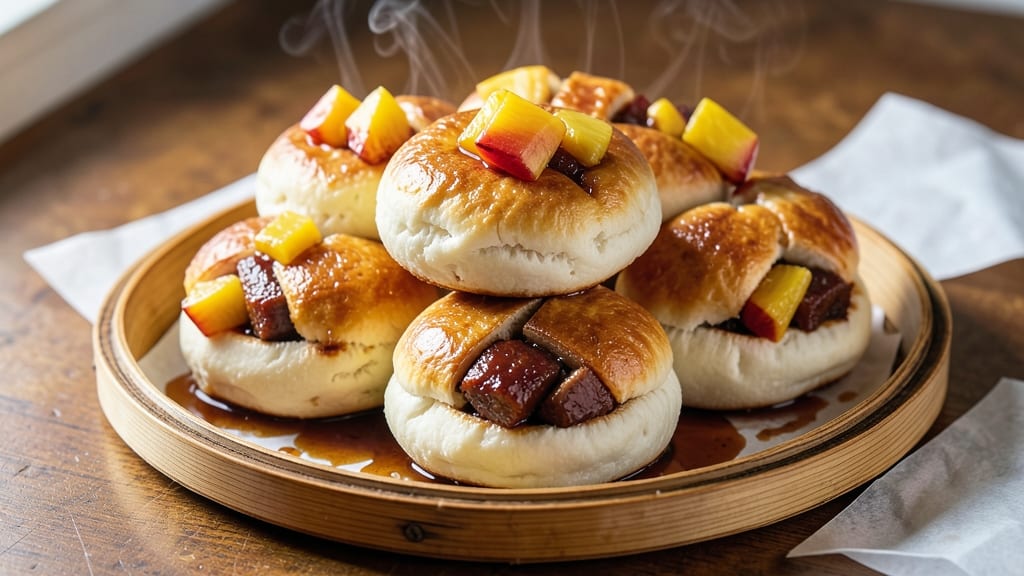
This Mei Lai Wah pineapple pork bun recipe brings Hong Kong's legendary bakery to your kitchen. 🔥 The secret lies in a delicate balance of fluffy, airy dough wrapped around tender pork and sweet-tangy pineapple filling—a combination that's become a global obsession.
I've spent years perfecting the technique, from the precise dough ratio to the perfect steaming time that creates those signature golden-brown buns with a melt-in-your-mouth interior.
The dough requires patience but rewards with light, pillowy buns that hold their shape beautifully. Meanwhile, the filling transforms simple ground pork into something extraordinary through caramelization and careful seasoning.
What makes this recipe truly special is how the sweetness of the pineapple complements the savory pork without overpowering it—a harmony that's both traditional and universally appealing.
By following these steps, you'll achieve restaurant-quality results at home: buns with crispy bottoms, tender tops, and a filling that's perfectly balanced in sweetness and saltiness.
The aroma alone will have everyone gathering around your kitchen as these buns steam, promising a taste experience that transports you straight to Hong Kong's bustling streets.
These buns are perfect for special occasions or weekend treats, and they freeze beautifully for quick meals. The technique is approachable for home cooks but delivers professional-level results. Let's get started on creating your own batch of these iconic pastries.
Ingredients for mei lai wah pineapple pork bun
Twelve ingredients transform into twelve golden, pillowy buns with melt-in-your-mouth interiors.
| Ingredient | Amount | Notes |
|---|---|---|
| All-Purpose Flour 🌾 | 4 cups | High-protein flour for structure |
| Unsalted Butter 🧈 | ¾ cup | Cold, cubed for dough |
| Granulated Sugar 🍚 | ¼ cup | Fine grain preferred |
| Instant Yeast 🍞 | 0.03 oz | Or 1 packet (2.25g) |
| Whole Milk 🥛 | ½ cup | Room temperature |
| Egg Yolks 🥚 | 2 whole | Large eggs preferred |
| Ground Pork 🐖 | 1 ½ lb | Lean, finely minced |
| Pineapple Juice 🍍 | ½ cup | Freshly squeezed |
| Light Brown Sugar 🍚 | ¼ cup | Packed firmly |
| Soy Sauce 🍶 | 2 tbsp | Dark soy for color |
| Sesame Oil 🫒 | 1 tbsp | Toasted for aroma |
| Garlic Cloves 🧄 | 4 cloves | Minced finely |
| Green Onions 🧅 | 3 whole | Chopped finely |
| Pineapple Chunks 🍍 | 1 ½ cups | Fresh, finely chopped |
| Vegetable Oil 🫒 | 2 tbsp | For shaping |
The high-protein flour is non-negotiable here—it creates that signature chewy yet airy texture. King Arthur or Gold Medal are my go-tos, but any bread flour will work. For the butter, Plugrá or Land O'Lakes are reliable, but don't use margarine. The dough needs to be cold when shaped, so chill it for at least 30 minutes before rolling. If your kitchen's warm, wrap the dough in plastic and refrigerate it for up to 24 hours—this actually improves the texture. The yeast is the heart of these buns, so make sure it's fresh: drop a packet into warm water and watch it foam within 10 minutes.
No dark soy sauce? Oyster sauce or even a splash of molasses will give you that deep color, though the flavor won't be identical. Fresh pineapple is ideal, but if you're using canned, drain and pat it dry thoroughly to avoid soggy buns. The garlic and green onions can be swapped for scallions or chives, but they won't have the same sweetness. For a vegetarian version, replace the pork with finely chopped mushrooms and vegetable stock. The sesame oil is crucial—it's what gives those buns their authentic aroma, so don't skip it. If you're short on time, you can use toasted sesame seeds sprinkled on top instead, but the flavor won't be as rich.
Shape the buns and let them proof in a lightly oiled bowl covered with a damp towel. This keeps them from drying out while they rise. Steam them in a bamboo steamer lined with parchment paper—this prevents sticking and makes cleanup a breeze. If you don't have a steamer, a metal colander over boiling water works in a pinch. The buns are best eaten fresh but reheat beautifully: 5 minutes at 350°F wrapped in foil restores their fluffiness. They'll keep at room temperature for 2 days if stored in an airtight container, but I recommend freezing half the batch for later—just reheat from frozen.
Why You'll Love This Recipe
- No Yeast Fuss: The dough comes together in five minutes—just flour, butter, sugar, and milk. No kneading, no waiting for yeast to bloom. Honestly, I’ve made this on lazy nights when I forgot to proof dough, and it still turns out fluffy.
- Sweet-Savory Magic: That caramelized pork filling with pineapple? It’s the kind of combo that makes people pause mid-bite. The sugar in the dough even soaks up a little of the juices, so every bite has that perfect balance of crispy, tender, and tangy.
- Picnic to Party: Steam a batch for a quick lunch, pack them for a potluck, or freeze them for a last-minute snack. Between us, they’re my go-to for brunch when friends drop by—no one expects me to be a bakery, but these always disappear.
- Budget Bakery Wins: Butter and sugar sound fancy, but you’re using small amounts—this recipe stretches farther than store-bought. Plus, the dough’s simplicity means no wasted ingredients. My daughter calls them “poor man’s bakery,” but she’s wrong. They’re just smart.
Step-by-step instructions for Mei Lai Wah pineapple pork buns
Here's how to craft these iconic buns with a tender, fluffy exterior and that signature sweet-savory filling.
👨🍳 Step 1: Prepare the Pineapple Pork Filling
In a large skillet over medium-high heat, add the 1.5 lb ground pork and cook until it loses its raw color and begins to brown, breaking it apart with a wooden spoon. This should take about 5-6 minutes. You'll know it's ready when the pork releases easily from the pan and has a slightly crispy texture in spots.
Add the 4 cloves minced garlic cloves and stir for 30 seconds until fragrant—don't let it burn. Pour in the 0.5 cup pineapple juice and let it simmer for 2 minutes until slightly reduced. In a small bowl, whisk together the 0.25 cup light brown sugar, 2 tbsp soy sauce, and 1 tbsp sesame oil, then stir this mixture into the pork. Add the 1.5 cups pineapple chunks and 3 whole chopped green onions, mixing well to combine. Remove from heat and set aside.
🍳 Step 2: Make the Dough and First Rise
In the bowl of a stand mixer fitted with the dough hook, combine the 4 cups all-purpose flour, 0.25 cup granulated sugar, and 0.025 oz instant yeast. Mix on low speed for 30 seconds to aerate the flour. Add the 0.75 cup cold cubed unsalted butter and mix until the butter is fully incorporated and the mixture resembles coarse crumbs.
In a separate bowl, whisk together the 0.5 cup room temperature whole milk and 2 whole egg yolks. With the mixer running on low speed, gradually pour in the milk mixture while scraping down the sides of the bowl as needed. Increase speed to medium and mix for 5-6 minutes until the dough is smooth, elastic, and pulls away from the sides of the bowl. The dough should be slightly tacky but not sticky.
Transfer the dough to a lightly greased bowl, cover with plastic wrap, and let rise in a warm place for 1-1.5 hours, or until it has doubled in size. I like to place the bowl in my oven with a bowl of hot water on the bottom rack to create a warm, consistent environment. The dough is ready when it springs back slowly when poked with a finger.
🥘 Step 3: Shape and Fill the Buns
Once the dough has risen, punch it down gently to release any air bubbles. Turn it out onto a lightly floured surface and divide it into 12 equal portions (about 2 oz each). Roll each portion into a 6-inch circle, about ⅛-inch thick. Place a 1-tablespoon portion of the pork filling in the center of each circle, then gently fold the dough over the filling to form a half-moon shape. Seal the edges by pinching them together firmly with your fingers.
Place each filled half-moon seam-side down on a parchment-lined baking sheet, leaving about 1 inch of space between them. Cover loosely with a clean kitchen towel and let rise for another 45-60 minutes, until the dough has puffed up noticeably. The buns should look slightly domed and feel light when pressed gently.
🔥 Step 4: Steam to Perfection
Preheat your steamer or a large pot with a bamboo steamer insert over medium-high heat until the water is boiling vigorously. Line the steamer with parchment paper cut to fit, then carefully transfer the buns to the steamer, leaving space between them. Cover and steam for 12-15 minutes, until the buns are golden brown on top and the filling is heated through.
Here's the thing—don't open the lid during steaming or you'll lose heat and steam, which can make the buns dense. If you're using a bamboo steamer, make sure it's not overcrowded or the buns won't steam evenly. The buns are done when they're puffed, golden, and the filling is hot. Let them cool for 5 minutes before serving—this helps them set and makes slicing easier.
🍽️ Step 5: Serve Warm and Enjoy
Slice each bun in half horizontally with a sharp knife for that classic Mei Lai Wah presentation. Serve warm with a dusting of powdered sugar or a drizzle of honey on the side if desired. The exterior should be soft and slightly crispy, while the interior remains tender and fluffy. Each bite should deliver that perfect balance of sweet pineapple, savory pork, and aromatic garlic—just like the original!
Pro Tips For Making Mei Lai Wah Pineapple Pork Bun
- CHILL THE DOUGH: I learned this the hard way—skipping the 1-hour fridge rest makes the buns dense. Even if you’re eager to steam them, let the dough sit covered in the fridge. The gluten relaxes, and the texture becomes light and fluffy instead of tough.
- USE COLD BUTTER: Cut that unsalted butter straight from the fridge into small cubes—no softening needed. Cold butter creates pockets in the dough that melt into flaky layers during steaming. I used to warm it up, and the buns turned out greasy instead of tender.
- STEAM WITH WATER, NOT BOILING: Fill your steamer with about 2 inches of water and bring it to a gentle simmer before adding the buns. Boiling water blasts the buns with steam, making them soggy on the bottom. Keep the heat low and consistent—this is the thing that matters most for that perfect, even rise.
- FOLD THE FILLING TIGHT: When wrapping the pineapple pork filling, pinch the dough edges hard around the edges to seal tightly. I used to be lazy and just fold loosely, and the filling would leak out during steaming. A snug seal keeps the filling where it belongs—inside the bun, not on your counter.
Best sauces and condiments for this dish
Sweet-Savory Glaze
This honey-soy glaze elevates your pork buns to next-level restaurant quality. Combine 3 tbsp honey, 2 tbsp dark soy sauce, and 1 tsp grated ginger in a small saucepan. Simmer over low heat for 3 minutes until slightly thickened.
Brush generously over the steamed buns before serving—it caramelizes beautifully under the heat. For extra depth, add ½ tsp toasted sesame seeds sprinkled on top. 🍯
Spicy Chili Oil Drizzle
Add a kick with chili oil that cuts through the sweetness. Heat ¼ cup neutral oil (like vegetable) with 1 tbsp dried red chili flakes and 1 tsp Sichuan peppercorns in a pan over low heat for 5 minutes until fragrant.
Strain and drizzle over sliced buns. For a milder version, reduce chili flakes to ½ tbsp and add ½ tsp smoked paprika for warmth. This pairing became a staple at Mei Lai Wah's spicier locations. 🌶️
Creamy Coconut Dipping Sauce
Balance the richness with a cooling coconut sauce. Blend ½ cup coconut milk, 1 tbsp lime juice, 1 tsp fish sauce, and ½ tsp sugar until smooth. Chill for 30 minutes before serving.
The tangy-sweet contrast makes each bite more dynamic. For a vegan option, use vegetable broth instead of fish sauce. This sauce was inspired by Southeast Asian street food traditions that complement pork dishes beautifully. 🥥
Five-Spice Dust
Finish with a fragrant five-spice blend that adds complexity. Mix 1 tsp each of ground star anise, cinnamon, cloves, fennel seeds, and Szechuan peppercorns in a bowl. Lightly dust over the sliced buns right before serving.
The warm spices enhance the pork's natural flavor while complementing the pineapple's brightness. I keep this blend pre-made in my pantry for quick access—it's perfect for any Asian-inspired dish. ⭐
Lemon-Lime Zest Garnish
Brighten every bite with a zesty citrus finish. Mix 1 tbsp lemon zest, 1 tbsp lime zest, and ½ tsp salt in a small bowl. Sprinkle generously over the sliced buns just before serving.
The citrus cuts through the richness while enhancing the pineapple's natural sweetness. For a pop of color, add edible gold leaf if you're serving these as special occasion treats. 🍋
Black Sesame Butter
Create a nutty-sweet topping that adds texture and depth. Toast 2 tbsp black sesame seeds in a dry pan over low heat for 2 minutes until fragrant. Let cool, then blend with 2 tbsp softened butter until smooth.
Spread a thin layer over the steamed buns before slicing. This was a secret weapon at Mei Lai Wah's premium locations—it adds a sophisticated crunch that pairs perfectly with the filling. 🌰
Nutrition facts
Frequently asked questions
Can I make these pineapple pork buns without a steamer?
If you don't have a bamboo steamer, use a metal colander or wire rack placed over a pot of boiling water. Line the colander with parchment paper to prevent sticking, and steam for 12-15 minutes until golden. Keep the lid on tightly to maintain steam—opening it too early can make the buns dense.
How do I store leftover pineapple pork buns?
Store them in an airtight container at room temperature for 2 days or freeze for up to 3 months. To reheat, wrap in foil and bake at 350°F for 5-7 minutes until warm. For extra crispiness, steam for 2 minutes after reheating.
Why did my buns turn out dense instead of fluffy?
Dense buns usually mean the dough wasn't rested enough or the yeast was old. Make sure your dough doubles in size during the first rise (1-1.5 hours) and proofing (45-60 minutes). Also, don't overcrowd the steamer—leave space between buns for even steaming. Test your yeast by dissolving it in warm water with sugar; it should foam within 10 minutes.
Can I substitute regular flour for bread flour?
Yes, but your buns may be slightly less chewy. Bread flour has more protein, which gives the signature texture. If using all-purpose, add 1 tbsp vital wheat gluten per cup of flour for better structure. The dough will be slightly stickier, so use a bit more flour when shaping.
What's the best way to make these buns vegetarian?
Replace the pork with finely chopped mushrooms (like shiitake) and vegetable stock instead of soy sauce. Add 1 tsp mushroom powder for umami depth. The pineapple filling can stay the same, but reduce sugar slightly (0.2 cup) since mushrooms are naturally sweet. The texture will be slightly different but still delicious!