
Sauces & Condiments
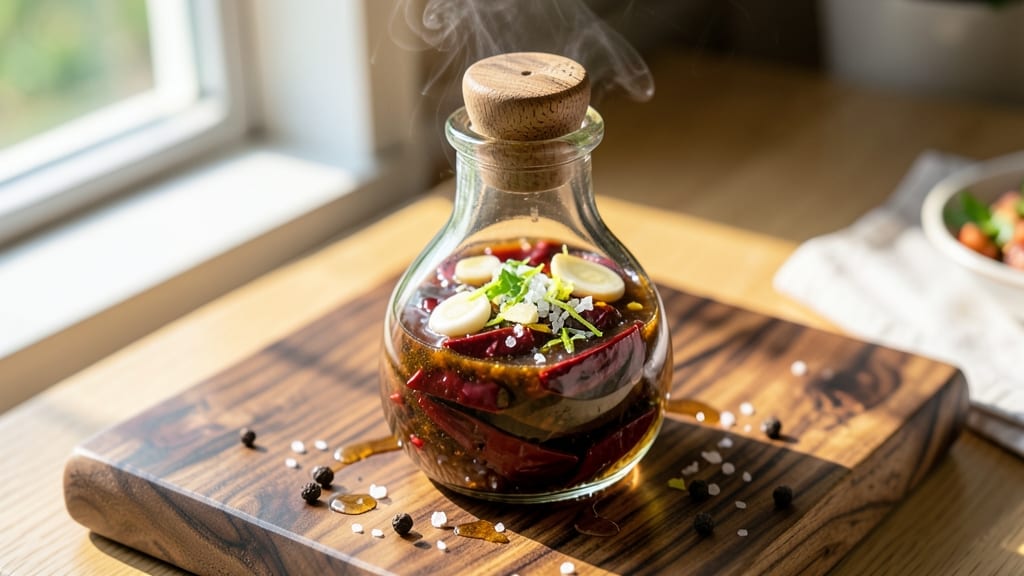
This hot sauce recipe with apple cider vinegar delivers the perfect balance of heat and tang that elevates everything from tacos to grilled meats. The vinegar base creates a bright, acidic foundation that carries the spice beautifully, while a touch of sweetness rounds out the bold flavors.
I developed this recipe after years of experimenting with homemade hot sauces—it’s the one that actually gets used up instead of sitting on the shelf.
The secret lies in the blend of fresh peppers and spices, simmered until their flavors meld into a cohesive, fiery sauce. You’ll start with apple cider vinegar as the backbone, then layer in chili peppers, garlic, and a hint of sweetness from honey or maple syrup.
The result is a versatile condiment that’s tangy enough to cut through richness but never overpowering. This recipe is designed to be adaptable—adjust the heat level to your preference by controlling the pepper quantity.
What you’ll end up with is a smooth, aromatic hot sauce with a vibrant red hue and a depth of flavor that store-bought versions simply can’t match.
The apple cider vinegar adds a subtle fruity note that pairs exceptionally well with smoky meats, creamy dips, or even as a finishing touch on soups. It keeps for months in the refrigerator, so you can make a big batch and enjoy it all season long.
Whether you’re a spice enthusiast or just looking to add some zing to your meals, this hot sauce is a game-changer. The process is straightforward, but the payoff is a condiment that feels like a restaurant-quality secret weapon. Let’s get started—your taste buds will thank you.
Ingredients for hot sauce recipe apple cider vinegar
Nine simple ingredients transform into a tangy, fiery hot sauce that’s restaurant-quality at home.
| Ingredient | Amount | Notes |
|---|---|---|
| Apple Cider Vinegar 🍏 | 1 ½ cups | Raw, unfiltered preferred |
| Fresh Red Chili Peppers 🌶️ | 1 cup | Jalapeños or serranos, chopped |
| Garlic Cloves 🧄 | 4 cloves | Freshly minced for bold flavor |
| Honey 🍯 | ¼ cup | Wildflower or clover variety |
| Salt 🧂 | 1 tsp | Kosher or sea salt |
| Ground Black Pepper 🌶️ | ½ tsp | Freshly cracked for depth |
| Cayenne Pepper 🔥 | ½ tsp | Adjust for heat preference |
| Smoked Paprika 🌶️ | 1 tsp | For smoky complexity |
| Fresh Ginger 🌿 | 1 tbsp | Grated, optional for brightness |
| Water 💧 | ½ cup | For thinning if needed |
The apple cider vinegar is the backbone—Bragg’s or Texas Pete work great, but anything raw and unfiltered adds depth. Fresh peppers are non-negotiable (no canned heat here)—jalapeños or serranos give that bright, crisp bite. I always double-check the vinegar’s age too—older batches taste sharper. For the honey, local wildflower adds subtle floral notes that balance the heat beautifully. The smoked paprika? It’s what turns this from good to ‘wow’—Penzeys or Trader Joe’s have the best quality.
No fresh peppers? Dried chipotle peppers in adobo sauce work in a pinch (soak first), but they’ll add smokiness too. Short on honey? Maple syrup at half the amount keeps things vegan. The cayenne is where you control the heat—start with half a teaspoon, then add more to taste. Want extra tang? Add a splash of lemon juice at the end. The ginger’s optional but worth it—it cuts through the heat and adds a zesty kick that pairs perfectly with the vinegar’s fruitiness.
This sauce thickens as it sits, so shake before each use. Keeps in the fridge for 3-4 months in a clean glass jar—sterilize it first to avoid mold. I make a big batch and gift it away; everyone asks for seconds. For gifting, use amber glass bottles to preserve color and flavor longer. Freezes beautifully too, though texture changes slightly after thawing.
Why You'll Love This Recipe
- No Chopping Needed: Fresh chili peppers? Just toss them whole into the blender—no peeling, no seeding, no mess. The vinegar and honey do all the work while you sip your coffee.
- Sweet Heat Balance: That honey isn’t just for sweetness—it mellows the garlic’s bite and the chili’s punch into something ridiculously smooth. One taste and you’ll understand why I keep a jar in my fridge.
- Pantry Staple Magic: Between us, this uses things you already own. No specialty trips, no wasted ingredients—just vinegar, garlic, and whatever peppers you grab on your way home.
- Lasts Forever: Store it in the fridge for months. Drizzle on eggs, roast veggies, or even toss in salads—it’s the one sauce that makes everything better without effort. (Yes, even on a Tuesday night.)
Step-by-step instructions for homemade apple cider vinegar hot sauce
This method delivers a perfectly balanced hot sauce with bright acidity and deep spice.
Prepare and Cook the Chili Base
Combine the 1 cup fresh red chili peppers (chopped), 4 cloves minced garlic, and 1 tbsp grated fresh ginger in a medium saucepan. Add 1.5 cups apple cider vinegar and bring to a gentle boil over medium heat. Reduce to a simmer and cook for 15-20 minutes until the peppers soften and the mixture becomes fragrant.
I like to stir occasionally to prevent sticking, but don't over-stir—you want those peppers to break down naturally. The sauce should reduce slightly and develop a deep, rich color. If it starts to stick, add 1-2 tablespoons of water to keep it moving. This simmering process extracts all the heat and flavor from the peppers while preserving the vinegar's tangy brightness.
Add Sweetness and Smoky Depth
Remove the pan from heat and let it cool slightly for 5 minutes. Then stir in the 0.25 cup honey, 1 tsp smoked paprika, 0.5 tsp cayenne pepper, 0.5 tsp freshly cracked black pepper, and 1 tsp salt. The honey will help balance the acidity and heat while adding a subtle sweetness that rounds out the flavors.
Return the pan to low heat and stir gently for 2-3 minutes until the honey dissolves completely. You'll notice the sauce thicken slightly as it cooks. Taste at this stage—you should feel the heat from the cayenne and peppers, the smokiness from the paprika, and the bright acidity from the vinegar. If you want more heat, add an extra pinch of cayenne. If it needs more balance, add a little more honey.
Blend and Strain for Smoothness
Transfer the mixture to a blender and purée until completely smooth. I use an immersion blender for convenience, but a countertop blender works too. The sauce should be silky and free of any lumps. If it's too thick, add 0.5 cup water one tablespoon at a time until you reach your desired consistency—it should coat the back of a spoon but still pour easily.
Strain the blended sauce through a fine-mesh sieve into a clean jar to remove any remaining seeds or skin. This step ensures a silky texture without any texture surprises. The strained sauce should have a vibrant red-orange color with a glossy sheen. If you prefer a chunkier texture, skip the straining step and leave the peppers in for texture.
Cool and Store Properly
Let the hot sauce cool completely at room temperature for 30 minutes, then transfer it to a sterilized glass jar. Seal tightly and store in the refrigerator. The sauce will continue to develop flavor over the next 24-48 hours, so I recommend waiting at least a day before using it to let the flavors meld.
This hot sauce keeps well in the fridge for up to 3 months, though the flavor will evolve over time. The acidity will mellow slightly, and the heat will become more integrated. For a longer shelf life, you can process the sauce in a water bath for 10 minutes to sterilize it, but refrigeration is perfectly fine for everyday use.
Pro Tips For Making Hot Sauce Recipe Apple Cider Vinegar
- STEAM THE PEPPERS FIRST: I learned this the hard way—raw peppers in vinegar make a muddy, bitter sauce. Instead, blanch them in boiling water for 30 seconds, then ice bath to stop cooking. The skins slip off clean, and you’ll get bright, clean heat instead of a mouthful of astringency.
- USE RAW GARLIC FOR FLAVOR: Cooked garlic turns sweet and dull in vinegar. Minced raw garlic cloves (peeled, crushed with a pinch of salt) release their pungency immediately. Let it sit in the vinegar for at least 10 minutes before adding heat—this builds depth without bitterness.
- SALT THE VINEGAR: Vinegar alone tastes harsh. Dissolve ½ teaspoon salt directly into the warm vinegar before blending—it mellows the acid and lets the honey’s sweetness cut through. Skip this, and your sauce will taste like a punch to the throat.
- STRAIN THE HONEY FIRST: Thick, unfiltered honey clogs jars and makes pouring a mess. Heat it gently (just until pourable) and strain through a fine-mesh sieve before mixing. The sauce will still be rich, but you’ll avoid globs and clumps—especially when storing.
Dietary considerations for this hot sauce recipe apple cider vinegar
Gluten-Free Friendly
This hot sauce is naturally gluten-free since it relies solely on vinegar, peppers, and spices—no wheat or barley derivatives. I always double-check labels on ingredients like smoked paprika and honey to ensure they’re certified gluten-free, especially if you have celiac disease or sensitivity.
The apple cider vinegar itself is typically gluten-free, but brands like Bragg’s explicitly label theirs as safe. For extra peace of mind, use a dedicated gluten-free kitchen if you cross-contaminate easily. 🌾
Low-Sugar Adaptations
If you’re watching sugar intake, reduce the honey to just 1 tablespoon or swap it entirely for 1 tablespoon maple syrup (which has a lower glycemic index). For a completely sugar-free version, omit it altogether—though you’ll lose some of the sauce’s natural balance.
I’ve found that 1 teaspoon of molasses (just a hint) adds depth without spiking blood sugar. Always check labels on vinegar and spices too, as some brands add hidden sugars. 🍯
Vegan-Friendly Base
This recipe is 100% vegan as written, since it contains no animal products. The honey can be easily replaced with maple syrup or agave nectar for plant-based diets. I’ve also experimented with date syrup (2 tablespoons) for a richer, caramel-like sweetness that still keeps things vegan.
Just ensure your smoked paprika and other spices are vegan-certified—some brands use animal-based processing aids. 🌱
Allergen Considerations
For soy allergies, this recipe is already safe since it contains no soy ingredients. If you’re allergic to mustard, avoid brands of smoked paprika that might contain cross-contamination—stick to pure, single-ingredient smoked paprika like Penzeys.
For tree nut allergies, check honey labels, as some brands process in facilities that handle nuts. I always keep a separate jar of this hot sauce when nut allergies are in the house, just to be safe. 🚫
Heat Adjustments
Control the heat level by adjusting the cayenne pepper—start with ½ teaspoon for mild heat, then increase to 1 teaspoon for medium, or 1.5 teaspoons for a fiery kick. For a ghost pepper version, replace the cayenne with ½ teaspoon ghost pepper powder (wear gloves!).
If you prefer fruitier heat, add 1 tablespoon of mango purée to the blend—it mellows the spice while adding sweetness. Always taste as you go! 🌶️
Nutrition facts
Frequently asked questions
Can I use white vinegar instead of apple cider vinegar?
While white vinegar works in a pinch, it lacks the fruity depth that makes apple cider vinegar special. The natural sweetness and subtle apple notes in ACV create a more complex flavor profile. If you must substitute, use a 50/50 mix of white vinegar and apple juice to mimic the balance—just know the heat will taste sharper without the vinegar's complexity.
How do I make this hot sauce spicier?
Start by increasing the cayenne pepper to 1 teaspoon for medium heat, or 1.5 teaspoons for a serious kick. For extreme heat, add ½ teaspoon ghost pepper powder (wear gloves!) or swap in fresh habaneros. The key is to blend these peppers thoroughly and taste as you go—build the heat gradually to avoid overpowering the sauce's bright acidity.
Why did my hot sauce turn cloudy?
Cloudiness usually means the sauce hasn't fully settled or was exposed to temperature fluctuations. Let it sit at room temperature for 24 hours before refrigerating—this allows flavors to meld and particles to separate. If it's still cloudy, strain it again through a fine-mesh sieve. For extra clarity, chill the sauce for 1 hour before straining to help impurities settle.
Can I make this without a blender?
Skip blending by finely chopping the peppers and garlic, then simmering them until completely soft (20-25 minutes). Strain through a cheesecloth-lined sieve to remove skins, then whisk in the honey and spices. The texture will be slightly chunkier but still delicious—just stir well before using. For a smoother result, pulse in a food processor instead of a blender.
What's the best way to use up extra hot sauce?
Gift it! This sauce makes an amazing homemade present—use amber glass bottles for a rustic touch. Other creative uses: mix into marinades for grilled meats, stir into mayo for spicy sandwich spreads, or drizzle over roasted vegetables. For a fun twist, freeze into ice cube trays and pop out single-serving "hot sauce shots" for cocktails or nachos.