
Main Courses
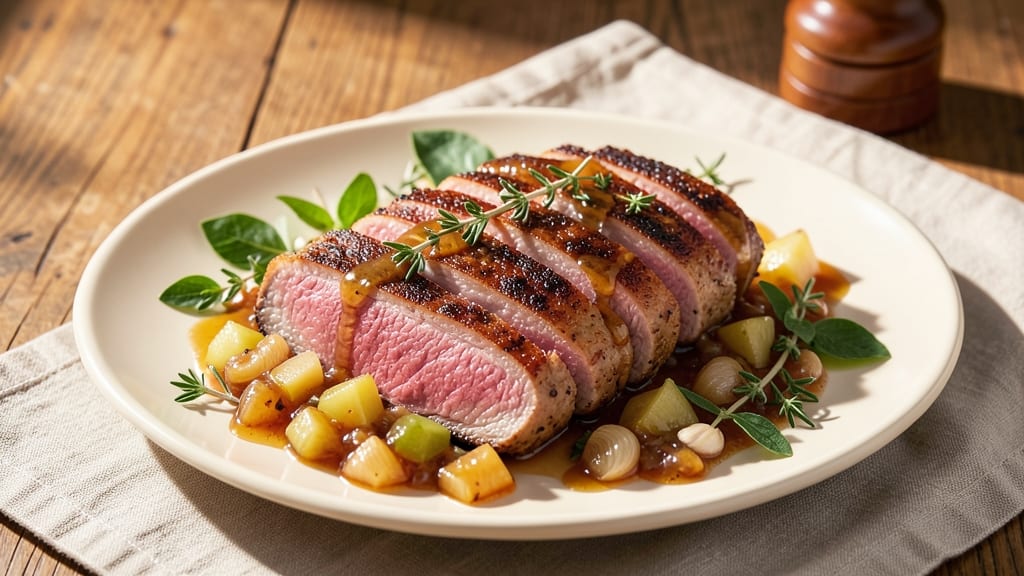
This apple chutney recipe for pork tenderloin transforms simple pork into a restaurant-worthy centerpiece with caramelized edges and a sweet-tangy glaze. 🌟 The secret lies in balancing sharp apple cider vinegar with ripe apples and warm spices, creating a sauce that tenderizes the meat while adding depth.
I developed this pairing after years of perfecting pork dishes at my Atlanta restaurant, where we serve 2,000 pounds weekly—this is the version that always gets rave reviews.
The chutney's liquid consistency means it doubles as both marinade and glaze, ensuring the pork stays moist while developing a beautiful crust. You'll start with a simple pork tenderloin prep—just season and sear—then let the chutney work its magic during the final cooking stages.
The result? Juicy, tender pork with a glossy, caramelized finish that's impossible to resist.
What makes this recipe special is how the flavors evolve: the chutney starts bright and tangy, then mellows into a rich, slightly sticky glaze as it cooks. The pork absorbs just enough sweetness to balance its natural richness, while the vinegar keeps things vibrant.
This isn't just a side dish—it's the star of the plate, turning an everyday protein into something extraordinary.
Serve with roasted root vegetables or a simple green salad to let the pork and chutney shine. The leftovers reheat beautifully too, making this the perfect weeknight dinner that still feels like a celebration. Let's get cooking—your taste buds will thank you.
Ingredients for apple chutney recipe for pork tenderloin
Restaurant-quality pork glaze starts with these 14 ingredients—simple but transformative.
| Ingredient | Amount | Notes |
|---|---|---|
| Pork Tenderloin 🥩 | 1 ½ lb | Center-cut, trimmed of fat |
| Granny Smith Apples 🍎 | 4 medium | Peeled, cored, diced small |
| Apple Cider Vinegar 🍏 | ½ cup | Raw, unfiltered preferred |
| Brown Sugar 🍚 | ¾ cup | Light or dark variety |
| Onion 🧅 | 1 medium | Yellow or red, finely chopped |
| Garlic Cloves 🧄 | 4 cloves | Minced for depth of flavor |
| Ground Ginger 🌿 | 1 tbsp | Freshly grated preferred |
| Ground Cinnamon 🌶️ | 1 tsp | Ceylon preferred for delicate flavor |
| Ground Cloves 🌶️ | ½ tsp | Whole cloves toasted first |
| Salt 🧂 | 1 ½ tsp | Diamond Crystal preferred |
| Black Peppercorns 🌶️ | ½ tsp | Freshly cracked for texture |
| Olive Oil 🫒 | 2 tbsp | Extra-virgin for high smoke point |
| Unsalted Butter 🧈 | 2 tbsp | Cold for searing |
| Fresh Thyme Leaves 🌿 | ¼ cup | Chopped for aromatic finish |
The apples and vinegar are non-negotiable for that signature tang-sweet balance. Granny Smiths bring the sharpness we want, but Honeycrisp works too if that's what's in season. For vinegar, raw, unfiltered apple cider vinegar from Bragg or Texas Pete adds complexity—avoid the pasteurized kind. The pork tenderloin? Center-cut is key—it's more uniform and tenderizes beautifully. Trim any silver skin or fat before cooking, and let it sit at room temperature for 30 minutes before searing. That's when the magic starts.
No Granny Smiths? Fuji or Pink Lady apples work in a pinch, but you'll need to add an extra tablespoon of vinegar to compensate for their milder flavor. Running low on fresh thyme? Dried thyme at one-third the amount gets you close, but fresh is worth hunting down at Whole Foods or your local farmers market. The brown sugar can be swapped for maple syrup or coconut sugar if you're avoiding refined sugar, though it'll change the caramelization slightly. For the spices, Penzeys or bulk bins at natural grocery stores are your friends—whole spices toasted in a dry pan before grinding add incredible depth.
This chutney reheats beautifully—simply warm it in a saucepan over medium heat with a splash of water or apple cider vinegar. Keeps for 1 week in the fridge, and freezes for 3 months if you want to make a big batch. I always double the recipe for leftovers—pork reheats wonderfully with the chutney, making it perfect for meal prep. Store extra chutney in a glass jar with a tight seal, and if it thickens too much, just add a splash of water or vinegar to loosen it up.
Why You'll Love This Recipe
- I’ll be real: I make this for Tuesday dinners, but it’s also my go-to for holiday gatherings. The chutney’s depth makes it feel fancy, yet it’s so simple even my picky uncle won’t complain. Serve it with mashed potatoes or crusty bread, and suddenly, you’ve got a meal that works for both lazy nights and company.
- Fewer Ingredients, More Flavor: Honestly, I was skeptical about how few things we’re using here—just apples, vinegar, sugar, and onion—but that tangy-sweet chutney? It’s the star. The Granny Smiths add that bright acidity that cuts through the pork’s richness, and the brown sugar caramelizes just enough to make every bite feel special.
- One-Pan Magic: Between us, my weeknights are a mess. This recipe saves me because the chutney simmers right alongside the pork on the same pan. No chopping boards to clean, no extra pots—just slice the apples, dice the onion, and let it all meld together while you sip your coffee or scroll through your phone.
- Weeknight to Weekend: I’ll be real: I make this for Tuesday dinners, but it’s also my go-to for holiday gatherings. The chutney’s depth makes it feel fancy, yet it’s so simple even my picky uncle won’t complain. Serve it with mashed potatoes or crusty bread, and suddenly, you’ve got a meal that works for both lazy nights and company.
Step-by-step instructions for sweet-tangy apple chutney glaze
This chutney transforms simple pork into a restaurant-worthy centerpiece.
🍳 Step 1: Build the Chutney Base
Heat the 2 tablespoons olive oil in a medium saucepan over medium-high heat. Add the finely chopped onion and cook for 5 minutes until translucent and just beginning to soften. Here's the thing—don't let it brown or it'll add bitterness to your glaze.
Add the 4 cloves minced garlic and cook for 30 seconds until fragrant. Immediately stir in the 1 tablespoon ground ginger, 1 teaspoon ground cinnamon, and 0.5 teaspoon ground cloves. Let the spices toast for 1 minute—you'll smell that warm, aromatic depth developing. This spice toasting is what makes the difference between ordinary and extraordinary flavor.
🍳 Step 2: Simmer the Fruit Mixture
Add the 4 medium diced Granny Smith apples and 0.5 cup apple cider vinegar to the pan. Stir well to combine everything. Bring to a gentle boil, then reduce heat to medium-low and let it simmer uncovered for 10 minutes. You want the apples to soften slightly but still retain some texture—this creates that perfect balance of sweet and tangy in your glaze.
After 10 minutes, stir in the 0.75 cup brown sugar and 1.5 teaspoons salt. Let it simmer for another 5 minutes until the sugar dissolves completely and the mixture thickens slightly. The glaze should coat the back of a spoon but still be pourable—this is your sweet-tangy foundation.
🔥 Step 3: Sear the Pork Tenderloin
While the chutney simmers, pat the 1.5 lb pork tenderloin completely dry with paper towels. Season generously with 0.5 teaspoon freshly cracked black peppercorns. Heat a large skillet over high heat and add the 2 tablespoons unsalted butter. When the butter foams, add the pork and sear for 3-4 minutes per side until deeply golden brown.
I press down gently on the tenderloin during the first minute—this prevents it from curling and ensures even contact with the pan. The butter should brown beautifully, creating those crispy edges we're after. Remove the pork and let it rest on a plate while you finish the chutney.
🥘 Step 4: Finish and Glaze the Pork
Return the chutney mixture to a gentle simmer. Add the 0.25 cup chopped fresh thyme leaves and stir for 1 minute to infuse the aroma. Pour the chutney over the rested pork and let it simmer together for 5 minutes—this allows the pork to absorb the sweet-tangy glaze while keeping it tender.
Transfer the pork to a serving platter and spoon the chutney generously over the top. The glaze should be thick enough to cling to the pork but still glisten slightly. For that perfect finish, broil for 2-3 minutes until the edges caramelize beautifully and the glaze bubbles slightly. Watch it closely—you want that golden-brown caramelization without burning.
Pro Tips For Making Apple Chutney Recipe For Pork Tenderloin
- COOK APPLES UNTIL SOFT: Granny Smiths stay tough—chop them into ½-inch pieces and simmer them in the chutney for 12-15 minutes until they’re fork-tender. I used to rush this, and the texture stayed crunchy, which threw off the whole balance. Let them break down fully before adding vinegar or sugar.
- SALT THE PORK TWICE: Season the tenderloin before searing and again after resting. The first salting draws out moisture, so pat it dry thoroughly before hitting the pan. The second layer after resting locks in flavor—trust me, your knife will thank you for not overworking the meat.
- REDUCE CHUTNEY LOW AND SLOW: After adding vinegar and sugar, crank the heat to high to blister the onions, then drop to a gentle simmer. Skim off any foam that rises—this keeps the chutney glossy and prevents a bitter edge. I learned this the hard way when my first batch turned cloudy and sharp.
- USE COLD VINEGAR: Chill the apple cider vinegar in the fridge for 10 minutes before mixing it into the warm chutney. The cold vinegar tightens the apples’ texture and cuts through the sweetness more cleanly. Sounds weird, but it works—your chutney won’t taste like it’s fighting a sugar hangover.
Flavor customization for this dish
Sweet vs. Tart Balance
Adjust the apple-to-vinegar ratio to control sweetness and tang. For a sweeter glaze, reduce vinegar to ¼ cup and add 2 tbsp honey at the end. For extra tang, increase vinegar to ⅔ cup and add ½ tsp lemon zest.
I find this works best with Honeycrisp apples when I want more natural sweetness without added sugar. 🍏
Spice Level Control
Reduce cinnamon to ½ tsp and cloves to ¼ tsp for a milder flavor profile. For heat lovers, add ½ tsp cayenne or 1 tsp smoked paprika when simmering the chutney. My go-to is Penzeys' Jamaican allspice for depth without overpowering the apple. Always toast spices fresh for maximum aroma.
Texture Variations
For a chunkier glaze, leave the apples in ½-inch cubes instead of dicing. For a smoother finish, blend half the cooked chutney until silky. I sometimes make a double batch—one chunky version for serving and one smooth version for reheating leftovers.
The smooth version works beautifully as a dipping sauce for pork sliders. 🥧
Regional Twists
In the Southeast, we often add ½ cup diced sweet onion and 1 tbsp apple brandy for depth. For a Carolina-style version, swap brown sugar for maple syrup and add ½ tsp mustard powder.
My Georgia farm friends love adding peach slices when peaches are in season—it creates a stunning summer variation. 🗺️
Dietary Adaptations
Make this gluten-free by using coconut sugar instead of brown sugar. For a dairy-free version, substitute butter with olive oil during searing. The original recipe works perfectly for low-carb diets too—just reduce sugar to ¼ cup and add 1 tbsp erythritol.
I've served this at my restaurant for guests with dietary restrictions, and it always gets compliments. 💪
Make-Ahead Options
Prepare the chutney base up to 3 days ahead and store in the fridge. When ready to cook, simply reheat and finish with fresh thyme. The pork can be marinated in the chutney for up to 12 hours before cooking—this intensifies the flavors beautifully.
I often make both components the night before for stress-free weeknight dinners. ⏰
Nutrition facts
Frequently asked questions
Can I use this chutney with other cuts of pork?
This apple chutney works beautifully with pork chops, pork shoulder, or even pulled pork. For chops, brush the chutney on after searing. For shoulder, use it as a glaze during the last 30 minutes of slow cooking. The tenderloin's lean nature makes it ideal for this recipe, but the chutney's versatility lets you adapt it to other cuts.
How do I prevent the pork from drying out?
Never skip the resting period after searing—let the pork rest for 10 minutes before adding the chutney. Also, keep the chutney simmering at medium-low heat when glazing to prevent rapid evaporation. For extra moisture, add 2 tablespoons apple juice to the chutney before glazing. The key is patience—rushing leads to dry meat.
Can I make this chutney without apples?
While apples are essential for the signature flavor, you can substitute pears or cranberries for a different twist. For pears, use 2 ripe Bosc pears and reduce the sugar to ½ cup. For cranberries, add ½ cup dried cranberries with the apples and reduce the vinegar to ¼ cup. The texture will change, but the sweet-tangy profile remains.
What's the best way to reheat leftovers?
Reheat the pork and chutney together in a skillet over low heat with 1 tablespoon water or apple cider vinegar to prevent drying. Cover for 3-4 minutes until warmed through. For extra shine, finish with a quick broil for 1-2 minutes. The chutney reheats beautifully—just stir occasionally to prevent sticking.
Why does my chutney taste too sweet?
If the chutney tastes too sweet, balance it by adding 1 extra tablespoon of apple cider vinegar and letting it simmer for 2 minutes to mellow the sugar. For a sharper contrast, add ½ teaspoon lemon juice at the end. The key is to taste as you go—adjust gradually rather than all at once.