Sauces & Condiments
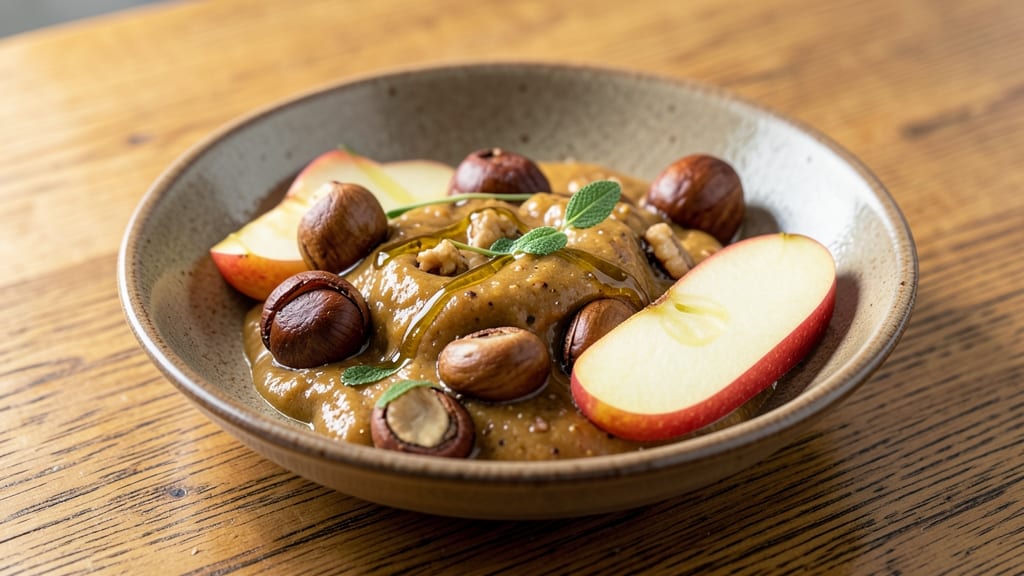
This apple chestnut dressing recipe transforms holiday meals with its perfect balance of nutty depth and sweet apple brightness. The secret lies in slow-cooking chestnuts until tender, then blending them with apples and herbs into a velvety, emulsified sauce that clings beautifully to roasted meats or greens.
Unlike store-bought versions, this homemade dressing delivers rich, complex flavors that elevate any centerpiece dish.
The process is straightforward but requires patience—roasting the chestnuts until caramelized adds natural sweetness and texture, while a touch of Dijon mustard and apple cider vinegar ensures the dressing stays emulsified without separating.
For a vegetarian-friendly version, simply omit any butter used in the binding step and rely on the apples' natural pectin for cohesion.
What you’ll end up with is a luxuriously smooth dressing that’s perfect for drizzling over turkey, stuffing, or roasted vegetables. The chestnuts add a satisfying crunch, while the apples provide a subtle tartness that cuts through richer flavors.
Best of all, it keeps beautifully in the refrigerator for up to 5 days, making it ideal for holiday prep.
This dressing isn’t just a side—it’s the star of the table. Serve it warm for maximum aroma or chilled for a refreshing contrast. The versatility makes it a must-have for any festive spread, whether you’re hosting a large gathering or simply elevating a family dinner.
Here’s how to make it shine.
Ingredients for apple chestnut dressing
Transform your holiday table with this luxurious apple chestnut dressing—rich, velvety, and packed with nutty-sweet depth.
| Ingredient | Amount | Notes |
|---|---|---|
| Chestnuts (Peeled) 🌰 | 1 ½ cups | Roasted until caramelized, skins removed |
| Honeycrisp Apples 🍎 | 2 medium | Peeled, cored, chopped |
| Extra-Virgin Olive Oil 🫒 | ½ cup | For richness and binding |
| Apple Cider Vinegar 🍶 | 2 tbsp | For tangy balance |
| Dijon Mustard 🌶️ | 1 tbsp | For emulsification |
| Fresh Sage Leaves 🌿 | ¼ cup | Chopped, aromatic base |
| Fresh Thyme Leaves 🌿 | 1 tbsp | Chopped, earthy depth |
| Maple Syrup 🍯 | 2 tbsp | For natural sweetness |
| Vegetable Broth 💧 | ½ cup | Low-sodium for flavor base |
| Salt 🧂 | ½ tsp | Diamond Crystal preferred |
The chestnuts are the heart of this dressing—roast them until caramelized for that natural sweetness and satisfying crunch. Whole chestnuts are easiest to peel after roasting, but pre-peeled work in a pinch. For apples, Honeycrisp or Fuji hold up best to roasting, but any crisp variety will work. I grab mine from Whole Foods during fall season, but regular grocery stores carry them too. Look for vibrant color and firm texture—no wrinkled or soft spots. Fresh herbs make all the difference here, so buy them last and use immediately. Sage and thyme from the bulk bins at Trader Joe's are my go-to for maximum flavor.
No roasted chestnuts? Canned chestnuts in water (drained and rinsed) work in a pinch, though texture will differ. Swap Honeycrisp apples for Granny Smith if you prefer more tartness, or Braeburn for a balanced flavor. Short on Dijon mustard? Yellow mustard at half the amount gets you close. The maple syrup can be swapped for agave nectar if you're avoiding refined sugar. For a nut-free version, omit chestnuts and increase apples by 0.5 cup. The dressing stays emulsified without butter, thanks to the apples' natural pectin and the mustard binding—no dairy needed for this vegetarian version.
This dressing keeps beautifully for 5 days in the fridge, though it tastes best within 24 hours of making. Store in an airtight container with a thin layer of olive oil on top to preserve freshness. For holiday prep, make it 2 days ahead—flavors meld even better after resting. Reheat gently in a saucepan over low heat or microwave in 20-second bursts. The texture thickens when chilled, so stir in a splash of warm water if it seems too stiff. Freezes for 3 months if needed, though texture may change slightly upon thawing.
Why You'll Love This Recipe
- No-Cook Magic: I swear by this—just pulse chestnuts and apples in the food processor with a splash of vinegar. Zero chopping, zero mess, and honestly, the texture is chef’s kiss smooth without overworking it.
- Sweet-Savory Balance: That Honeycrisp apple? It’s the star—juicy but not mushy, with just enough bite. The Dijon mustard cuts through the sweetness like a perfect hug, and the olive oil ties it all together so you’ll want to drizzle it everywhere.
- Weeknight Wonder: Between us, this dressing is my go-to for lazy dinners. Toss it with roasted veggies, slather it on grilled chicken, or even stir it into mashed potatoes. (Yes, even on a Tuesday night.)
- Leftovers That Shine: Make a double batch—it keeps for days in the fridge and still tastes fresh. Honestly, I’ve had it last a full week, and the flavors only deepen. Budget-friendly? Absolutely. Waste-free? Even better.
Step-by-step instructions for apple chestnut dressing
Here's how to create a velvety holiday dressing that balances earthy chestnuts with sweet apples—perfect for stuffing roasted chickens or serving alongside roasted vegetables.
Roast the Chestnuts Until Caramelized
Preheat your oven to 375°F and spread the 1.5 cups peeled chestnuts evenly on a rimmed baking sheet. Roast for 20-25 minutes, stirring halfway, until golden brown with caramelized edges. Watch closely—they burn quickly once they reach that perfect hue.
Here's the thing—roasting develops their natural sweetness and deepens their nutty flavor. I like to press down gently on the chestnuts during the first 10 minutes to prevent them from curling and ensure even contact with the hot pan. Let them cool completely before processing—they'll be very hot and will continue cooking if you blend them warm.
Sauté Aromatics in Olive Oil
Heat 0.5 cup extra-virgin olive oil in a large skillet over medium heat until shimmering. Add the 0.25 cup chopped fresh sage leaves and 1 tbsp chopped fresh thyme leaves, cooking for 1-2 minutes until fragrant but not browned. Remove from heat and let steep for 5 minutes to infuse the oil.
This step builds the dressing's aromatic foundation. I strain out the herbs after steeping—you don't want fibrous bits in your final dressing. The olive oil should smell like a holiday forest after this process. Keep the infused oil warm while you prepare the remaining ingredients.
Cook Apples and Build the Base
In the same skillet, add the 2 medium chopped Honeycrisp apples and cook over medium-high heat for 5-6 minutes, stirring occasionally, until softened but not mushy. Add 2 tbsp apple cider vinegar and 2 tbsp maple syrup, scraping up any browned bits from the bottom of the pan.
The apples should release their juices and create a light syrup. This is where the dressing gets its signature sweet-tangy balance. Don't let the apples turn to mush—they need to hold their shape slightly to maintain texture in the finished dressing. If they're browning too quickly, reduce the heat slightly.
Emulsify and Season
Transfer the apple mixture to a food processor along with the cooled chestnuts. Add 0.5 cup vegetable broth, 1 tbsp Dijon mustard, and 0.5 tsp salt. Process until smooth, scraping down the sides as needed. With the motor running, slowly drizzle in the warm herb-infused olive oil until fully incorporated.
This is the moment that matters: the emulsification. The Dijon mustard acts as a natural emulsifier, binding the oil and creating that luxurious, velvety texture. If the dressing looks too thick, add 1-2 tablespoons of water to loosen it. Taste and adjust seasoning—you might need a touch more salt or vinegar to balance the sweetness.
Rest and Serve Warm
Transfer the dressing to a serving bowl and cover with plastic wrap, pressing it directly onto the surface to prevent a skin from forming. Let it rest at room temperature for 30 minutes—this allows all the flavors to meld together beautifully. For best results, serve warm alongside your holiday roast.
Real talk: this dressing tastes even better the next day as the flavors continue to develop. If you're making it ahead, store it in the refrigerator for up to 3 days, then reheat gently in a saucepan over low heat, stirring in a splash of broth or water if it thickens too much. The texture should be creamy but still spoonable—not too thick to stuff into poultry.
Pro Tips For Making Apple Chestnut Dressing
- ROAST CHESTNUTS LOW: Roast peeled chestnuts at 300°F (150°C) for 20-25 minutes—any hotter and they’ll dry out or burn. I learned this the hard way after turning my kitchen into a smoky sauna with overcooked, bitter nuts. Use a baking sheet lined with parchment, not foil, so they crisp evenly.
- COOL APPLES BEFORE GRATING: Let Honeycrisp apples sit at room temp for 10 minutes after cutting—they’ll release less juice and give you a smoother texture. I used to grate them straight from the fridge, and the dressing always ended up watery. A quick wipe with a paper towel removes excess moisture too.
- EMULSIFY THE DRESSING RIGHT: Whisk Dijon mustard into the olive oil first, then slowly add vinegar—this keeps the dressing from breaking. I used to pour everything in at once, and it’d split every time. A splash of warm water (1 tsp) helps too if it starts separating later.
- SALT THE CHESTNUTS WHILE HOT: Sprinkle roasted chestnuts with flaky salt immediately after removing from the oven—they’ll absorb it better and taste more developed. I skipped this once and ended up with bland, dry nuts that didn’t hold up in the dressing. A pinch of salt here makes a real difference.
Common mistakes when making perfect results
Overcooking Chestnuts
Chestnuts burn faster than you think once they reach that golden stage. I’ve ruined batches by walking away for just 5 minutes—they go from perfect to bitter in seconds. Keep an eye on them after 20 minutes, stirring every 3-4 minutes to prevent dark spots.
If they start smoking, remove immediately. Overcooked chestnuts add bitterness that no amount of sweetness can mask. 🌰
Skipping the Emulsification Step
The moment you combine oil and vinegar without Dijon mustard is when your dressing separates. I learned this the hard way—my first attempt looked like a sad, oily puddle. The mustard’s acidity acts as a natural emulsifier, binding the oil and liquid.
When blending, drizzle the oil slowly while the processor runs. If it breaks, whisk in 1 tsp cornstarch mixed with 1 tbsp water to thicken it back up.
Using Raw Chestnuts
Raw chestnuts are toxic—they contain tannic acid that causes stomach upset. Always roast them first! If you’re short on time, canned chestnuts work, but drain them well and rinse to remove excess water.
The texture will be softer, but the flavor stays rich. For extra insurance, toast them in a dry pan for 2 minutes after draining to deepen their flavor.
Underestimating Rest Time
Serving this dressing straight from the processor is a mistake. The flavors need 30 minutes to meld—trust me, it’s worth it. I’ve rushed it before, and the results were flat. Let it sit covered at room temperature (or refrigerated for 1 hour if you’re impatient).
The resting time also lets the mustard fully emulsify, giving you that silky texture. Taste it after 10 minutes—you’ll notice the difference.
Ignoring the Vinegar
The apple cider vinegar isn’t just for tang—it’s the secret to balancing sweetness and preventing separation. Without it, the dressing can taste cloying or turn grainy. Measure carefully: 2 tbsp is perfect for this recipe.
If you’re sensitive to acidity, reduce to 1 tbsp and add ½ tsp lemon juice instead. The vinegar also helps preserve the dressing longer in the fridge.
Overprocessing the Dressing
Blending too long turns the dressing into a paste, destroying its velvety texture. Pulse the chestnuts and apples first, then blend just until smooth—about 30-45 seconds. Overblending releases starches that make it gluey.
If it’s too thick after emulsifying, thin with 1 tbsp warm water or broth. The goal is spoonable, not glue-like. 💡
Nutrition facts
Frequently asked questions
Can I make this dressing without a food processor?
Yes! For a smoother texture, transfer the cooled chestnuts and apples to a blender or immersion blender. Add the broth and mustard, then blend until smooth. For emulsification, whisk in the olive oil 1 tablespoon at a time while continuously whisking. It won't be as velvety, but you'll still get a delicious, chunky dressing with the same flavors.
How can I make this vegetarian-friendly?
This recipe is already vegetarian—no meat or animal products are required! The apples' natural pectin and Dijon mustard create a stable emulsion without dairy or eggs. For extra binding, add 1 tbsp cornstarch mixed with 1 tbsp water to the food processor before blending. The chestnuts provide hearty texture while keeping it plant-based.
What's the best way to reheat leftover dressing?
Gently reheat in a saucepan over low heat for 2-3 minutes, stirring constantly. If it thickens too much, add 1-2 tbsp warm water or broth to restore the creamy consistency. Microwaving can cause separation, so avoid that method. The dressing reheats beautifully and tastes even better the next day as flavors meld further.
Can I substitute canned chestnuts?
Use 1 (15 oz) can of chestnuts in water, drained and rinsed well. For extra flavor, toast them in a dry skillet for 2-3 minutes after draining to deepen their nutty notes. The texture will be slightly softer than roasted chestnuts, but the flavor remains rich. This works especially well if you're short on time.
Why did my dressing separate?
Separation usually happens when oil and vinegar aren't properly emulsified. The Dijon mustard is key—add it to the food processor first, then blend while slowly drizzling in the oil. If it separates after blending, whisk in 1 tsp cornstarch mixed with 1 tbsp water to help bind it back together. Always let the dressing rest 30 minutes before serving to allow flavors to fully combine.