
Main Courses
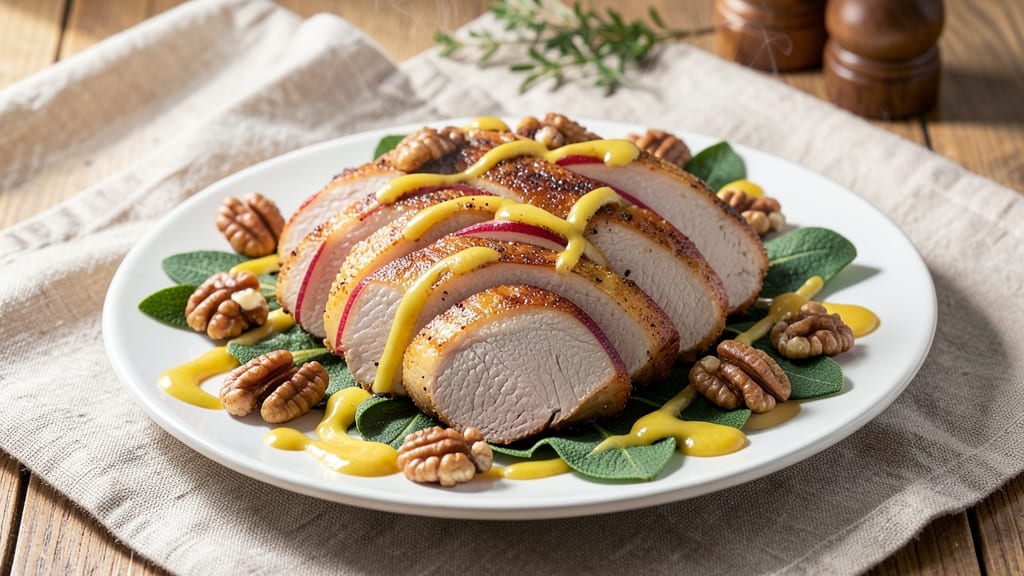
This apple walnut stuffed pork roast recipe transforms holiday dinners from ordinary to extraordinary with its herb-infused centerpiece that steals every show. 🌟 After perfecting this technique for years—especially during Thanksgiving feasts when family expectations are highest—I’ve developed a method that ensures tender, juicy pork with a flavorful stuffing that holds together beautifully.
The secret lies in balancing sweet apples, toasted walnuts, and aromatic herbs within the meat, creating a dish that’s both impressive and foolproof for home cooks.
The recipe begins with a simple brine to guarantee moist pork, followed by a carefully constructed stuffing that includes diced apples, chopped walnuts, fresh herbs, and a touch of mustard for depth.
This combination not only enhances the pork’s natural flavors but also adds texture and visual appeal that makes every slice look like it came from a high-end restaurant. The roasting process is straightforward—just monitor the internal temperature to achieve perfect doneness without drying out the meat.
By the time you’re carving this roast at the table, you’ll have a dish that’s rich, aromatic, and packed with complementary flavors in every bite. The apples caramelize slightly, the walnuts add crunch, and the herbs infuse the pork with a fragrant, savory note.
This is the kind of centerpiece that turns a holiday meal into a memorable experience, proving that restaurant-quality results are well within reach at home.
Pair it with classic sides like mashed potatoes, roasted Brussels sprouts, or a simple green salad to complete the meal. The stuffing’s flavors also make this roast versatile enough for weeknight dinners, not just special occasions.
Let’s get started on creating a dish that will have everyone asking for seconds—and the recipe to take home.
Ingredients for apple walnut stuffed pork roast
Six pounds of pork, sweet apples, and toasted walnuts create a holiday-worthy centerpiece that impresses every time.
| Ingredient | Amount | Notes |
|---|---|---|
| Boneless Pork Loin Roast 🥩 | 4 lb | Center-cut for even cooking |
| Granny Smith Apples 🍎 | 2 medium | Diced, skin on for texture |
| Walnuts 🥜 | 1 ½ cups | Toasted, roughly chopped |
| Fresh Sage Leaves 🌿 | ½ cup | Chopped, stems removed |
| Fresh Thyme Leaves 🌿 | ¼ cup | Chopped, stems removed |
| Yellow Mustard 🍯 | ¼ cup | Dijon preferred for depth |
| Kosher Salt 🧂 | 1 ½ tbsp | Diamond Crystal preferred |
| Ground Black Pepper 🌶️ | 1 tsp | Freshly ground for best flavor |
| Olive Oil 🫒 | ¼ cup | Extra-virgin for richness |
| Unsalted Butter 🧈 | ¼ cup | Cold, cubed for basting |
| Fresh Rosemary 🌿 | ¼ cup | Chopped, stems removed |
| Apple Cider Vinegar 🍎 | ½ cup | For brine balance |
| Brown Sugar 🍚 | ½ cup | Packed, light variety |
| Garlic Cloves 🧄 | 4 cloves | Minced for stuffing |
| Breadcrumbs 🍞 | ½ cup | Panko for extra crunch |
The pork loin is the foundation—center-cut ensures even cooking without drying out. Butcher sections at Whole Foods or Costco often have pre-trimmed roasts, saving you time. Look for good marbling; it guarantees juiciness. For the apples, Granny Smiths hold their shape best when roasted—avoid Red Delicious, which turns mushy. The walnuts? Toast them in a dry pan for 5 minutes until fragrant—they make all the difference in texture. Fresh herbs are a must here; dried just won't cut it for the bright, aromatic flavors you want in every bite.
No Granny Smiths? Fuji or Honeycrisp work well too—just dice them slightly smaller to prevent browning. Short on walnuts? Pecans or almonds are solid swaps, though walnuts' earthiness pairs best. Mustard stuck in the back of the pantry? Dijon or whole-grain mustard both work, but avoid the sweet varieties—they'll overpower the dish. The stuffing can be prepped ahead and stored in the fridge for up to 24 hours, so don't stress about last-minute prep. For the brine, use apple cider vinegar—white vinegar works, but it lacks that subtle fruitiness that complements the pork.
This roast reheats beautifully—carve and warm slices in a 300°F oven for 10 minutes to revive the juices. Leftovers keep for 4 days in the fridge, but honestly, you'll want to eat it all at once. The stuffing can be made a day ahead and stored separately. For presentation, carve the roast against the grain and arrange slices on a platter with any pan juices drizzled over the top. The walnuts and apples add enough visual appeal that you won't need extra garnishes—just a sprinkle of fresh thyme if you're feeling fancy.
Why You'll Love This Recipe
- I swear by this hack: slice those Granny Smiths and toast the walnuts while the oven preheats. No fancy prep, just chop, stuff, and roast—like a Sunday dinner with half the fuss.
- Stuffed in Minutes: I swear by this hack: slice those Granny Smiths and toast the walnuts while the oven preheats. No fancy prep, just chop, stuff, and roast—like a Sunday dinner with half the fuss.
- Sweet-Savory Magic: The apples caramelize into a sticky, tangy jam while the pork stays juicy, and those toasted walnuts add crunch that makes every bite feel special. Sage and thyme? They’re the secret glue holding this together.
- Leftovers That Shine: This roast practically begs to be sliced for sandwiches the next day—crispy edges, tender meat, and that apple-walnut filling turns cold cuts into something gourmet. (Yes, even on a Tuesday.)
Step-by-step instructions for apple walnut stuffed pork roast
Transform your holiday centerpiece with this herb-infused roast—juicy, aromatic, and packed with sweet-savory stuffing.
👨🍳 Step 1: Prepare the Apple-Walnut Stuffing
Core and dice the 2 medium Granny Smith Apples into ¼-inch cubes, leaving the skin on for texture. In a large bowl, combine the apples with the 1.5 cups toasted walnuts, 0.5 cup chopped fresh sage leaves, 0.25 cup chopped fresh thyme leaves, 4 minced garlic cloves, 0.5 cup breadcrumbs, 0.25 cup yellow mustard, 0.25 cup olive oil, and 0.5 cup brown sugar. Mix until evenly distributed—this stuffing needs to cling to the pork later.
For extra flavor, add 0.5 cup apple cider vinegar and 1.5 tbsp kosher salt to the mixture. Taste and adjust seasoning with 1 tsp ground black pepper if needed. The stuffing should taste sweet, tangy, and herby—this balance is key for a well-rounded flavor in every bite.
🔪 Step 2: Stuff and Season the Pork Roast
Preheat your oven to 325°F for even cooking. Using a sharp boning knife, make a pocket in the center of the 4 lb boneless pork loin roast by slicing horizontally about ½ inch deep without cutting all the way through. Gently stuff the pocket with the apple-walnut mixture, pressing it in firmly so it stays in place during roasting.
Rub the entire exterior of the roast with 0.25 cup unsalted butter and 0.25 cup chopped fresh rosemary, ensuring every inch is coated. The butter will create a golden crust, while the rosemary adds a piney depth that pairs beautifully with the sweet stuffing. Let the roast sit at room temperature for 30 minutes before cooking—this ensures even heat distribution and prevents cold spots in the center.
🔥 Step 3: Roast to Juicy Perfection
Place the stuffed roast on a rack set inside a roasting pan, fat-side up. Roast for 2 hours and 15 minutes (or until the internal temperature reaches 145°F when measured with a meat thermometer). The stuffing will release its juices, basting the pork and keeping it moist. For extra crispiness, broil for the last 3-5 minutes—watch closely to avoid burning.
I like to baste the roast every 30 minutes with its own juices, using a spoon to spread the flavorful liquid over the surface. This step ensures the crust stays crisp while the interior remains tender. The roast is done when it reaches 145°F and the juices run clear when pierced with a fork.
⏰ Step 4: Rest and Serve with Pan Sauce
Transfer the roast to a cutting board and tent loosely with foil. Let it rest for 15 minutes—this critical step allows the juices to redistribute, preventing dry meat. While resting, place the roasting pan on the stovetop over medium heat and add 0.25 cup apple cider vinegar to deglaze, scraping up all the browned bits from the bottom with a wooden spoon.
Simmer the sauce for 3-4 minutes until slightly thickened, then pour it over the sliced roast. The stuffing will soften slightly but retain its texture, creating a harmonious blend of sweet apples, nutty walnuts, and herby pork. Slice the roast into ½-inch thick pieces and serve with the pan sauce drizzled generously on top.
Pro Tips For Making Apple Walnut Stuffed Pork Roast
- Salt the Pork Twice: I learned this the hard way—pork loin soaks up salt like a sponge, but if you only season it once, the center stays bland. Wet the roast, pat it dry, then rub with 1 teaspoon of kosher salt per pound before stuffing. After searing, hit it with another light coating—this guarantees flavor all the way through, not just on the outside.
- Core the Apples First: Granny Smiths are tart and firm, but their cores hold moisture that turns to mush when roasted. Remove them before dicing—just slice off the top, scoop out the core with a melon baller, then chop the flesh into even ½-inch cubes. This keeps the stuffing from turning into a watery apple purée.
- Toast the Walnuts Until Golden: Raw walnuts taste bitter and release oil that makes the stuffing greasy. Toast them in a dry skillet over medium heat for 5–7 minutes, shaking the pan often, until they’re fragrant and just starting to brown. Let them cool completely before mixing into the stuffing—this step makes the difference between a bland filling and one that adds real texture.
- Sear the Roast Skin-Side Down: Pork loin doesn’t have skin, but the sear still needs time to develop crust. After stuffing, place the roast seam-side down in the pan (if it has one) or fat-cap side down if not. Let it sit undisturbed for 5 minutes to build a rich brown foundation before turning. This isn’t just for looks—it locks in juices and adds depth to the flavor.
Essential equipment for this dish
Roasting Pan Essentials
You’ll need a heavy-duty roasting pan with a rack—my go-to is the All-Clad Stainless Steel Roasting Pan with a removable rack. The rack elevates the roast for even air circulation, preventing soggy bottoms.
If you don’t have one, a Vosges brand roasting pan (affordable and durable) works perfectly. Avoid non-stick pans for roasting—they can’t handle high heat and won’t develop the flavorful crust you want. 🔥
Precision Tools
A meat thermometer is non-negotiable for this recipe—I swear by the ThermoWorks Smoke for its accuracy and durability. It’s the only way to guarantee your pork reaches the perfect 145°F internal temperature without overcooking.
For stuffing the roast, a sharp boning knife (like the Wüsthof Classic) and a long-handled spoon for pressing the filling in securely are essential. I also keep a mandoline handy for even apple dicing, but a chef’s knife works too.
Butter and Basting Tools
Use unsalted butter (like Plugrá) for basting—it’s purer and lets you control the seasoning. A basting brush (I prefer OXO Good Grips) helps spread the butter evenly, but a spoon works in a pinch.
For crisping the crust, I recommend a broiler pan or a cast-iron skillet if you’re finishing under the broiler. A wire cooling rack is also handy for resting the roast—it prevents sogginess and keeps slices warm while you plate.
Optional Upgrades
If you love the smoky depth, a charcoal smoker (like the Traeger Pellet Grill) can add complexity to the roast’s crust. For presentation, a carving fork (such as the Victorinox Swiss Army) makes slicing clean cuts effortless.
And if you’re prepping ahead, vacuum-seal bags (like FoodSaver) help store the stuffing for up to 24 hours without drying out. 💡
Nutrition facts
Frequently asked questions
Can I use a bone-in pork roast instead of boneless?
Bone-in roasts like pork shoulder work beautifully—just adjust cooking time. The bone helps retain moisture, but you'll need to monitor for 155°F internal temp (10°F higher than boneless) and add 30-45 minutes to roasting time. For stuffing, use a sharp boning knife to create a pocket along the bone.
What if my stuffing leaks out during roasting?
Don't worry—this happens! Use butcher's twine to secure the pocket tightly before roasting. For extra insurance, place a small piece of foil under the stuffing pocket to catch any drips. If it still leaks, the roast is done before the stuffing fully cooks—just remove it and finish in a separate skillet.
Can I make this ahead of time?
Yes! Assemble the stuffing and store it in the fridge for up to 24 hours. For the roast, prep it completely (stuffed and seasoned) and refrigerate overnight. Bring to room temp 2 hours before roasting. The stuffing will soften slightly when reheated, but the flavors stay vibrant.
What's the best way to reheat leftovers?
Slice the roast and reheat portions in a 300°F oven for 10-15 minutes with a splash of apple cider. For stuffing leftovers, warm in a skillet with 1 tbsp butter over medium heat for 3-4 minutes. Avoid microwaving—it makes the pork dry and the stuffing gummy.
Can I substitute pears for apples?
Pears work wonderfully—they caramelize beautifully and add a subtle floral note. Use Bosc or Anjou varieties, dice them slightly smaller (⅛-inch cubes), and reduce the brown sugar to ¼ cup to balance the natural sweetness. The texture will be slightly softer but equally delicious.