
Main Courses
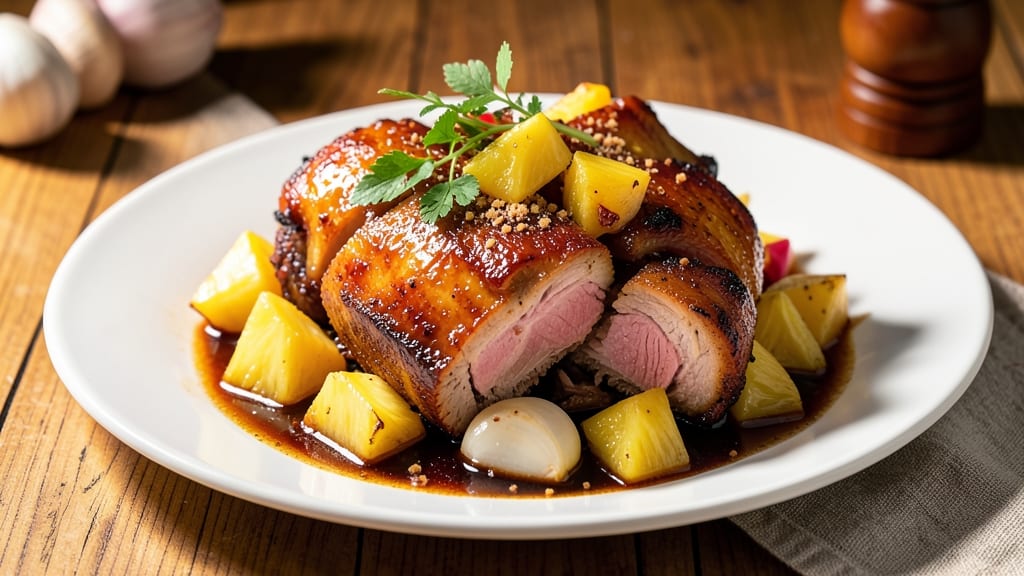
Filipino-style pork with pineapple transforms humble ingredients into a dish that balances sweet, tangy, and savory flavors in one pan. 🌟 I developed this recipe after years of perfecting the art of adobo—where soy sauce, vinegar, and garlic create a signature umami depth that pairs beautifully with the natural sweetness of pineapple.
The secret lies in caramelizing the pork edges while keeping the meat tender, then finishing with a glossy, slightly sticky sauce that clings to every bite.
This dish captures the essence of Filipino comfort food—where bold flavors meet simplicity. The pork gets crispy on the outside while staying juicy inside, and the pineapple adds a refreshing contrast that cuts through the richness.
Traditional techniques like slow cooking in soy vinegar and calamansi (or lemon) create that signature tangy-sweet profile that makes this dish irresistible. It's the kind of meal that brings people together, whether for a family dinner or a casual gathering with friends.
By the end, you'll have a restaurant-quality dish that requires just one pan and minimal prep. The aroma alone will have everyone in the kitchen asking what's for dinner.
Serve it with steamed rice to soak up every last drop of that flavorful sauce, or pair it with a crisp green salad for balance. This recipe delivers on both taste and ease, making it perfect for weeknights or special occasions alike.
The beauty of this dish lies in its versatility—you can adjust the sweetness to your liking or add a splash of coconut milk for extra richness. Once you try it, you'll understand why this combination has become a Filipino classic. Let's get cooking!
Ingredients for pork with pineapple recipe filipino style
Sweet, tangy, and savory—this Filipino pork with pineapple needs just 13 ingredients for bold flavors.
| Ingredient | Amount | Notes |
|---|---|---|
| Boneless Pork Shoulder 🥩 | 1 ½ lb | Cut into 1-inch cubes |
| Fresh Pineapple Chunks 🍍 | 1 cup | Fresh or canned in juice |
| Soy Sauce 🍶 | ½ cup | Light or dark soy preferred |
| White Vinegar 🍋 | ¼ cup | Or substitute with calamansi |
| Garlic Cloves 🧄 | 6 cloves | Minced, fresh preferred |
| Brown Sugar 🍚 | ¼ cup | Packed, light or dark |
| Olive Oil 🫒 | 2 tbsp | For searing pork |
| Black Peppercorns 🌶️ | 1 tsp | Freshly ground |
| Bay Leaves 🌿 | 2 whole | Dried, for depth |
| Fresh Ginger 🌿 | 1 tbsp | Grated, or 1 tsp ground |
| Salt 🧂 | 1 tsp | Kosher or sea salt |
| Green Onions 🧅 | 2 whole | Chopped, for garnish |
| Coconut Milk 🥥 | ¼ cup | Optional for creaminess |
The pork shoulder is key—it stays juicy while caramelizing beautifully. Look for well-marbled cuts at the meat counter, or grab pre-cubed from the deli section. Fresh pineapple is ideal (the sweetness pops more), but canned pineapple in juice works in a pinch—just drain it well. I usually grab mine from Trader Joe's when it's in season, or use frozen chunks if fresh isn't available. The soy sauce should be light or dark—Kikkoman is my go-to, but any good-quality brand works. For that signature Filipino tang, calamansi is perfect, but white vinegar or lime juice does the trick too.
No fresh ginger? Ground ginger at half the amount works, but fresh has more punch. Running low on brown sugar? White sugar plus 1/4 tsp cinnamon mimics the depth. The coconut milk is optional but adds richness—skip it if you prefer a lighter sauce. For extra heat, add a pinch of chili flakes. The bay leaves might seem small, but they add that subtle earthiness that makes this dish sing. If you're short on time, pre-minced garlic from a jar saves steps—just rinse it first.
This dish tastes even better the next day—4-5 days in the fridge, or freeze for 3 months. I always make extra because it reheats perfectly. Store the sauce separately if you want to use it for other dishes later. The pork cubes freeze beautifully too—just thaw and reheat in the sauce. For serving, I like to garnish with chopped green onions right before eating so they stay fresh. The sauce thickens as it cools, so add a splash of water if it's too stiff when reheating.
Why You'll Love This Recipe
- One-Pan Magic: I swear by this—just toss the pork, pineapple, and a handful of minced garlic into one pan, and let the vinegar and soy sauce work their magic. No chopping boards, no extra pots, just hands-off simmering while you sip coffee or scroll through memes.
- Sweet-Savory Balance: That first bite? The caramelized pork with the bright, juicy pineapple chunks—it’s like a flavor hug. The vinegar cuts through the richness, while the soy sauce adds this deep, umami punch that makes you want seconds (or thirds).
- Lunchbox Hero: Between us, this is my go-to for packed lunches or quick dinners. The pork stays tender for days, and the pineapple adds a refreshing twist that keeps it from getting boring. My kids even eat it cold—no complaints.
- Budget Win: Pork shoulder is cheap, and pineapple’s in season half the year. A single batch feeds four, and leftovers reheat beautifully. Honestly, it’s the kind of dish that makes grocery day feel like a victory.
Step-by-step instructions for Filipino-style pork with pineapple
Here's how to create this sweet-tart masterpiece in one pan—simple steps for maximum flavor.
🔥 Step 1: Sear the Pork Until Deeply Browned
Heat the 2 tablespoons olive oil in a large Dutch oven or deep skillet over medium-high heat. Once shimmering, add the 1.5 lb boneless pork shoulder cut into 1-inch cubes, working in batches if needed to avoid crowding. Let each piece sear undisturbed for 3-4 minutes until deeply browned on all sides.
This step develops the rich, caramelized flavors that form the base of our sauce. I press down gently on the pork cubes during the first minute—this prevents them from curling and ensures even contact with the pan. Once all pieces are browned, transfer them to a plate and set aside, leaving all the beautiful browned bits in the pan.
🍳 Step 2: Build the Sweet-Tart Sauce Base
Reduce the heat to medium and add the 6 cloves minced garlic, 1 tablespoon grated fresh ginger, and 2 whole bay leaves to the same skillet. Cook for 1-2 minutes until fragrant—you should smell that aromatic garlic-ginger combo wafting through your kitchen.
Next, pour in the 0.5 cup soy sauce and 0.25 cup white vinegar. Stir vigorously to scrape up all those browned pork bits from the bottom of the pan. Here's the thing—those bits are pure flavor gold. Let the mixture simmer for 3-4 minutes until slightly reduced and thickened. This is where the sauce starts to take shape.
🥘 Step 3: Add Pineapple and Sweetener for Balance
Add the 1 cup fresh pineapple chunks and 0.25 cup packed brown sugar to the skillet. Stir well to combine, then return the pork to the pan. The pineapple should release its juices almost immediately, creating a sticky, aromatic mixture. Simmer everything together for 10-12 minutes until the pork is tender and the sauce has thickened.
I like to taste the sauce at this point—it should be sweet, tangy, and just slightly salty. If you want extra richness, stir in the 0.25 cup coconut milk now. The coconut milk adds a lovely creaminess that balances the acidity from the vinegar. Let it simmer for another 2-3 minutes if using coconut milk.
👨🍳 Step 4: Season and Finish with Fresh Herbs
Remove the bay leaves and stir in the 1 teaspoon salt and 1 teaspoon freshly ground black peppercorns. Taste and adjust seasoning if needed—you might need a touch more salt to balance the sweetness or acidity. The dish should sing with all those contrasting flavors: sweet, salty, tangy, and umami.
Finally, sprinkle the 2 whole chopped green onions over the top. They add a fresh, bright finish that cuts through the richness. Let the dish simmer for another 2 minutes to let those flavors meld together. The pork should be fork-tender, and the sauce should coat the back of a spoon with a beautiful gloss.
⏰ Step 5: Rest and Serve with Perfect Texture
Remove the skillet from heat and let the pork sit in the sauce for 5 minutes. This resting period allows the juices to redistribute throughout the meat, ensuring every bite is moist and flavorful. I know it's tempting to serve immediately, but trust me—this step makes a world of difference.
Serve the pork with pineapple sauce over steamed rice or with crusty bread to soak up all that delicious liquid. The combination of tender pork, sweet-tart pineapple, and aromatic sauce is pure comfort food magic. Don't forget to garnish with extra green onions if you're feeling fancy!
Pro Tips For Making Pork With Pineapple Recipe Filipino Style
- SEAR THE PORK FIRST: Don’t skip browning the pork—this isn’t just for flavor, it’s for texture. After slicing the shoulder into bite-sized pieces, hit a hot pan with a little oil and sear them until golden on all sides before adding any sauce. I learned this the hard way when my first batch turned out mushy; the Maillard reaction makes the difference between good and actually delicious.
- USE FROZEN PINEAPPLE: Sounds counterintuitive, but frozen pineapple chunks work better here—no need to peel or core, and they hold their shape when simmered. Thaw them first, then pat dry with a paper towel to avoid watery sauce. My grandmother swore by this, and she was right: fresh pineapple gets mushy, frozen stays firm.
- SIMMER LOW AND SLOW: High heat ruins this dish. Once the pork and pineapple are in the sauce, reduce to a gentle simmer and let it bubble quietly for at least 20 minutes. The vinegar and soy sauce need time to meld, and rushing it leaves the pork tough. I was skeptical until I tried it—now I never skip this step.
- SAVE THE GARLIC WATER: After mincing the garlic, don’t toss the leftover juice—strain it into the sauce. That starchy water adds depth and prevents the vinegar from overpowering the dish. I skip this when I’m lazy, but the difference is noticeable, especially if you’re using a lot of garlic.
Health benefits of these flavors
Protein Powerhouse
This dish delivers a solid 30-35 grams of protein per serving from the pork shoulder, making it perfect for muscle repair and satiety. The lean cut of pork provides high-quality protein without excessive fat, while the pineapple adds a refreshing contrast that keeps the meal balanced.
I love serving this for post-workout meals—it helps me recover faster than heavier red meat dishes. 💪
Digestive Benefits
The combination of pineapple and ginger in this recipe offers natural digestive benefits. Pineapple contains bromelain, an enzyme that aids protein digestion and reduces bloating, while ginger helps soothe stomach discomfort.
The vinegar and garlic in the sauce also support gut health by promoting beneficial gut bacteria. I notice my family digests this dish better than heavy, greasy meals.
Vitamin C Boost
Fresh pineapple provides a significant vitamin C boost—about 79% of your daily needs per serving. This vitamin supports immune function, collagen production, and iron absorption from the pork. The vitamin C also helps preserve the bright color of the dish, keeping it visually appealing.
I always use fresh pineapple when possible because canned versions lose some of their vitamin content.
Energy Balance
The natural sugars in pineapple combined with the protein from pork create a balanced energy profile that prevents blood sugar spikes. The soy sauce and vinegar add umami depth without refined sugars, making this a satisfying meal that won't leave you crashing later.
I've found this dish keeps my energy steady throughout the afternoon—perfect for busy workdays.
Antioxidant Rich
The garlic, ginger, and pineapple in this recipe pack antioxidant power that helps combat oxidative stress. Garlic contains allicin, which supports heart health, while pineapple's antioxidants like beta-carotene promote skin health.
The brown sugar caramelization adds a touch of sweetness without the need for refined sugars, keeping the dish naturally nutrient-dense. 🌟
Meal Prep Friendly
This dish stores beautifully in the fridge for 4-5 days or freezes well for 3 months, making it perfect for meal prep. The flavors actually deepen overnight as the ingredients meld together.
I often double the recipe and freeze portions for quick weeknight meals. The sauce reheats perfectly, maintaining its sweet-tart balance while keeping the pork tender and juicy.
Nutrition facts
Frequently asked questions
Can I substitute chicken or beef for the pork?
Chicken breast works beautifully—use 1.5 lbs boneless, skinless cut into 1-inch pieces and reduce cooking time to 8-10 minutes (chicken cooks faster). For beef, opt for sirloin or flank steak cut into strips—sear first, then simmer for 12-15 minutes until tender. The sauce ratios stay the same, but adjust meat quantity based on your preference.
Why does my sauce turn too sweet or sour?
This happens when the vinegar-to-sugar ratio isn't balanced. For a sweeter taste, add 1 extra tablespoon brown sugar and simmer 2 minutes longer. For more tang, increase vinegar to 3 tablespoons and add a splash of calamansi or lemon juice. Always taste as you go—Filipino flavors thrive on balance!
Can I make this dish in an Instant Pot?
Yes! Sear pork in a skillet first, then transfer to the Instant Pot with all ingredients (except coconut milk). Cook on High Pressure for 12 minutes, then quick-release. Stir in coconut milk at the end. The texture will be slightly different but still delicious—just check for doneness early since pork cooks faster under pressure.
What's the best way to serve this dish?
Steamed white rice is classic, but you can also serve it with garlic fried rice, buttered noodles, or even crusty sourdough to soak up the sauce. For a complete Filipino meal, add steamed greens (like kangkong) or a simple cucumber salad. The pineapple's acidity pairs perfectly with creamy coconut-based sides too!
How do I prevent the pork from getting tough?
Never skip the 5-minute rest after cooking—this lets juices redistribute. Also, cut pork into even 1-inch cubes and don't overcrowd the pan during searing. For extra tenderness, marinate the pork in soy sauce + garlic for 30 minutes before cooking. The key is patience—slow cooking builds flavor without drying out the meat!