
Main Courses
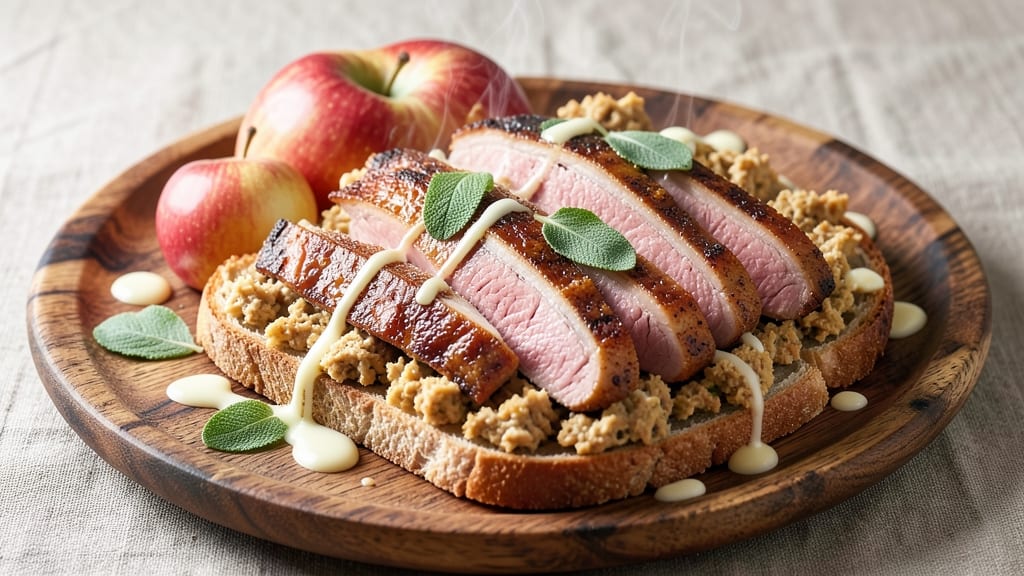
This pork sage apple stuffing recipe transforms humble ingredients into a showstopping centerpiece that balances rich pork with crisp, spiced apple bites. 🔥 Growing up in Georgia, I learned that pork and apples create magic together—now I'm sharing the professional technique that delivers restaurant-quality results at home.
The secret lies in slow-roasting the pork until tender while developing deep caramelized flavors in the stuffing's apple-sage filling.
What makes this dish special is the perfect harmony between the savory pork and the sweet-tangy stuffing. I use heritage pork shoulder for its marbled fat that renders into juicy perfection, while the stuffing gets its crisp edges from a toasted bread base and a touch of apple cider.
The sage adds earthy depth that ties everything together, creating a dish that's elegant enough for holiday feasts but simple enough for weeknight dinners.
By the time you're done, you'll have golden-brown pork with crispy skin that practically falls apart at the touch, paired with stuffing that's perfectly crisp on the edges and tender in the center.
The apple bits add a delightful crunch and subtle sweetness that complements the pork's richness. This is the kind of dish that makes guests ask for seconds—and leaves them begging for the recipe.
The best part? This recipe scales beautifully for any gathering, from intimate family dinners to large holiday spreads. I've perfected it over years of cooking for crowds, and it never fails to impress. Let's get started on creating a dish that's equal parts comforting and sophisticated.
Ingredients for pork sage apple stuffing
Six ingredients make this stuffing magic—crispy bread, spiced apples, and sage that ties it all together.
| Ingredient | Amount | Notes |
|---|---|---|
| Heritage Pork Shoulder 🐖 | 3 lb | Bone-in, marbled fat preferred |
| Honeycrisp Apples 🍎 | 4 medium | Peeled, diced small (about 2 cups) |
| Day-Old French Bread 🍞 | 1 loaf | Crusts removed, cubed (about 8 cups) |
| Fresh Sage Leaves 🌿 | ½ cup | Chopped finely (about 12 leaves) |
| Unsalted Butter 🧈 | ¾ cup | Cold, cubed (full-fat for crispiness) |
| Apple Cider 🍏 | 1 cup | 100% pure, no additives |
| Chicken or Vegetable Broth 🥄 | 1 ½ cups | Low-sodium preferred |
| Yellow Onion 🧅 | 1 whole | Diced finely (about 1 cup) |
| Garlic Cloves 🧄 | 4 cloves | Minced finely |
| Fresh Thyme Leaves 🌿 | 1 tbsp | Chopped (or 1 tsp dried) |
| Kosher Salt 🧂 | 1 ½ tsp | Diamond Crystal preferred |
| Ground Black Pepper 🌶️ | ½ tsp | Freshly cracked |
| Ground Nutmeg 🌿 | ¼ tsp | Freshly grated |
| Olive Oil 🫒 | 2 tbsp | For bread toasting |
The pork shoulder is non-negotiable here. Heritage pork from Butcher Shoppe or your local farm store has the best marbling, but any bone-in pork shoulder works. Look for thick slices of fat—those render down into pure flavor. For the apples, Honeycrisp or Pink Lady at Whole Foods or your grocery store's produce section are your best bets. They hold their shape when cooked and stay sweet. If you can't find fresh sage, dried works at half the amount—but fresh gives that earthy aroma that makes this dish sing. The bread? Day-old is key—it's drier and toasts up perfectly crisp.
No fresh sage? Dried works at half the amount, but it's not the same. Running low on apple cider? Unsweetened apple juice is a fine swap, though it lacks that deep caramelized flavor. The broth can be chicken or veggie—just make sure it's low-sodium. For the stuffing, Pepperidge Farm French bread is my go-to, but any crusty loaf works. If your bread is fresh, toast it first to dry it out. The butter? Full-fat only—this is where the crispy edges come from. And if you're feeling fancy, add a splash of bourbon to the stuffing for extra depth.
This stuffing reheats beautifully—just add a splash of broth or water and bake at 350°F until crispy again. Keeps for 5 days in the fridge, freezes for 3 months. I always make extra—it's perfect for sandwiches or alongside roasted veggies. The pork? Let it rest 30 minutes before slicing, or all that juicy goodness will run out. Store it wrapped in foil in the fridge, and it stays tender for 4 days. For large gatherings, double the stuffing—it disappears fast.
Why You'll Love This Recipe
- One-Pan Magic: I swear by this trick—just toss everything (cubed pork, toasted bread, apples, sage) into one skillet with butter and let it caramelize. No extra pots, no extra stress, just hands-off cooking while you sip your wine.
- Caramelized Crunch: That first bite? The pork stays juicy while the apples turn golden and the bread gets this perfect crunch. Honestly, the way the sage releases its aroma when it hits the hot butter? It’s like a flavor hug for your taste buds.
- Holiday or Weeknight: Between us, this stuffing works for Thanksgiving and Tuesday dinners. Serve it alongside roasted pork for a main course, or pile it high on toast for a brunch star. (Yes, even on a Tuesday night.)
- Budget-Friendly Luxe: Heritage pork shoulder is cheaper than you’d think, and Honeycrisp apples stretch far when diced small. Plus, day-old bread means no wasted loaves—just repurpose and save. Feels fancy, costs smart.
Step-by-step instructions for pork sage apple stuffing
Here's how to make this showstopping stuffing with crispy edges and spiced apple bites.
🔥 Step 1: Toast the Bread for Perfect Crisp
Preheat your oven to 350°F. Line a baking sheet with parchment paper and spread the cubed day-old French bread evenly in a single layer. Drizzle the bread with the 2 tablespoons olive oil and toss gently to coat each cube lightly. Spread them back on the baking sheet.
Toast the bread for 15-18 minutes, stirring once halfway, until the cubes are golden brown and completely dry. You want them crispy but not burnt—this creates that perfect texture contrast later. Let them cool completely before handling, as warm bread absorbs too much liquid and makes the stuffing soggy.
👨🍳 Step 2: Sauté Aromatics and Cook Apples
In a large skillet, melt the 0.75 cup unsalted butter over medium heat. Add the finely diced yellow onion and cook for 5-6 minutes until soft and translucent. Add the minced garlic cloves and cook for another 30 seconds until fragrant—don't let it brown or it'll turn bitter.
In a separate bowl, toss the peeled and diced Honeycrisp apples with 1 teaspoon kosher salt, 0.25 teaspoon ground nutmeg, and 0.25 teaspoon ground black pepper. Add them to the skillet with the onions and cook for 8-10 minutes until they soften but still hold their shape. The apples should release their juices and create a light caramelization—this is what gives the stuffing its sweet-spiced depth.
🥘 Step 3: Build the Stuffing Mixture
In a large mixing bowl, combine the toasted bread cubes, cooked apple-onion mixture, chopped fresh sage leaves, and chopped fresh thyme leaves. Stir in the 1 cup apple cider and 1.5 cups chicken or vegetable broth until everything is evenly moistened. The mixture should look like damp sand—if it's too dry, add 1-2 tablespoons more broth.
Here's the thing—don't overmix. Just gently fold everything together until the bread absorbs the liquid. You want to preserve some texture so the stuffing stays crispy. Taste and adjust seasoning with more kosher salt or black pepper if needed. The stuffing should be flavorful but not overwhelmingly salty.
🔥 Step 4: Bake Until Golden and Crisp
Transfer the stuffing mixture to a greased 9x13-inch baking dish and spread it evenly. Bake in the preheated 350°F oven for 30-35 minutes until the top is deep golden brown and crispy. If the top browns too quickly, tent it loosely with foil to prevent burning while it finishes cooking.
For that restaurant-quality finish, broil for 2-3 minutes at the end until the top is richly browned and crispy. Watch it closely—broilers can be aggressive. The stuffing should be hot throughout with no cool spots in the center. Let it rest for 5 minutes before serving to let the flavors meld and the juices redistribute.
🍽️ Step 5: Serve with Pork and Gravy
Slice the 3 lb heritage pork shoulder and serve the stuffing alongside it. The crispy edges and spiced apple bites complement the rich pork perfectly. For extra flavor, spoon any pan juices from the pork over the stuffing before serving. This dish is even better the next day when the flavors have fully developed—just reheat gently in the oven to restore crispiness.
Pro tip: If you have leftovers, store them in an airtight container and reheat in the oven at 325°F for 10-15 minutes to revive that crispy texture. The stuffing keeps well for up to 3 days in the refrigerator.
Pro Tips For Making Pork Sage Apple Stuffing
- TOAST BREAD LOW: DESCRIPTION: Skip the high-heat oven—dry your day-old French bread slices on a wire rack at 200°F (93°C) for 15-20 minutes. I used to blast it at 350°F and end up with crispy edges and a dry center; low and slow keeps the crumb soft while toasting evenly. Spritz lightly with apple juice halfway if it’s stubborn.
- COARSE THE APPLES: DESCRIPTION: Dice Honeycrisp apples into ¼-inch chunks, not smaller—you want texture, not mush. I learned this after pureeing a batch by accident; the stuffing turned into apple compote. A sharp knife and steady hand make this easy, but don’t rush it.
- SAGE IN LAYERS: DESCRIPTION: Tuck whole sage leaves between bread layers and sprinkle finely chopped pieces into the butter mixture. Whole leaves add aroma, but chopped sage releases flavor faster. My grandmother’s trick: bruise the leaves slightly with your palm before adding them—they’ll perfume the stuffing like a pro.
- BUTTER THE BREAD WELL: DESCRIPTION: Don’t just dot the bread with butter—rub it into every nook, especially the crusty edges. Use about 2 tablespoons per loaf, melted and cooled slightly. I was lazy once and got dry stuffing; the butter coats the bread like glue, keeping it moist even after baking.
Troubleshooting perfect results
Soggy Bread Fix
If your stuffing turns out soggy, it's usually from too much liquid or fresh bread. I've had this happen when I rushed and didn't let the toasted bread cool completely—it absorbs liquid too quickly. The fix? Always use day-old bread and toast it thoroughly until completely dry.
For extra insurance, spread the toasted cubes on a baking sheet and let them sit for 10 minutes before mixing with other ingredients. This gives them time to fully dry out and prevents that dreaded mushy texture. 💫
Apple Overcooking
Those spiced apple bites should hold their shape but still be tender—if they turn to mush, you've overcooked them. I learned this the hard way when I left the apples in the skillet too long.
Cook them for exactly 8-10 minutes until just soft, then immediately transfer to the stuffing mixture. For added insurance, use Honeycrisp or Pink Lady apples—they hold up better than softer varieties.
If you accidentally overcook, try adding 1-2 tablespoons of apple cider vinegar to the stuffing mixture to balance the sweetness and cut through any excess moisture.
Pork Overcooking
The pork shoulder should be tender but not falling apart—if it's dry and stringy, you've likely overcooked it. I recommend using a meat thermometer and pulling the pork at 195-203°F internal temperature.
If it's overcooked, try slicing against the grain and serving with extra pan juices or a rich gravy to compensate. For next time, consider brining the pork for 4-6 hours before cooking to help retain moisture.
The heritage pork shoulder from local butcher shops has the perfect fat-to-lean ratio that makes all the difference.
Stuffing Too Dry
A dry stuffing usually means insufficient liquid or overtoasted bread. The fix is simple: add 1-2 tablespoons of broth or apple cider to the mixture and stir gently. If the bread was overtoasted, try adding 1 extra tablespoon of butter to create a richer, more cohesive texture.
For future batches, measure your broth carefully—1.5 cups should be plenty for 8 cups of bread cubes. If you're still worried about dryness, cover the stuffing loosely with foil during the last 10 minutes of baking to trap moisture.
Uneven Browning
If your stuffing browns unevenly, it's likely because the top dried out too quickly while the center stayed undercooked. The solution is simple: tent the stuffing loosely with foil during the last 15 minutes of baking to allow steam to escape while preventing the top from burning.
For that perfect golden crust, finish with 2-3 minutes under the broiler at the very end. Watch it closely—broilers can be aggressive! If you're using a dark baking dish, consider lining it with parchment paper to help with even browning.
Flavor Imbalance
If the stuffing tastes too sweet or too savory, it's usually from misjudging the apple-to-sage ratio. For a balanced flavor, I recommend using 1 cup of diced apples to 0.5 cup of chopped sage leaves.
If it's too sweet, add ½ teaspoon more salt and ¼ teaspoon black pepper to bring out the savory notes. If it's too earthy, add a pinch of ground cinnamon or a splash of apple cider vinegar to brighten the flavors.
Taste as you go—this stuffing is all about balance, and a little adjustment can make all the difference. 🌟
Nutrition facts
Frequently asked questions
Can I use regular pork chops instead of pork shoulder?
Not for this recipe—pork shoulder is key because its fat and connective tissue create tender, juicy meat when slow-roasted. Pork chops are too lean and will dry out. If you're set on chops, try a different recipe where quick cooking preserves moisture, like pan-seared chops with a sage-apple compote on the side.
What's the best apple variety for this stuffing?
Honeycrisp or Pink Lady apples are ideal—they hold their shape while cooking and stay sweet with just a hint of tartness. If those aren't available, Granny Smith works for a sharper flavor, but reduce the sugar in the recipe by ½ teaspoon. Avoid overly soft varieties like McIntosh.
How do I make this stuffing ahead of time?
Prepare the stuffing mixture up to 24 hours ahead and store it in an airtight container in the fridge. When ready to bake, spread it in the dish and bake as directed. For the pork, it reheats beautifully—wrap slices in foil and warm in a 300°F oven for 20 minutes. Both components keep well for 4 days refrigerated.
Can I make this stuffing vegetarian?
Replace the pork with seitan or hearty mushrooms for a meaty texture. For the bread base, use a vegetarian broth and consider adding 1 cup of cooked quinoa for extra substance. The apple-sage flavor profile works perfectly with plant-based proteins.
Why does your recipe call for day-old bread?
Fresh bread absorbs too much liquid and makes soggy stuffing. The starchy crusts dry out overnight, creating the perfect crispy texture when toasted. If you only have fresh bread, slice it thin and toast it thoroughly in the oven until completely dry—this mimics day-old bread's texture.