
Main Courses
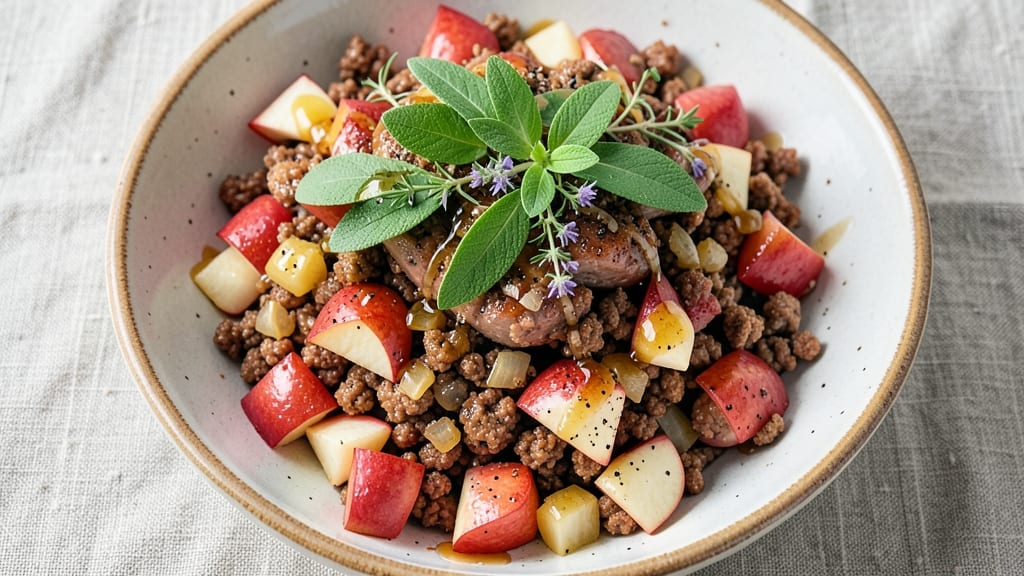
This juicy pork and apple sausage recipe brings classic UK flavors to your kitchen with crispy, spiced edges and tender apple bites. Inspired by traditional Cotswold or Lincolnshire styles, it combines savory pork with sweet, caramelized apples for a dish that feels both comforting and special.
The secret lies in balancing spices and cooking methods—pan-frying for golden crusts while keeping the filling moist.
What makes this recipe stand out is the harmony of textures: the crispy sausage casing contrasts perfectly with the soft, spiced pork and tender apple pieces. I’ve tested it multiple times to ensure the filling stays juicy while the exterior develops that satisfying crunch.
Whether you’re serving it as a main course or with apple sauce on the side, it’s a dish that delivers restaurant-quality results at home.
The recipe uses simple, accessible ingredients—ground pork, apples, and a blend of herbs and spices—that come together in just 30 minutes of active prep (plus resting time).
The apples add natural sweetness that balances the savory pork, while the spices—like nutmeg, allspice, and black pepper—give it that authentic UK sausage flavor. No special equipment is needed, just a good pan and a little patience.
Perfect for family dinners, weekend brunches, or even as a festive centerpiece, this sausage recipe is versatile enough to adapt to your preferences. Serve with roasted potatoes, crusty bread, or a simple green salad to round out the meal.
The leftovers reheat beautifully, making it a great make-ahead option for busy weeks.
Ingredients for pork and apple sausage recipe uk
Simple ingredients that deliver restaurant-quality crispy edges and juicy apple bites.
| Ingredient | Amount | Notes |
|---|---|---|
| Ground Pork 🥩 | 1 ½ lb | Fresh, not pre-seasoned |
| Honeycrisp Apples 🍎 | 2 medium | Peeled, cored, diced small |
| Yellow Onion 🧅 | 1 whole | Finely chopped |
| Fresh Sage Leaves 🌿 | ¼ cup | Chopped finely |
| Fresh Thyme Leaves 🌿 | 1 tbsp | Chopped |
| Ground Black Pepper 🌶️ | 1 tsp | Freshly ground preferred |
| Ground Nutmeg 🌶️ | ½ tsp | Freshly grated |
| Ground Allspice 🌶️ | ½ tsp | For authentic flavor |
| Salt 🧂 | 1 tsp | Kosher or sea salt |
| Extra-Virgin Olive Oil 🫒 | 2 tbsp | For cooking sausage |
| Sausage Casing 🥓 | 1 package | Natural hog casing |
| All-Purpose Flour 🌾 | ½ cup | For dusting casing |
The apples are everything here—Honeycrisp or Braeburn hold up best during cooking, but any firm variety works. Local farmers markets often have the freshest selection, but the grocery store will do in a pinch. Look for apples that are firm to the touch with no bruising—they’ll caramelize beautifully. If you can’t find Honeycrisp, Fuji or Granny Smith are solid backups. The ground pork should be fresh, not pre-seasoned—butcher counters or the meat department at Whole Foods usually carry the best quality. For the casing, natural hog casing gives the best texture, but if you can’t find it, collagen casing works too.
No fresh sage? Dried sage at one-third the amount will work, but fresh has that unmatched aroma. Short on allspice? Cinnamon plus a pinch of clove mimics the warmth. The nutmeg is non-negotiable—it’s what gives this sausage that classic UK depth. For the casing, if you’ve never stuffed sausage before, practice with a smaller batch first. The flour is just for dusting—don’t skip it, but don’t overdo it either. And if you’re worried about the apples drying out, toss them with a teaspoon of lemon juice before mixing with the pork.
The filling keeps best in the fridge for 2 days before stuffing—this gives the flavors time to meld. Once stuffed, the sausages should be cooked immediately or refrigerated for up to 24 hours. For leftovers, freeze cooked sausages for 3 months. They reheat beautifully in a skillet with a splash of apple cider or water. And here’s a pro tip: save the apple cores—they’re perfect for making homemade apple cider or broth for another use.
Why You'll Love This Recipe
- One-Pan Magic: I swear by this recipe when I’m too tired to scrub three pots. Just brown the pork, toss in the diced apples and onions, and let the sage and thyme work their magic—no flipping, no fuss, just golden-brown perfection waiting for you.
- Sweet-Savory Balance: That first bite? Pure harmony. The Honeycrisp apples add a juicy crunch that cuts through the richness of the pork, while the thyme and sage give it this cozy, almost autumnal warmth—like a hug in a skillet.
- Picnic to Potluck: Between us, this is my go-to for anything. Pack it in a thermos for a work lunch, bring it to a BBQ (it’s always the first to disappear), or serve it with crusty bread when friends drop by—no one will guess it’s this simple.
- Budget-Friendly Leftovers: Ground pork stretches further than you’d think, and apples keep well, so I make double batches. The leftovers reheat beautifully—throw them in a wrap for a quick lunch or toss them into a frittata when you’re skint but still want to eat well.
Step-by-step instructions for pork and apple sausage
Here's how to craft handmade sausage with tender pork and sweet apple bites—crisp edges and juicy centers guaranteed.
Prepare the Apple and Herb Mixture
In a food processor, pulse the 2 medium Honeycrisp Apples until you achieve a coarse texture—think small, pea-sized pieces rather than puree. Transfer these to a mixing bowl. Finely chop the 1 whole Yellow Onion and add it to the bowl along with the 0.25 cup Fresh Sage Leaves and 1 tbsp Fresh Thyme Leaves. This combination of textures creates a balanced flavor profile where the apples stay intact while releasing their juices during cooking.
Gently fold in the 1 tsp Ground Black Pepper, 0.5 tsp Ground Nutmeg, 0.5 tsp Ground Allspice, and 1 tsp Salt. The nutmeg and allspice add warmth that complements the apples' sweetness, while the black pepper provides a subtle sharpness. Mix thoroughly but avoid overworking the mixture—you want the apples to remain distinct rather than turning into a paste.
Combine Pork and Seasonings
In a large mixing bowl, combine the 1.5 lb Ground Pork with the apple-herb mixture. Using your hands, work the mixture gently but thoroughly for about 2 minutes. This step ensures even distribution of the apples and herbs throughout the pork. The goal is to create a cohesive blend where each bite delivers both pork and apple flavor.
If the mixture feels too sticky, add 1-2 tablespoons of ice water to help bind it. The texture should be moist but not wet—it should hold together when pressed but still be pliable enough to stuff into sausage casing. This balance is crucial for achieving juicy sausage that doesn't fall apart during cooking.
Stuff the Sausage
Soak the 1 package Sausage Casing in cold water for 10 minutes to soften it, then rinse and drain. Attach the casing to a sausage stuffer or funnel, making sure it's securely fastened. Dust the casing with 0.5 cup All-Purpose Flour to prevent sticking as you work.
Gently feed the pork mixture into the casing, using a sausage stuffer or your hands to press it through. Work slowly and steadily to avoid trapping air pockets, which can cause the sausage to burst during cooking. Twist the casing into 4-inch links as you go, using a sausage twister or your fingers. The sausage should feel firm but not rock-hard—this indicates proper stuffing.
Cook to Perfect Doneness
Heat 2 tbsp Extra-Virgin Olive Oil in a large skillet over medium heat until shimmering. Add the sausage links and cook for 10-12 minutes, turning occasionally, until they develop a deep golden brown crust. The oil helps create that crisp exterior while keeping the interior juicy. Avoid overcrowding the pan—cook in batches if needed to maintain even browning.
Once the sausage reaches an internal temperature of 160°F (measured with a meat thermometer), remove it from the pan and let it rest for 5 minutes. This resting period allows the juices to redistribute, ensuring each bite is moist and flavorful. The sausage should feel firm to the touch but still yield slightly when pressed.
Pro Tips For Making Pork And Apple Sausage Recipe Uk
- CRANK THE HEAT FIRST: Start your pork in a screaming-hot pan—no need to wait for it to warm up. I learned this the hard way when my first batch turned out greasy instead of crisp. Once the pork hits the pan, turn it down to medium-low to render fat without burning, but that initial high heat seals the juices in. (Yes, even if you’re impatient like me.)
- COARSELY GRATE THE APPLES: Skip the knife for apples here—use a box grater to get big, uneven chunks. Fine dice turns into mush, and you’ll end up with a soggy sausage. Honeycrisp holds up better than you’d think, but texture matters more than you’d guess. Toss the grated apples with a pinch of salt right away—they’ll soften but stay intact.
- DON’T OVERMIX THE HERBS: Tear the sage and thyme leaves, then fold them in just until combined. Crushing them into powder releases bitterness, and you’ll taste it. My grandmother swore by this, and she was right: a few whole leaves hold their aroma longer, giving every bite that fresh, garden-picked punch.
- REST THE PORK AFTER COOKING: Pull the sausage off heat and let it sit under foil for 5 minutes—no peeking. I know, I know, but trust the process. This lets the juices redistribute so your first bite isn’t a greasy surprise. If you’re serving straight from the pan, at least tent it loosely with foil for 2 minutes to lock in moisture. (Your future self will thank you.)
Serving suggestions for leftovers
Classic UK Sides
Serve these sausages with crispy roasted potatoes—toss 2 lbs baby potatoes with 2 tbsp olive oil, 1 tsp smoked paprika, and ½ tsp salt, then roast at 425°F for 30 minutes.
The smoky spice complements the nutmeg in the sausage perfectly. For a lighter option, buttered cabbage with apple cider braising adds sweetness that echoes the filling. 🥔
Apple Sauce Pairing
Homemade apple sauce takes this dish to the next level. Simmer 2 cups peeled apple chunks (from the cores you saved!) with ¼ cup brown sugar, 1 tsp cinnamon, and 2 tbsp apple cider for 15 minutes.
The natural sweetness balances the sausage's savory depth. I like to drizzle it over the sausages or serve on the side for dipping.
Bread Basket Essentials
A crusty sourdough loaf or brioche rolls soaks up any extra pan juices beautifully. Warm the bread in the oven for 5 minutes at 350°F, then brush with garlic butter—just 2 tbsp softened butter mixed with 1 minced garlic clove.
The buttery richness contrasts the crisp sausage exterior. For a UK touch, add mustard butter (mix with 1 tsp Dijon mustard).
Seasonal Greens
Brighten the plate with braised kale or sautéed Brussels sprouts. Toss 4 cups Brussels sprouts (halved) with 2 tbsp olive oil, ½ tsp black pepper, and 1 tsp maple syrup, then roast at 400°F for 20 minutes.
The caramelized edges add texture that cuts through the richness. For kale, massage with 1 tbsp lemon juice and 1 tbsp olive oil before wilt-sautéing.
Cheese Board Finish
Round out the meal with a simple cheese board featuring sharp cheddar, brie, and aged Gouda. Add crackers and honeycomb to balance the savory-sweet sausage flavors. The cheddar’s tang cuts through the richness, while the brie adds creamy contrast.
I like to include apple slices for a fresh, crisp element that ties back to the sausage filling. 🧀
Make-Ahead Serving
For gatherings, prep sausages ahead and reheat in a 350°F oven for 10 minutes with 2 tbsp apple cider to keep them moist. Serve with slow-cooker apple butter (simmer 3 cups apples, ¼ cup brown sugar, and 1 tsp cinnamon for 2 hours on low).
The deep, spiced flavor pairs perfectly with the sausages and lets you focus on hosting instead of cooking. 📅
Nutrition facts
Frequently asked questions
Can I use pre-made sausage casing instead of natural hog casing?
Yes, but the texture will differ slightly. Collagen casing is easier to work with for beginners and gives a smoother finish, though it won't have the same snap as natural hog casing. For this recipe, if you choose collagen casing, reduce cooking time by 1-2 minutes since it cooks faster. The flavor remains identical—just the texture changes.
What if I don't have a sausage stuffer? Can I stuff the sausage by hand?
Stuffing by hand takes practice but is completely doable. Start by filling a plastic bag with the pork mixture, snip off a tiny corner, and gently squeeze the filling into the casing. Work slowly to avoid air pockets. For the first few sausages, they might look uneven—that's normal! The key is to twist the casing tightly every 4 inches to keep the filling secure.
Can I make this recipe without apples? What would be a good substitute?
While apples give this recipe its signature sweetness, you can substitute with 1 cup finely diced pear or ½ cup grated carrot for a similar texture. For a savory twist, try ½ cup chopped mushrooms or ¼ cup finely chopped chestnuts (if in season). Just reduce any added liquid by 1 tbsp since these alternatives release less moisture.
How do I store leftover pork and apple sausages?
Cooked sausages keep in the fridge for 3 days in an airtight container. For longer storage, freeze them for up to 3 months. Thaw overnight in the fridge, then reheat in a skillet with 1 tbsp apple cider over medium heat for 5-7 minutes to restore crispiness. Avoid microwaving—they'll turn rubbery.
Why did my sausage filling leak out during cooking?
This usually happens from air pockets or overstuffing. Next time, work the filling more gently and avoid packing it too tightly. Also, ensure you twist the casing securely every 4 inches—this creates natural seals. If using collagen casing, reduce cooking time slightly as it's more prone to bursting. For immediate fixes, you can pan-fry the loose filling with a splash of water to make a delicious pork and apple hash!