
Main Courses
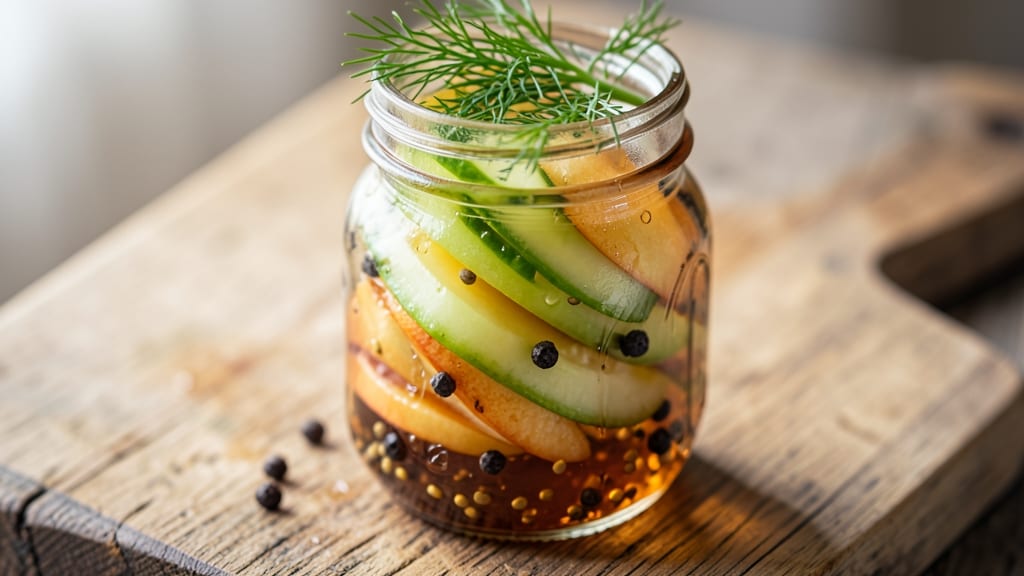
This pickled apple cucumber recipe transforms simple vegetables into a zesty, crunchy side dish that brightens any meal. The perfect balance of tangy vinegar, sweet apples, and crisp cucumbers creates a refreshing contrast that pairs beautifully with grilled meats, sandwiches, or even as a standalone snack.
I’ve perfected this method to ensure the right acidity level for safety while keeping the texture delightfully crisp.
The process is straightforward but requires attention to detail—sterilizing jars, measuring vinegar and sugar precisely, and allowing enough fermentation time for flavors to meld.
You’ll start with thinly sliced apples and cucumbers, then combine them in a flavorful brine of apple cider vinegar, sugar, and aromatic spices like mustard seeds and black peppercorns. This isn’t just pickling; it’s a flavor transformation that turns ordinary produce into something extraordinary.
Once the pickling solution coats the vegetables and the jars sit at room temperature, the magic happens. After 24 hours, the apples soften slightly while the cucumbers stay crisp, creating a textural contrast that makes every bite satisfying.
The result is a dish that’s as visually appealing as it is delicious—vibrant colors, glossy from the brine, and packed with bright, tangy flavors that cut through richer dishes.
This recipe is versatile enough for summer picnics, holiday spreads, or as a quick appetizer. The pickling process also makes it a great make-ahead dish, so you can prepare it in advance and enjoy it all week. Let’s get started on creating your own batch of this crunchy, zesty masterpiece.
Ingredients for pickled apple cucumber
Simple vegetables meet bright vinegar and sweet apples for this tangy, crunchy masterpiece.
| Ingredient | Amount | Notes |
|---|---|---|
| Cucumbers 🥒 | 2 whole | English or Persian, thinly sliced |
| Apples 🍎 | 2 whole | Firm variety like Fuji or Gala |
| Apple Cider Vinegar 🍏 | 2 cups | Raw, unfiltered preferred |
| Granulated Sugar 🍚 | 1 cup | White or raw cane sugar |
| Mustard Seeds 🌶️ | 1 tbsp | Yellow or brown, whole seeds |
| Black Peppercorns 🌶️ | 1 tbsp | Crushed lightly for texture |
| Garlic Cloves 🧄 | 4 cloves | Smashed for infusion |
| Fresh Dill 🌿 | ¼ cup | Chopped, stems removed |
| Salt 🧂 | 1 tsp | Diamond Crystal preferred |
| Water 💧 | 1 cup | Filtered or bottled |
| Mason Jars 🍶 | 2 pieces | Quart-sized, sterilized |
| Lemon Juice 🍋 | 1 tbsp | Freshly squeezed |
The apple variety makes all the difference—Fuji or Gala stay firm and hold their shape during pickling. Grab organic if possible, as pesticide residue can linger even after washing. For cucumbers, English or Persian types have thinner skins and fewer seeds, giving you that perfect crunch. Trader Joe's and Whole Foods usually carry these, but any grocery store will have regular cucumbers. If you're using pre-cut apples, skip the slicing step and just layer them whole—just make sure they're fully submerged in the brine.
No apple cider vinegar? White vinegar with 1 tbsp extra lemon juice works in a pinch, though the flavor won't be quite as complex. Raw sugar adds subtle molasses notes, but white sugar is fine if that's what you've got. Mustard seeds are non-negotiable for that classic tangy crunch, but if you're out, dried mustard flakes at double the amount will work. The garlic should be freshly smashed—jarred minced garlic lacks the aromatic punch. For dill, fresh is ideal, but dried dill at one-third the amount gets you close. Sterilize your jars properly: boil lids for 5 minutes and jars for 10, or run through a dishwasher cycle.
These pickles shine after 24 hours at room temperature, but they keep improving for up to 2 weeks in the fridge. Portion into smaller jars if you want to use them up faster—they're irresistible as a snack. The brine reduces over time, so add a splash of vinegar if the vegetables look dry after a week. Freeze extras in ice cube trays for quick garnishes later. Label your jars with the date, as the texture changes over time—apples get softer, cucumbers stay crisp.
Why You'll Love This Recipe
- I’ll be real: this recipe costs next to nothing to make, and it stretches forever. A few cucumbers, an apple or two, and some pantry staples? That’s it. And because it lasts so long, I can buy seasonal produce on sale, pickle it, and enjoy it all winter. My wallet—and my taste buds—thank me every time.
- Fridge Magic Ready: I swear by this for lazy nights when I’ve got zero energy but still crave something tangy and fresh. Just slice the cucumbers and apples thin, toss them in the jar with the vinegar, sugar, and mustard seeds, then let them sit. No cooking, no fuss—just open the fridge in 24 hours and boom, instant snack.
- Sweet-Tart Crunch: That balance of crisp cucumbers and slightly sweet apples? It’s like a party in your mouth. The apple cider vinegar keeps it bright, the sugar caramelizes just enough to make every bite addictive, and the mustard seeds add a tiny kick that wakes up your taste buds. Honestly, I’ve never met a pickle I didn’t like—but this one’s my favorite.
- Picnic Party Starter: Between us, this is my go-to for potlucks, BBQs, or even a simple lunch spread. It’s light enough to eat by itself, but it also pairs perfectly with grilled meats, sandwiches, or even just cold cuts. Plus, the jars keep for weeks, so I can make a big batch and not stress about it going bad.
Step-by-step instructions for pickled apple cucumber
Here's how to create vibrant, tangy pickles that balance sweetness and acidity perfectly.
Sterilize Jars and Prepare Vegetables
Start by sterilizing the two quart-sized mason jars. I place them upside down in a boiling water bath for 10 minutes, then keep them hot until ready to use. This ensures a clean, safe environment for your pickles. While the jars sterilize, peel and thinly slice the two whole cucumbers—about ⅛-inch thick—and core the two apples, then cut them into ¼-inch thick slices. The uniformity in cutting ensures even pickling.
Real talk: if you skip sterilizing, you risk contamination. Trust me, the extra effort prevents that sour (literally) disappointment later. Once sliced, place the cucumbers and apples in a large bowl. They'll need to marinate in the brine solution for flavor infusion.
Create the Brine Solution
In a medium saucepan, combine the 2 cups apple cider vinegar, 1 cup granulated sugar, 1 cup water, 1 tbsp mustard seeds, 1 tbsp crushed black peppercorns, 4 smashed garlic cloves, and 1 tbsp lemon juice. Bring the mixture to a gentle boil over medium-high heat while stirring until the sugar dissolves completely—this usually takes 3-4 minutes. The solution should be clear with no grainy sugar residue.
Here's the thing—using raw, unfiltered apple cider vinegar adds depth of flavor. If you use distilled, you'll miss that subtle complexity. Once boiling, reduce heat to low and let it simmer for 5 minutes to infuse the spices and garlic. Remove from heat and stir in the 1 tsp salt and ¼ cup chopped fresh dill. Let the mixture cool for 10 minutes before proceeding.
Pack and Seal the Jars
Using a slotted spoon, carefully pack the sliced cucumbers and apples into the sterilized mason jars, leaving about ½-inch headspace at the top. Distribute them evenly to ensure both ingredients get properly pickled. Pour the cooled brine solution over the vegetables until they're fully submerged—this prevents mold growth and ensures even flavor distribution.
I know it seems like too much liquid, but trust me, the vegetables will absorb some as they pickle. Seal the jars tightly with their lids and let them cool to room temperature. This step is crucial for creating a vacuum seal that keeps your pickles fresh for months.
Refrigerate and Rest
Once the jars are sealed and cooled, place them in the refrigerator and let them rest for at least 24 hours before tasting. The flavors need time to meld and develop that perfect balance of sweet, tangy, and slightly spicy notes. I usually wait 48 hours for the full flavor profile to emerge—patience here makes all the difference.
After resting, your pickled apple cucumbers should have a vibrant color and a crisp texture. The acidity from the vinegar will have softened the apples slightly while preserving the crunch of the cucumbers. Store them in the fridge for up to 3 months, and enjoy them as a refreshing snack, salad topping, or charcuterie board accent.
Pro Tips For Making Pickled Apple Cucumber
- CHILL THE APPLES FIRST: I learned this the hard way—slicing raw apples into a jar releases too much liquid, making your brine watery and dull. Toss apple slices in ice water for 10 minutes before adding them to the jar. The cold shock firms them up and keeps the texture crisp for days.
- USE THICK APPLE SLICES: Thin apple slices turn mushy fast. Go for ¼-inch thick rounds—big enough to hold shape but still bite-sized. If your knife skills are rusty, freeze the apple core for 10 minutes first; it’s easier to slice cleanly.
- STEER CLEAR OF PACKED JARS: I used to jam everything in, but that leaves no room for the brine to circulate. Fill jars only halfway with veggies, then add the liquid. The cucumbers and apples will plump up as they pickle, and the flavor stays even.
- TOAST THE MUSTARD SEEDS: Skip the raw seeds—they just sit there like tiny rocks. Dry-toast them in a pan for 30 seconds until they smell nutty. Toss them into the jar after packing the veggies so they stay aromatic and not soggy. (Yes, even if you’re impatient like me.)
Regional styles of pickled apple cucumber
German Sauerkraut Fusion
In Germany, pickled apples and cucumbers often appear in sauerkraut-based dishes with a tangy twist. Add ½ cup finely chopped sauerkraut (drained) to your jars before sealing, then ferment for an extra 12 hours at room temperature.
The lactic acid from the sauerkraut enhances the apple’s sweetness while adding a deep, fermented complexity. Serve this variation with bratwurst or pretzels for a hearty German-inspired spread. 🌶️
Southern U.S. Vinegar Slaw
The Southern U.S. loves its vinegar-based slaw, and this recipe adapts beautifully. Skip the apples and use 3 cups shredded cabbage instead, tossing it with the pickled cucumbers. Add 1 tbsp hot sauce and 1 tsp smoked paprika to the brine for a smoky kick.
This works perfectly as a BBQ side or sandwich topping, especially with pulled pork. The heat and crunch balance the richness of smoked meats. 🔥
Scandinavian Dill Pickle Twist
Scandinavian cuisine elevates pickles with bold dill flavors. Double the fresh dill to ½ cup and add 1 tsp caraway seeds to the brine. Use lemon juice instead of apple cider vinegar for a brighter tang.
This version pairs wonderfully with smoked salmon or herring, a staple in Nordic cuisine. The caraway adds an earthy depth that complements the crisp cucumbers and tender apples beautifully. ✨
Japanese Tsukemono Style
For a Japanese-inspired twist, replace apple cider vinegar with rice vinegar and add 1 tbsp grated ginger and 1 tsp sesame seeds to the brine. Use Persian cucumbers (thinner-skinned) and Fuji apples for a cleaner texture.
Let the pickles ferment for 48 hours at room temperature before refrigerating. This version works as a sushi side or in onigiri (rice balls) for a refreshing contrast. 🌿
Mediterranean Herb Infusion
Mediterranean flavors shine with this variation. Add 2 tbsp chopped fresh oregano and 1 tbsp chopped mint to the brine, along with ½ tsp red pepper flakes for heat. Use white wine vinegar instead of apple cider for a brighter acidity.
This version pairs perfectly with grilled lamb chops or as a topping for hummus and flatbread. The herbs add a bright, aromatic finish that’s pure Mediterranean magic. 💫
Nutrition facts
Frequently asked questions
Why do the apples get soft while cucumbers stay crisp?
The difference comes from their natural textures and the pickling process. Apples contain more water and natural pectin, which breaks down slightly in the acidic brine, creating a tender texture. Cucumbers, with their firmer structure and less pectin, maintain their crunch even after 24 hours of pickling. The key is using firm apple varieties like Fuji or Gala—they hold up better than softer types like Red Delicious.
Can I use this recipe without vinegar?
No, vinegar is essential for both flavor and food safety. The acidity prevents harmful bacteria growth and creates that signature tangy taste. You could try a fermented version with 1.5 tbsp salt per quart of water (like traditional sauerkraut) instead of vinegar, but this would require 5-7 days of fermentation time and different flavor results. For quick, safe pickles, vinegar is the way to go!
How do I fix cloudy brine in my pickled apple cucumbers?
Cloudy brine usually means sugar didn't fully dissolve or the solution cooled too quickly. To fix it, gently reheat the pickles (without opening jars) in a 150°F water bath for 10 minutes to redistribute flavors. For future batches, always stir until sugar dissolves completely and let the brine cool gradually. The cloudiness won't affect safety or taste—it's just less visually appealing.
What's the best way to store these pickles long-term?
For maximum freshness, store sealed jars in the refrigerator where they'll keep for up to 3 months. If you need longer storage, freeze the pickles (without brine) in airtight containers for up to 6 months. Thaw in the fridge overnight—never at room temperature. The texture will be slightly softer after freezing, but still delicious. Label jars with dates to track freshness!
Can I adjust the sweetness level in the recipe?
For a sweeter version, increase sugar to 1.25 cups and reduce vinegar slightly to 1.75 cups. For less sweetness, cut sugar to ½ cup and add 1 extra tbsp lemon juice to compensate. The ratio should always maintain at least 5% acidity (from vinegar/lemon) for safety. Taste the cooled brine before pouring—it should be pleasantly tangy but not overwhelming.