
Main Courses
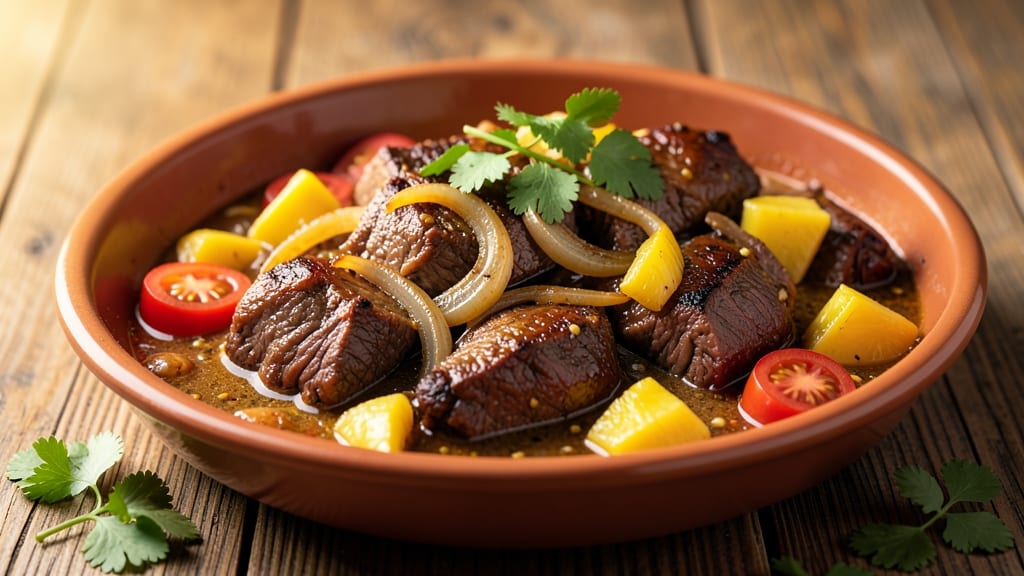
This beef caldereta recipe with pineapple juice brings the rich, sweet-tangy flavors of Filipino comfort food to your kitchen. 🌟 After years of perfecting the balance between tender beef, caramelized vegetables, and the bright acidity of pineapple, I've created a version that rivals the classic—with just the right amount of modern convenience.
The secret lies in slow-cooking the beef until it's fork-tender while building layers of flavor through a carefully reduced sauce.
The beauty of this dish is its versatility—it's hearty enough for a family dinner but elegant enough for guests, all while keeping traditional techniques like browning the beef and deglazing the pot with vinegar.
The pineapple juice adds a touch of tropical sweetness that cuts through the richness, making every bite irresistible. With just 30 minutes of active prep and 2 hours of hands-off cooking, you'll have a restaurant-quality stew without the fuss.
What you'll end up with is a deep, aromatic stew where tender beef and vegetables float in a glossy, slightly thickened sauce that's perfectly balanced between sweet, tangy, and savory.
The aroma alone will have everyone gathering around the table, and the first bite delivers that comforting, familiar taste of home. Serve it over steamed rice to soak up every last drop of that delicious sauce.
This recipe is designed to be your go-to for weeknight dinners or special occasions—it's the kind of dish that gets better with leftovers and tastes even more amazing the next day. Let's get cooking and bring a taste of the Philippines to your kitchen!
Ingredients for beef caldereta recipe with pineapple juice
These rich, aromatic ingredients create a Filipino classic that balances sweet pineapple with savory beef.
| Ingredient | Amount | Notes |
|---|---|---|
| Beef Chuck Roast 🥩 | 2 ½ lb | Cut into 1.5-inch cubes |
| Extra-Virgin Olive Oil 🫒 | ¼ cup | For searing beef |
| Yellow Onions 🧅 | 2 whole | Sliced into 1/2-inch pieces |
| Garlic Cloves 🧄 | 6 cloves | Minced finely |
| Canned Pineapple Juice 🍍 | 1 cup | No sugar added preferred |
| Tomatoes 🍅 | 4 whole | Roma or vine-ripened, quartered |
| Carrots 🥕 | 4 whole | Peeled and cut into chunks |
| Potatoes 🥔 | 4 whole | Russet or Yukon Gold, cubed |
| Green Bell Pepper 🍆 | 1 whole | Sliced into strips |
| Canned Tomato Sauce 🍅 | 1 cup | San Marzano preferred |
| White Vinegar 💧 | ¼ cup | For deglazing |
| Bay Leaves 🌿 | 2 whole | Dried, removed before serving |
| Ground Black Pepper 🌶️ | 1 tsp | Freshly ground preferred |
| Salt 🧂 | 1 ½ tsp | Diamond Crystal preferred |
| Whole Cloves 🌿 | 4 whole | For aroma |
The beef is non-negotiable—chuck roast gives you that melt-in-your-mouth texture, while sirloin stays too firm. Grab it from the butcher section at Whole Foods or your local grocery store's meat counter, where they'll often cube it for you. Look for good marbling—those little white flecks mean more flavor. For the pineapple juice, Dole or Del Monte no-sugar-added are my go-tos, but any canned juice works. The tomatoes should be firm and vibrant—Roma tomatoes hold up best during cooking, but vine-ripened work too if you're in season.
No pineapple juice? Fresh pineapple blended and strained works perfectly—just don't skip the straining or you'll end up with a watery stew. Short on tomatoes? Canned crushed tomatoes at half the quantity get you close, but they add more acidity. The carrots and potatoes can be swapped for sweet potatoes or parsnips if you're feeling adventurous. For the tomato sauce, San Marzano is the gold standard, but any quality canned sauce will do. The white vinegar adds brightness—apple cider vinegar works too, but it'll have a slightly different flavor profile.
This stew tastes even better the next day as the flavors meld together. Store leftovers in an airtight container in the fridge for up to 5 days, or freeze for 3 months. I always make a double batch—one for dinner and one to reheat for lunches. The sauce thickens as it cools, so a splash of water or broth brings it back to perfect consistency when reheating. Serve it over steamed rice to soak up every last drop of that delicious sauce.
Why You'll Love This Recipe
- One-Pot Magic: I swear by this recipe—just brown the beef, toss in onions and garlic, then let the pineapple juice do its thing. No extra pots, no fuss, and honestly? That slow simmer turns tough chuck roast into melt-in-your-mouth perfection.
- Sweet-Savory Balance: The pineapple juice isn’t just for flavor—it tenderizes the beef while cutting through the richness. Between us, that crispy sear on the outside with the juicy, slightly tangy sauce inside? It’s the kind of dish that makes you pause mid-bite.
- Weeknight to Party: Make it on a Tuesday when you’re exhausted, or double the batch for a Sunday gathering. The rich, hearty broth soaks into rice or crusty bread, and the sweetness from the pineapple juice makes it feel special without the effort.
- Budget-Friendly Leftovers: Beef chuck roast is cheap, and this recipe stretches it into three solid meals. I’ll be real: my freezer is always stocked with caldereta because reheating it is just as good as the first serving—no sad, dry meat here.
Step-by-step instructions for beef caldereta with pineapple juice
Here's how to craft this Filipino-inspired stew with rich, tangy-sweet depth.
🔥 Step 1: Sear the Beef Chuck for Deep Flavor
Heat the 0.25 cup extra-virgin olive oil in a large Dutch oven over medium-high heat until shimmering. Working in batches to avoid crowding, add the 2.5 lb beef chuck roast cut into 1.5-inch cubes and sear for 3-4 minutes per side until deeply browned. This step creates the foundational flavor—don't rush it.
Transfer the seared beef to a plate and set aside. Here's the thing—those browned bits (fond) are pure flavor gold. We'll scrape them up later when we deglaze the pot. Season the beef lightly with 0.5 tsp salt and 0.25 tsp black pepper now, but save the rest for later.
👨🍳 Step 2: Build the Aromatic Base
In the same Dutch oven, add the 2 sliced yellow onions and cook over medium heat for 5 minutes until softened and golden. Add the 6 minced garlic cloves and cook for another 30 seconds until fragrant—you should smell that sweet garlic aroma.
Push the onions and garlic to the sides of the pot and pour in the 0.25 cup white vinegar. Immediately scrape up all those browned bits from the bottom with a wooden spoon. This deglazing step releases all that caramelized flavor into the sauce. Let it simmer for 2 minutes until slightly reduced.
🥘 Step 3: Layer Vegetables and Liquid
Add the 4 quartered tomatoes, 4 cubed potatoes, 4 peeled carrot chunks, and 1 sliced green bell pepper to the pot. Stir to combine, then pour in the 1 cup canned tomato sauce and 1 cup canned pineapple juice. Add the 2 bay leaves and 4 whole cloves for aromatic depth.
Bring everything to a gentle boil, then reduce heat to low. Here's where it gets good—cover the pot and let it simmer for 45-50 minutes until the vegetables are tender and the beef is fork-tender. The pineapple juice will infuse the stew with subtle sweetness while the vinegar keeps the sauce tangy.
🔪 Step 4: Finish with Seasoning and Rest
Remove the bay leaves and whole cloves before serving. Taste the stew and adjust seasoning with the remaining 1 tsp salt and 0.75 tsp black pepper as needed. The sauce should be rich but not overly salty—Filipino caldereta balances sweet, sour, and savory perfectly.
Let the stew rest for 10 minutes off the heat before serving. This resting period allows all the flavors to meld together beautifully. The beef should be tender enough to pull apart with a fork, and the vegetables should be cooked through but still hold their shape slightly.
Pro Tips For Making Beef Caldereta Recipe With Pineapple Juice
- Sear the Chuck Hard: That beef chuck won’t fall apart if you treat it right—get it screaming hot in the pot with olive oil first. I used to rush this, and the meat turned out dry; now I brown it for 8-10 minutes on all sides until it’s deep golden. The crust locks in flavor and keeps it tender later.
- Sweat Onions Low: Don’t rush the onions—they’re the base of the sauce. Cook them over medium-low heat for 12-15 minutes until they’re soft and translucent, not browned. I learned this the hard way: burnt onions make the whole dish taste bitter, and you’ll be tasting that pineapple juice’s sweetness for days.
- Simmer Pineapple Slow: Add the pineapple juice after the beef is mostly cooked, then simmer gently. Dumping it in early turns the stew watery, and you’ll end up with a sad, thin sauce. Let the beef cook through first, then pour in the juice and reduce it by half—this thickens the sauce naturally.
- Salt the Beef Twice: Generously salt the chuck before searing, then add another pinch when the onions go in. The first salting seasons the meat, and the second balances the acidity of the pineapple juice later. Trust me, the second round makes a real difference—your taste buds will notice.
Creative variations of these flavors
Filipino-Inspired Twist
Add 1 tbsp soy sauce and 1 tsp fish sauce when deglazing the pot with vinegar for that authentic Filipino umami depth. I use Red Boat fish sauce—it's clean and flavorful without overpowering.
For extra richness, stir in 2 tbsp coconut milk during the final 10 minutes of simmering. This version tastes like my childhood visits to Lolo Rico's kitchen in Manila. 🌶️
Sweet Heat Variation
Swap half the pineapple juice for 1 cup tomato sauce mixed with 1 tbsp calamansi juice (or substitute with ½ lime + ½ lemon juice). Add 1 tbsp sriracha or 2 tbsp chili paste for heat.
My friend Maria swears by this spicy-sweet version—it's perfect for when you want a kick! The acidity from the citrus brightens the dish beautifully. 🌶️
Vegetarian Adaptation
Replace the beef with 2.5 lb extra-firm tofu or portobello mushrooms for a meaty texture. Press tofu first to remove excess water, then cube and pan-fry until golden. Add 1 tbsp soy sauce and 1 tsp smoked paprika to the tofu before cooking.
This version still delivers that comforting stew vibe while keeping it plant-based. I've served it at veggie potlucks with rave reviews! 🥗
Slow Cooker Shortcut
For a hands-off version, sear the beef as directed, then transfer everything (including deglazed bits) to a 6-quart slow cooker. Cook on low for 6-7 hours or high for 3-4 hours.
The slow cooker's gentle heat lets the flavors meld perfectly. I use this method when I'm busy with Lily's soccer practice—just dump, cook, and enjoy! 🏀
Creamy Coconut Version
Stir in 1 cup full-fat coconut milk during the final 15 minutes of simmering for a luxurious texture. Top with crispy fried shallots and fresh cilantro for garnish. This richer version reminds me of the caldereta my tia served during Christmas—it's like a hug in bowl form!
The coconut milk adds a velvety finish that balances the tangy pineapple juice. 🥥
Nutrition facts
Frequently asked questions
Can I substitute fresh pineapple for canned pineapple juice?
Use 1 cup fresh pineapple juice (strained from blended pineapple) instead of canned. For extra flavor, add 1 tsp pineapple juice concentrate to mimic the intensity of canned versions. Fresh juice adds a brighter, slightly floral note that works beautifully with the stew's rich flavors.
Why does my caldereta sauce turn out watery?
Watery sauce usually means the vegetables released too much moisture or the cooking time wasn't long enough. Simmer uncovered for 10-15 minutes at the end to reduce the sauce, or stir in 1 tbsp cornstarch mixed with 2 tbsp water to thicken it. For future batches, check vegetable doneness at 30 minutes—overcooked veggies break down more.
What's the best way to reheat leftover beef caldereta?
Reheat gently in a pot over low heat with 2-3 tablespoons water or beef broth to prevent drying. Stir occasionally until warmed through (10-15 minutes). For microwave reheating, cover with a damp paper towel and heat in 1-minute intervals until hot. The sauce thickens when cooled, so add liquid as needed.
Can I make this recipe without vinegar?
While vinegar adds essential tanginess, you can substitute with ½ cup lemon juice or ½ cup orange juice for brightness. However, the acidity will be slightly milder. For a deeper flavor, add ½ tsp sugar to balance the citrus. Traditional Filipino caldereta relies on vinegar's sharpness to cut through the richness—it's a key flavor component.
How do I make this dish spicier?
Add 1-2 tbsp sriracha or 1 tbsp chili paste when combining the pineapple juice and tomato sauce. For smoky heat, stir in ½ tsp smoked paprika during searing. If you love fresh heat, top individual servings with sliced jalapeños or fresh chili slices. Start with less—Filipino flavors build intensity over time!