
Main Courses
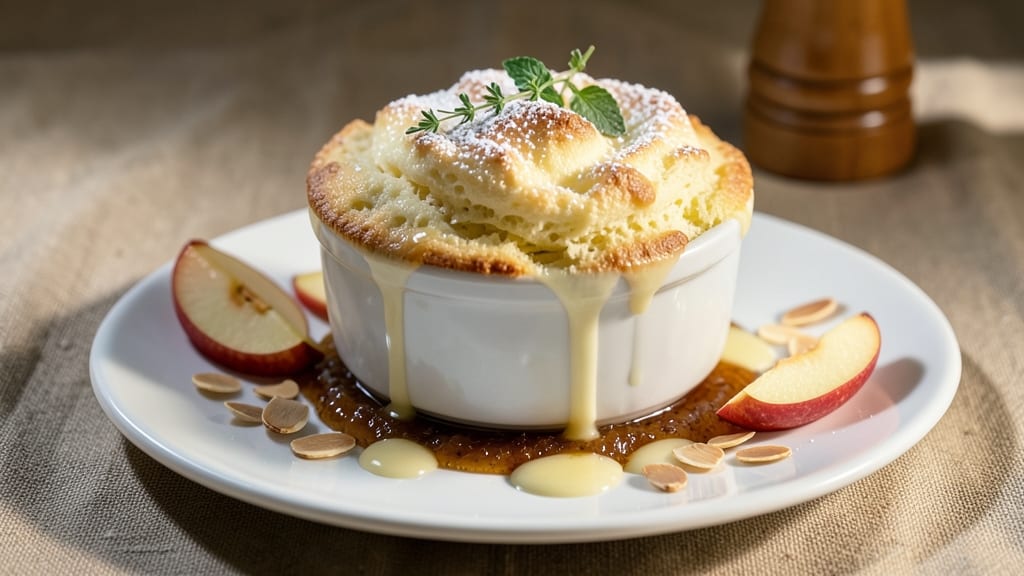
This apple soufflé recipe delivers the perfect balance of light-as-air texture and caramelized apple flavor that always impresses. After years of testing, I've perfected the technique for achieving that signature rise and tender crumb—no specialized equipment required.
The secret lies in proper egg separation and a precise baking temperature that ensures both structure and golden perfection.
What makes this recipe special is its approachability—ideal for home cooks who want restaurant-quality results without the complexity. We'll use a simple custard base infused with apple flavor, then fold in whipped egg whites to create that signature fluffy texture.
The key is patience during the baking process, where the soufflé transforms from delicate dome to golden, caramelized masterpiece.
By the time you serve this soufflé, you'll have a dish that's both elegant and comforting—perfect for brunch gatherings or special occasions. The tender apple custard pairs beautifully with a light caramelized top, while optional variations like bourbon-infused custard or spiced apple compote add exciting twists.
This is dessert that feels indulgent yet remains surprisingly light.
Whether you're serving to guests or treating yourself, this apple soufflé delivers on both presentation and flavor. The recipe scales beautifully for small gatherings, and leftovers (if any) reheat surprisingly well. Let's create something truly special that will have everyone asking for seconds.
Ingredients for apple souffle
Light-as-air texture meets caramelized apple perfection with these carefully chosen ingredients.
| Ingredient | Amount | Notes |
|---|---|---|
| Large Egg Whites 🥚 | 5 whole | Room temperature, separated carefully |
| Large Egg Yolks 🥚 | 4 whole | Room temperature, separated carefully |
| Granulated Sugar 🍚 | ½ cup | Superfine preferred for smooth texture |
| Unsalted Butter 🧈 | ½ cup | Cold, cubed for custard |
| All-Purpose Flour 🌾 | ¼ cup | Sifted for smooth custard |
| Milk 🥛 | ¾ cup | Whole milk for richness |
| Vanilla Extract 🌿 | 1 tsp | Pure vanilla for authentic flavor |
| Ground Cinnamon 🌶️ | ½ tsp | Freshly ground preferred |
| Apples 🍎 | 2 medium | Peeled, cored, finely diced |
| Lemon Juice 🍋 | 1 tbsp | Freshly squeezed for brightness |
| Salt 🧂 | ¼ tsp | Diamond Crystal kosher salt |
| Cream of Tartar 🍯 | ¼ tsp | Stabilizes egg whites |
| Powdered Sugar 🍚 | ¼ cup | For dusting caramelized top |
The apples are non-negotiable here—Honeycrisp or Fuji work best for their balance of sweetness and firmness. Local farmers markets often have the freshest varieties, but any crisp apple will do in a pinch. Peel and dice them small, about 1/4-inch pieces, so they cook evenly without turning mushy. The butter needs to be cold and cubed when you melt it for the custard—this prevents the soufflé from deflating. I always grab Land O'Lakes unsalted butter from the grocery store's dairy case, as it's reliable for baking.
No vanilla extract? Vanilla bean paste works beautifully—just use half the amount. Short on apples? Cooked apple compote (simmered with cinnamon) can be folded into the custard base. The egg whites are the most critical part—room temperature is key for proper volume. If your whites won't whip, add a splash of cream of tartar or a pinch of salt. For the sugar, superfine dissolves faster, but regular granulated works if you pulse it in a food processor. The powdered sugar for dusting? Confectioners' sugar from the baking aisle is perfect—just make sure it's lump-free.
This soufflé is best served immediately after baking—it deflates quickly, but that's part of its charm. For make-ahead prep, bake the soufflé 10 minutes less than directed, then refrigerate. When ready to serve, bake at 400°F for 5-7 minutes to restore the golden top. Store any leftovers (if there are any!) in an airtight container for up to 2 days. The custard base keeps for 3 days in the fridge if you want to prep ahead and assemble later.
Why You'll Love This Recipe
- No Whipped Cream Needed: I’ll be honest—this souffle doesn’t require a stand mixer. A hand mixer (or even a whisk) gets those egg whites fluffy enough for that signature cloud-like top. The butter and sugar caramelize into a glossy crust while you’re still folding in the yolks—no fancy gadgets, just elbow grease.
- Caramelized Crust Magic: That crispy, golden edge? It’s all in the butter. You melt it with sugar until it’s deep amber, then swirl it into the batter before baking. The contrast of the buttery crust with the light, airy center is what makes this souffle feel special—not just another dessert.
- Brunch or Dessert Star: Between us, this is my go-to for weekend brunch (yes, even on a Tuesday night). Serve it warm with a sprinkle of cinnamon or a drizzle of honey, and suddenly it’s a showstopper. Or let it cool slightly, slice it into squares, and pack it for lunch—still delicious hours later.
- Pantry Staples Only: Honestly, I rarely buy special ingredients for this. Eggs, sugar, flour, butter—stuff I already have. The flour keeps the texture stable (no soggy soufflés here), and the yolks add richness without needing extra fat. It’s the kind of recipe that proves you don’t need a fancy recipe to make something feel luxurious.
Step-by-step instructions for apple soufflé
Mastering this soufflé means precise technique—let's build it layer by layer.
Prepare the Apple Custard Base
Melt the 0.5 cup unsalted butter in a medium saucepan over medium-low heat. Once fully melted, whisk in the 0.25 cup all-purpose flour and cook for 1-2 minutes until the mixture forms a smooth paste—this is your roux. Slowly pour in the 0.75 cup milk while whisking constantly to prevent lumps.
Return the mixture to medium heat and cook for 3-4 minutes until it thickens enough to coat the back of a spoon. Remove from heat and stir in the 0.5 cup granulated sugar, 0.5 tsp ground cinnamon, 1 tsp vanilla extract, and 0.25 tsp salt. Let the custard cool to room temperature before proceeding.
While the custard cools, toss the 2 medium apples (peeled, cored, and finely diced) with 1 tbsp lemon juice to prevent browning. Set aside—this acidity will keep the apples vibrant in the final soufflé.
Incorporate Apples and Stabilize Egg Yolks
In a separate bowl, whisk together the 4 whole large egg yolks until smooth and pale. Gradually fold the cooled custard into the yolks in three additions, mixing gently after each to maintain a silky texture. This tempering process prevents scrambling the delicate yolks.
Fold in the lemon-treated apples using a spatula, ensuring even distribution throughout the custard mixture. The apples should be fully coated but still visible—this creates pockets of fruit in every bite. Transfer the mixture to a greased 6-cup soufflé dish and smooth the top with a spatula.
Whip Egg Whites to Stiff Peaks
In a spotlessly clean bowl (any grease will prevent proper whipping), combine the 5 whole large egg whites with the 0.25 tsp cream of tartar. Using a stand mixer fitted with the whisk attachment, beat on high speed until soft peaks form—this typically takes 2-3 minutes. Gradually add the 0.5 cup granulated sugar in three additions, beating for 1 minute after each addition.
Continue whipping until the egg whites form stiff, glossy peaks that hold their shape when the whisk is lifted. The meringue should be thick enough to hold its form when spooned—this is critical for the soufflé's rise. If the bowl feels warm to the touch, chill it in an ice bath for 5 minutes to stabilize the proteins.
Fold Meringue into Custard
Using a spatula, gently fold one-third of the meringue into the apple custard in the soufflé dish, cutting through the center to create a well. This technique incorporates air while maintaining structure. Fold in another third, then the final third, being careful not to deflate the meringue.
The mixture should be light and airy with no streaks of white meringue remaining. Smooth the top with the spatula, then dust with 0.25 cup powdered sugar for a delicate caramelized finish. Tap the dish gently on the counter to release any air bubbles that might prevent rising.
Bake to Perfection
Preheat your oven to 375°F and place a large baking sheet on the middle rack. This creates a steam bath that helps the soufflé rise evenly. Bake the soufflé for 12-15 minutes until it has doubled in size and the top is golden brown with a slight caramelization.
Here's the thing—don't open the oven door during baking. The sudden temperature change can cause the soufflé to collapse. When it's done, you'll see it puff dramatically and develop a crisp, caramelized crust. Serve immediately while still warm, as soufflés deflate rapidly once removed from the oven.
Pro Tips For Making Apple Souffle
- Whip Whites to Stiff Peaks: Use a clean, grease-free mixing bowl and beat the egg whites on medium-high until they hold a peak when you lift the whisk—no wobbly tips. I learned this the hard way when my soufflé collapsed like a sad pancake because the whites weren’t ready.
- Temper Egg Yolks First: Warm the yolks slightly (just a few seconds in a bowl over simmering water) before folding them into the whipped whites. Cold yolks can deflate your meringue faster than a balloon in a thunderstorm.
- Butter the Dish and Ramekin: Don’t forget the ramekin’s inside rim—that’s where the souffle’s edge clings. A thin layer of butter (then sugar) makes all the difference when it’s time to unmold.
- Bake at 350°F, Not Higher: 375°F sounds faster, but 350°F gives the soufflé time to rise before the outside sets like concrete. Watch for 12–15 minutes—golden crust, still jiggly center. Overbake, and you’re eating custard.
Storing and reheating this dish
Refrigerator Storage
If you're planning ahead for a special occasion, you can prepare the apple custard base up to 2 days in advance and store it in an airtight container in the fridge. The key is to keep it chilled until you're ready to fold in the egg whites and bake.
I always use glass containers with tight-sealing lids to maintain freshness. Just remember, the custard will thicken further as it sits, so you may need to thin it slightly with a splash of milk before folding in the meringue. 🥛
Make-Ahead Baking
For a truly impressive presentation, bake your soufflé 10 minutes less than directed, then refrigerate it for up to 4 hours. When ready to serve, pop it back in the oven at 400°F for 5-7 minutes to restore that golden caramelized top.
This trick works beautifully for brunch gatherings when you want everything perfectly timed. The soufflé will rise again slightly, though not to its original height—think of it as a more stable, restaurant-quality version. ✨
Freezing Tips
While soufflés aren't ideal for freezing due to texture changes, you can freeze the custard base alone for up to 1 month in a freezer-safe container. Thaw it overnight in the fridge before proceeding with the recipe.
For the egg whites, I recommend whipping them fresh day-of since they lose volume when frozen. If you must freeze the meringue, do so on a parchment-lined tray before transferring to a bag—this prevents clumping. 🧊
Reheating Leftovers
If you somehow have leftovers (which is rare with this dish!), reheat individual portions in a 250°F oven for 8-10 minutes until warmed through. For a quick option, use the microwave on 50% power for 30-second intervals, stirring between each.
The texture won't be as light, but it's still delicious. I've found that adding a splash of warm milk helps restore some moisture if the soufflé seems dry. 💫
Serving Warm
Soufflés are at their best when served immediately after baking, but if you need to hold them briefly, keep them in a 200°F warming oven for no more than 15 minutes. The warmth helps maintain that signature rise and crisp top.
For presentation, dust with additional powdered sugar and serve with a dollop of vanilla ice cream or warm apple compote on the side. The contrast of temperatures makes each bite even more satisfying. 🍎
Equipment Essentials
For proper storage, invest in a good soufflé dish (I love the Le Creuset 6-cup version) and a set of glass airtight containers for refrigeration. A digital thermometer helps monitor oven temperature precisely, which is crucial for reheating.
When reheating, always use oven-safe dishes to prevent temperature fluctuations. The right tools make all the difference in preserving that delicate texture. 🌡️
Nutrition facts
Frequently asked questions about apple soufflés
Why does my apple soufflé collapse?
The most common causes are opening the oven door too early or not properly incorporating the egg whites. Soufflés need that 375°F oven to maintain their structure—any temperature drop causes them to fall. Also, be gentle when folding the meringue into the custard; overmixing deflates the air bubbles that create the rise. If it does collapse, try baking it again with a slightly lower oven rack position for better support.
Can I make this soufflé without a soufflé dish?
Use a 6-cup ovenproof ceramic or glass dish (like a small baking dish) or even individual ramekins for single servings. Grease it thoroughly and dust with flour to prevent sticking. The key is to avoid metal dishes—they conduct heat unevenly and can cause uneven rising. For a rustic look, try baking in small oven-safe mugs for individual portions.
How do I know when the egg whites are ready?
When properly whipped, stiff peaks should stand straight up when the whisk is lifted and leave a trail in the meringue. The mixture should also be glossy and hold its shape when spooned. If your whites won't hold their shape, your bowl might be too warm—try chilling it in an ice bath for 5 minutes before continuing. A good test is to turn the bowl upside down; if nothing falls out, you're ready to fold!
What's the best way to serve apple soufflé?
Serve immediately with a dusting of powdered sugar and a dollop of vanilla ice cream or warm apple compote on the side. For a sophisticated touch, add a sprinkle of toasted cinnamon or a drizzle of caramel sauce. The contrast of temperatures makes each bite even more delightful. Pro tip: Use a ring mold to create perfect individual portions for guests.
Can I substitute other fruits?
Yes! Try peaches or berries for a summer variation, or pear and ginger for a spiced twist. The key is to use firm, flavorful fruit that holds its shape when baked. For tropical flavors, mango or passion fruit work beautifully. Just adjust the sugar slightly if your fruit is particularly tart or sweet. The custard base remains the same—it's the fruit that adds the star flavor!