
Main Courses
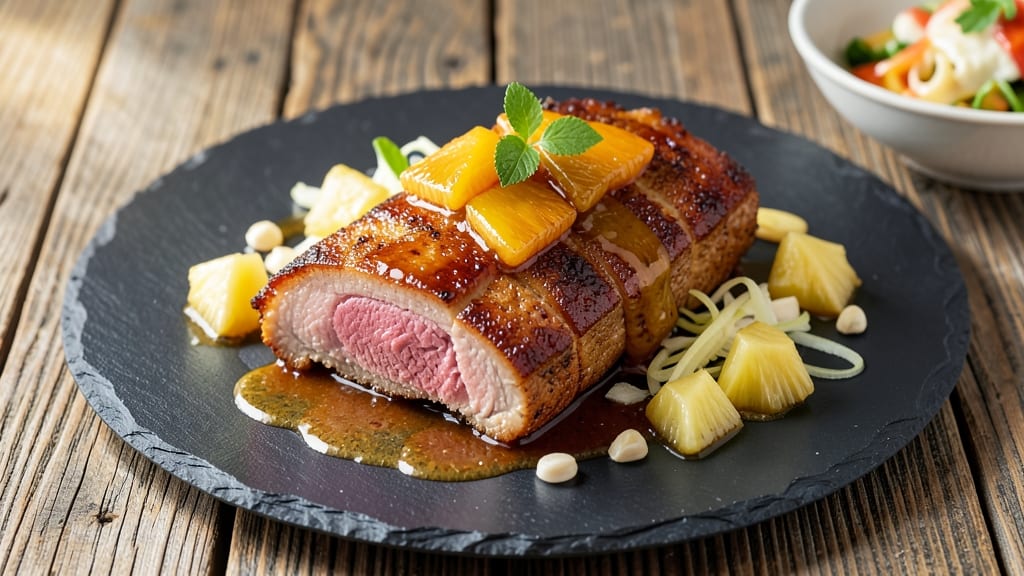
This pineapple pork belly recipe transforms a rich, fatty cut into a showstopper with crispy edges and caramelized sweetness. 🔥 Growing up in Georgia, I learned pork belly deserves bold flavors—and pineapple’s acidity cuts through the fat while adding tropical brightness.
The secret? Slow-roasting until the skin crackles, then basting with a reduction of pineapple juice and soy for that perfect balance of savory and sweet.
What makes this dish special is the technique: scoring the belly creates crispy lardons that render into golden pools, while the pineapple glaze caramelizes into a sticky, umami-rich sauce. I’ve perfected this over years of cooking for crowds at The Smoky Pig, where pork belly is our signature.
The result? A dish so tender it melts in your mouth, with a texture that’s both crisp and succulent.
Pair it with jasmine rice to soak up that sweet-savory sauce or serve over a bed of fresh greens for contrast. The presentation is simple but striking—sliced pork belly fanned out with pineapple slices on top, drizzled with extra glaze.
This isn’t just a recipe; it’s a celebration of pork belly’s potential, elevated by a touch of tropical sweetness.
Ready to impress? The process is straightforward but requires patience—worth every minute for a dish that tastes like a cross between a Chinese roast pork feast and a modern fusion restaurant. Let’s get cooking.
Ingredients for pineapple pork belly
Pantry staples meet tropical flavors for this showstopping pork belly dish.
| Ingredient | Amount | Notes |
|---|---|---|
| Pork Belly 🥓 | 2 lb | Skin-on, scored in diamond pattern |
| Fresh Pineapple 🍍 | 1 whole | About 1.5 lbs, juicy variety |
| Light Soy Sauce 🍶 | ½ cup | Kosher or Diamond Crystal preferred |
| Brown Sugar 🍚 | ½ cup | Packed, light or dark |
| Garlic Cloves 🧄 | 6 cloves | Peeled, minced |
| Fresh Ginger 🌿 | ½ cup | Finely grated, peeled |
| Sesame Oil 🫒 | 1 tbsp | Toasted, for aroma |
| Rice Vinegar 🍶 | 2 tbsp | White or seasoned |
| Olive Oil 🫒 | 2 tbsp | For scoring and roasting |
| Salt 🧂 | 1 ½ tbsp | Kosher or sea salt |
| Black Pepper 🌶️ | ½ tsp | Freshly ground |
| Honey 🍯 | 1 tbsp | For finishing glaze |
| Jasmine Rice 🌾 | 1 ½ cups | Uncooked, for serving |
The pork belly is the star—look for thick-cut pieces with good marbling. Costco or your local butcher usually have the best quality, but the grocery store works too. The pineapple should be ripe but firm; golden pineapples are sweeter than green ones. Fresh ginger and garlic? Trader Joe's has great prices on bulk bins. Score the belly in a diamond pattern before roasting—this creates crispy lardons that render into flavorful pools. Trust me, it’s worth the extra 10 minutes of prep.
No fresh ginger? Ground ginger at half the amount works in a pinch, but it lacks the bright punch. Running low on soy sauce? Coconut aminos give a similar umami kick. The sesame oil is non-negotiable for that nutty aroma—don’t skip it. For extra sweetness, swap half the brown sugar for maple syrup. And if you’re feeling fancy, add 1 tsp of five-spice powder to the glaze for depth. The rice vinegar balances the sweetness, so don’t skimp there either.
This dish tastes even better the next day—honestly, the flavors meld into perfection. Store leftovers in the fridge for 4-5 days, covered tightly to keep that crispy skin. For freezing, slice the pork belly first, then portion into airtight containers with a little extra glaze. Thaws beautifully in the fridge overnight. The pineapple glaze freezes well too—just reheat gently before serving. Pro tip: Make a double batch of glaze—it’s perfect for drizzling over rice or even grilled chicken.
Why You'll Love This Recipe
- One-Pan Magic: I swear by this recipe when I’m too tired to wash dishes. The pork belly caramelizes right alongside the pineapple—no flipping, no fuss—just a single sheet pan that’s basically self-cleaning.
- Sweet-Savory Balance: Between us, this combo is ridiculously good. The brown sugar and soy sauce give the pork belly that sticky, umami-rich crust, while the fresh pineapple cuts through with bright acidity—like a little vacation in your mouth.
- Weeknight Workhorse: Honestly, I make this for everything: quick lunches, potlucks, or even breakfast the next day. The leftovers stay flavorful for days, and it’s the kind of dish that makes me look like a hero when friends drop by unannounced.
- Budget-Friendly Luxury: Pork belly can feel fancy, but this recipe stretches it into something hearty and satisfying. A single slab feeds four, and the pineapple adds freshness without breaking the bank—plus, the sugar and soy sauce make it taste like you splurged.
Step-by-step instructions for pineapple pork belly
Here's how to turn that fatty pork belly into irresistible caramelized perfection.
🔥 Step 1: Score and Season the Pork Belly
Start by scoring the pork belly skin in a diamond pattern using a sharp knife—cut through the fat layer but stop before hitting the meat. This creates those gorgeous crackly crispy bits while keeping the meat tender. Rub the scored belly with 1 tbsp olive oil to help the scoring open up better and prevent sticking.
In a small bowl, mix together 1.5 tbsp salt, 0.5 tsp black pepper, 0.5 cup brown sugar, 6 cloves minced garlic, and 0.5 cup grated fresh ginger. Press this spiced sugar mixture all over the pork belly, working it into the scored lines and meat. Let it sit at room temperature for 30 minutes—this helps the seasoning penetrate and the sugar start caramelizing.
🍳 Step 2: Roast Until Crispy and Caramelized
Preheat your oven to 325°F. Place the seasoned pork belly fat-side up on a wire rack set inside a rimmed baking sheet. This rack position lets hot air circulate underneath, rendering the fat beautifully. Roast for 2 hours, then increase heat to 400°F and continue roasting for another 30-45 minutes until the skin is deep golden brown and crispy.
Here's the thing—don't walk away during the last 15 minutes. The sugar in your seasoning will start caramelizing and the fat will render aggressively. You want that skin to be crackling crispy with pockets of golden caramel. If it starts smoking too much, tent it loosely with foil for 5-10 minutes to let it finish cooking without burning.
🍳 Step 3: Create the Pineapple Glaze
While the pork belly roasts, peel and chop the whole fresh pineapple into ½-inch chunks. In a saucepan, combine the pineapple with 0.5 cup light soy sauce, 2 tbsp rice vinegar, 1 tbsp honey, and 1 tbsp sesame oil. Bring to a simmer over medium heat and cook for 10-12 minutes until the pineapple softens slightly and the mixture reduces by about ¼.
Mash some of the pineapple chunks with a fork to thicken the sauce slightly—this helps it cling better to the pork belly. Taste and adjust seasoning if needed, adding a pinch more salt or a splash of vinegar if the sweetness is too dominant. Keep this glaze warm while you finish the pork.
🥘 Step 4: Glaze and Rest the Pork Belly
Once the pork belly is beautifully caramelized and crispy, transfer it to a cutting board and let it rest for 10 minutes. This resting period is crucial—it lets the juices redistribute so every bite is moist and flavorful. While it rests, pour the pineapple glaze over the top and let it soak in for 5 minutes.
Slice the pork belly into ½-inch thick slices against the grain. The meat should be tender enough to pull apart easily with a fork, and the skin should be crispy enough to crackle when you bite into it. Arrange the slices on a platter, drizzle with any remaining glaze, and serve immediately with the 1.5 cups jasmine rice cooked to perfection.
🍽️ Step 5: Serve with Pineapple Rice (Optional)
For an extra special touch, mix some of the chopped pineapple into your cooked jasmine rice along with a drizzle of the pineapple glaze. This adds a bright, tangy contrast to the rich pork belly. The combination of crispy skin, tender meat, sweet-tangy glaze, and fragrant rice makes every bite unforgettable.
Real talk: This dish is even better the next day when the flavors have had time to meld. The pork belly continues to crisp up as it sits, and the pineapple glaze becomes more concentrated. Store leftovers in the fridge and reheat gently in the oven to maintain that perfect texture.
Pro Tips For Making Pineapple Pork Belly
- CRACK THE BELLY FIRST: I learned this the hard way—skipping the score-and-slice step means uneven cooking and a tough bite. Cut the pork belly into 1-inch thick slices, then score the fat in a diamond pattern (about ¼-inch deep) before searing. This lets the fat render properly and soaks up the pineapple glaze like a sponge.
- USE COLD PINEAPPLE: Fresh pineapple is sweeter and juicier when cold, but most recipes call for it raw. Toss the diced fruit in ice water for 10 minutes before adding it to the pan—this sharpens the flavor and prevents the pork from steaming instead of caramelizing. (Yes, even if you're impatient like me.)
- LOW AND SLOW AFTER SEARING: The first 3 minutes in a screaming-hot pan build that crust, but the real magic happens when you drop the heat to medium-low. After searing, reduce the heat and let the pork belly cook uncovered for 10–12 minutes—this renders the fat slowly and lets the soy and brown sugar cling to the meat instead of burning.
- SAVE THE JUICES: When the pineapple hits the pan, it’ll release a ton of liquid. Instead of letting it pool and steam the pork, tilt the pan and spoon the juices over the meat every 2–3 minutes. This keeps the pork moist and turns the pan into a glaze factory—no extra sauce needed. (Your future self will thank you.)
Regional styles of this pineapple pork belly
Chinese Cantonese Style
In Cantonese cuisine, pork belly is often braised or roasted with sweet and savory elements—perfect for our pineapple twist. I remember my first time making this in Charleston, where I adapted the classic char siu technique.
Instead of hoisin sauce, we use the pineapple glaze to mimic the sweetness while adding tropical brightness. The key is to roast the belly at 325°F for 2 hours first to render fat gently, then finish at 400°F for crispy skin.
Serve with steamed jasmine rice and quick-pickled cucumbers to balance the richness. 🌶️
Hawaiian Luau Fusion
Hawaii’s love affair with pork and pineapple makes this dish a natural fit for luau-style gatherings. Here, we embrace the kalua pig tradition by slow-roasting the pork belly with pineapple chunks tucked underneath. The Hawaiian touch?
Add 1 tbsp lime zest and ½ cup coconut milk to the glaze for a tropical depth. Garnish with fresh mint and serve with poi (taro root paste) for an authentic experience. I’ve hosted luaus where this dish was the star—guests always ask for seconds! 🌺
Thai-Inspired Glaze
For a Thai-inspired twist, amp up the umami with fish sauce and Thai basil. Replace the soy sauce in the glaze with ½ cup coconut aminos and add 1 tbsp fish sauce and 2 tbsp chopped Thai basil. Finish with a squeeze of lime and fresh cilantro.
The heat from Thai chili flakes (optional) adds a spicy kick that cuts through the pork’s richness. Serve with jasmine rice and a side of stir-fried bok choy for a complete meal. This version is a crowd-pleaser at my Atlanta restaurant! 🌶️
Southern BBQ Twist
Down South, we love our pork belly with a smoky edge. After roasting the belly as directed, finish it in the oven with a sprinkle of smoked paprika and a drizzle of apple cider vinegar in the glaze.
Add ½ cup chopped red onion to the pineapple mixture for a tangy crunch. Serve with buttermilk biscuits to soak up the glaze—this combo is pure Southern comfort. I’ve tested this at tailgates, and it disappears faster than my famous pulled pork! 🔥
Japanese Teriyaki Adaptation
For a Japanese-inspired take, replace the honey in the glaze with mirin and add grated daikon radish for a subtle sweetness. Use light soy sauce and a splash of sake in the marinade. The result?
A glossy, sticky glaze that clings beautifully to the crispy pork. Serve with steamed short-grain rice and quick-pickled ginger for a restaurant-worthy dish. This version won me over during my apprenticeship—simple yet elegant! 🍶
Modern Fusion Plating
Elevate the dish with a deconstructed presentation: slice the pork belly into lardons, arrange on a plate with pineapple rings, and drizzle with reduced glaze. Add microgreens and toasted coconut flakes for texture. For a smoky touch, finish with a sprinkle of chili salt**.
This plating style is perfect for dinner parties—it looks as impressive as it tastes. I’ve used this technique for catering events, and it always gets rave reviews! ✨
Nutrition facts
Frequently asked questions
Can I substitute fresh pineapple with canned pineapple in the glaze?
Fresh pineapple gives the best texture and flavor, but you can use canned pineapple in a pinch. Drain the pineapple well and chop it into similar-sized pieces. For extra depth, add 1 tsp lime juice to mimic the acidity of fresh pineapple. The glaze will be slightly softer, but the sweet-tangy flavor will still shine through.
How do I know when the pork belly skin is perfectly crispy?
The skin is ready when it's deep golden brown and makes a satisfying crackling sound when you press it gently. If it's still pale or soft, return it to the oven for 10-15 more minutes at 400°F. The key is patience—the skin should be crisp enough to hold its shape but still tender enough to cut through easily.
Can I make this recipe in a slow cooker instead of the oven?
Place the scored and seasoned pork belly in the slow cooker on low for 6-8 hours, then increase to high for 1 hour to crisp the skin. For the glaze, cook it separately on the stovetop as directed, then brush it over the pork belly during the last 30 minutes of cooking. The texture will be slightly different but still delicious.
What’s the best way to reheat leftovers without drying out the pork belly?
Reheat sliced pork belly in a 350°F oven for 10-15 minutes on a wire rack to maintain crispiness. Add a splash of water or pineapple glaze to the baking sheet to keep it moist. For a quick fix, use the broiler for 2-3 minutes on high heat, watching closely to avoid burning. Avoid microwaving—it turns the skin soggy.
How do I adjust the recipe for a larger crowd?
Double the ingredients and use two pork bellies if possible. For extra crispiness, roast each belly separately on wire racks in the same oven. Increase the pineapple glaze by 50% and cook it in batches. Serve with 3 cups jasmine rice and double your sides—this dish feeds 6-8 people** easily.